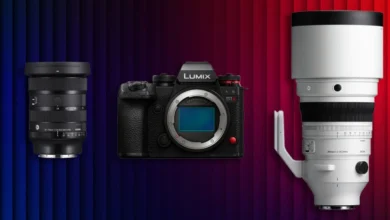
The global digital imaging and consumer electronics market is experiencing a significant wave of speculation, manufacturing bottlenecks, and bold design departures as three of the industry’s leading manufacturers make headlines. Recent developments indicate that Canon is quietly preparing the successor to its popular APS-C flagship, the EOS R7, while Sony has encountered yet another frustrating postponement in the rollout of its much-anticipated compact cinema line addition, the FX5. Concurrently, Nikon has ignited vigorous debate among traditionalists and modern creators alike by reportedly experimenting with a rangefinder-style, EVF-free iteration of its full-frame mirrorless architecture, tentatively designated as the Z5IIc. These concurrent developments highlight a transitional period for camera manufacturers as they navigate shifting consumer demands, persistent global supply chain friction, and the relentless convergence of professional cinema and high-end photography.
Main Facts of the Current Industry Landscape
The modern mirrorless camera market is defined by rapid technological iteration and a constant balancing act between high-resolution performance, compact ergonomics, and cinematic video capabilities. In this ecosystem, the latest industry reports have pinpointed three major storylines shaping the immediate future of digital capture.
First, supply chain analysts and insider leaks point toward the imminent development of the Canon EOS R7 Mark II. The original R7, launched to considerable critical acclaim as Canon’s high-speed APS-C flagship, established a high benchmark for wildlife and sports photographers seeking reach and rapid frame rates. The rumored Mark II iteration is expected to address minor consumer grievances regarding electronic shutter rolling shutter artifacts and low-light performance while incorporating next-generation autofocus algorithms.
Second, the anticipated release of the Sony FX5—a cinema-line camera designed to bridge the gap between the ultra-compact FX3 and the more traditional form factor of the FX6—has reportedly suffered yet another corporate delay. Industry insiders suggest that component shortages and rigorous internal quality control protocols regarding thermal management have pushed the timeline back, disappointing videographers who had anticipated an autumn announcement.
Third, Nikon has surprised the photography community with leaks concerning the Z5IIc, a camera that aggressively strips away traditional design conventions by omitting the electronic viewfinder entirely in favor of a sleek, rangefinder-style profile. This move underscores a growing market division between traditional viewfinder-reliant shooters and a younger demographic of content creators who favor rear-LCD composition and ultra-compact pocketability.
Chronology of Recent Manufacturer Adjustments and Leaks
The trajectory leading to this current state of affairs spans several years of post-pandemic manufacturing recovery and aggressive competitive positioning among Canon, Sony, and Nikon.
The timeline accelerated in mid-2022 when Canon debuted the EOS R7 alongside the EOS R10, signaling a definitive corporate shift toward replacing aging DSLR systems with high-performance APS-C mirrorless alternatives. Following the initial adoption phase, professional users began providing iterative feedback concerning menu responsiveness and mechanical shutter durability. By late 2023, preliminary engineering samples of internal sensor designs suggested that Canon’s R&D department had begun prototyping the next generation of stacked APS-C sensors, laying the groundwork for the R7 Mark II rumors that have intensified over recent months.
Simultaneously, Sony’s cinema division has faced a protracted timeline with the FX product family. The phenomenal commercial success of the FX3 created a high demand for a dedicated intermediate model that could offer internal ND filters without scaling up to the heavier chassis of the FX6. Initial street-level rumors in early 2023 pointed toward a late-2024 launch for the FX5. However, sequential updates from manufacturing plants in Southeast Asia indicate that sensor fabrication challenges and firmware integration hurdles have forced multiple rescheduling phases, pushing the expected reveal well into the subsequent fiscal year.
Nikon’s journey to the Z5IIc represents a more calculated, reactive pivot. Following the successful stabilization of its mirrorless lineup with the Nikon Z9 and Z8, and the nostalgic triumph of the retro-styled Zf, Nikon recognized a lucrative opening in the minimalist, full-frame segment. The concept of stripping the electronic viewfinder to reduce manufacturing costs and physical footprint began circulating among product design teams in early 2023, culminating in the recent leak cycle that has captured the attention of gear enthusiasts globally.
Supporting Data and Market Context
To fully understand the weight of these developments, one must examine the macroeconomic and structural realities governing the digital camera industry. According to recent data from the CIPA (Camera & Imaging Products Association), worldwide shipments of mirrorless cameras have experienced a stabilizing trend following the steep declines of the 2010s smartphone boom. While unit sales volumes remain a fraction of their peak 2010 numbers, total market value has steadily risen due to higher average selling prices driven by professional and enthusiast demand.
Market Share and Consumer Demographics
- Canon continues to maintain the largest overall market share in the interchangeable lens camera sector, hovering near 45% globally, bolstered by its robust RF lens ecosystem and aggressive consumer loyalty programs.
- Sony retains a dominant position in the full-frame mirrorless and video-centric hybrid markets, particularly among independent filmmakers and commercial content creators who rely heavily on E-mount third-party lens compatibility.
- Nikon has successfully arrested its long-term market share decline, stabilizing around 10-15% globally, largely propelled by the aggressive technological halo effect of its flagship sports and wildlife bodies and the emotional appeal of its retro-design campaign.
The profitability of these companies increasingly depends on high-margin accessory ecosystems, specialized software subscriptions, and premium lens sales. The introduction of cameras like the rumored Canon R7 Mark II or a stripped-down Nikon Z5IIc directly addresses distinct consumer segments: the action shooter demanding high frames per second at an accessible price point, and the street photographer prioritizing discretion over mechanical ergonomics.
Official Responses and Corporate Posture
As is standard industry practice, executive leadership at Canon, Sony, and Nikon have maintained a guarded silence regarding unverified rumors and leaked product roadmaps. Representatives from Canon USA declined to comment directly on specific specifications for a hypothetical EOS R7 Mark II, emphasizing instead the company’s ongoing commitment to listening to user feedback and expanding the capabilities of the existing RF mount system.
Sony’s corporate communications division has similarly avoided direct commentary on the FX5 delays, though supply chain analysts note that Sony has consistently prioritized component reliability and thermal dissipation testing in its cinema line to prevent the overheating controversies that plagued early competitors in the full-frame mirrorless video space.
Nikon executives have historically deflected questions regarding future product variants, though corporate strategy briefings have repeatedly highlighted an intention to explore diverse form factors to attract younger, design-conscious demographics who view photography through the lens of modern social media aesthetics rather than traditional photojournalistic heritage.
Broader Industry Impact and Strategic Implications
The convergence of these three distinct stories—Canon’s iterative refinement, Sony’s supply chain friction, and Nikon’s bold structural redesign—carries profound implications for the future of the imaging industry.
First, the persistence of delays in specialized gear lines like Sony’s cinema ecosystem demonstrates that the semiconductor and optical glass industries have not entirely recovered from systemic disruptions. Manufacturers are finding it increasingly difficult to balance the rapid pace of technological innovation with stable, predictable mass production. This environment places a premium on resilient supply chains and diversified manufacturing hubs.
Second, Nikon’s willingness to experiment with the EVF-less Z5IIc signals a potential fragmentation in how cameras are conceptualized. For decades, the electronic or optical viewfinder was treated as an non-negotiable cornerstone of serious photography. By experimenting with its removal in a full-frame body, Nikon is testing the waters for a future where high-end imaging sensors are housed in ultra-minimalist shells, relying entirely on articulated touchscreens and external monitors. This could democratize access to large sensors while lowering production costs, yet it risks alienating purists who rely on eye-level stabilization and bright daylight framing.
Finally, Canon’s methodical approach to updating its APS-C lineup reinforces the reality that consumer retention relies on continuous software support and ecosystem depth. As third-party lens manufacturers slowly gain authorized access to autofocus protocols, incumbent brands must rely on superior body ergonomics, predictive AI autofocus tracking, and robust trade-in frameworks—such as those facilitated by authorized retail partners—to maintain consumer loyalty in a competitive global economy.
Ultimately, whether these rumors materialize into groundbreaking retail products or undergo significant design shifts before hitting store shelves, they reflect a vibrant, highly dynamic industry that refuses to stand still. As photographers and videographers weigh their upgrade paths against rising equipment costs and shifting technological standards, the coming quarters promise to reshape the competitive hierarchy of modern digital imaging.