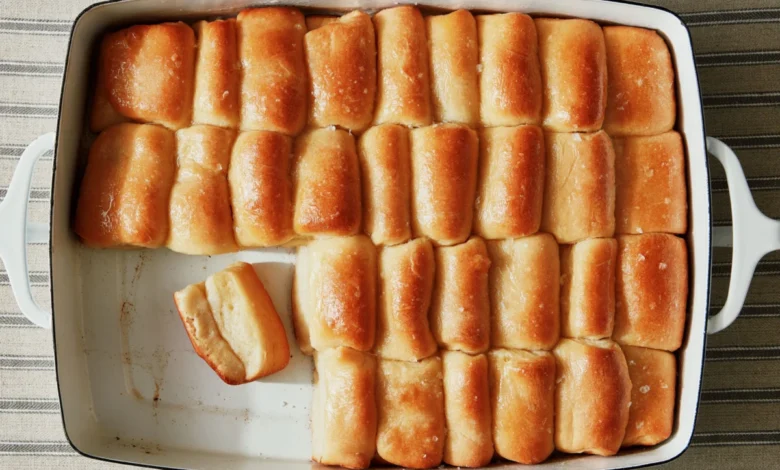
The Parker House roll stands as a cornerstone of American culinary tradition, representing a legacy of 19th-century hospitality that continues to influence modern dinner tables. Characterized by their burnished, golden-brown tops, pillowy interior crumb, and signature pocketbook fold, these yeast-risen rolls serve as a hallmark of classic comfort food. Originating from the historic Parker House Hotel in Boston, Massachusetts, the rolls have transcended their regional roots to become a staple accompaniment to festive gatherings, including Thanksgiving and holiday celebrations. Beyond their utility as a dinner side, their structural integrity and flavor profile—enhanced by a delicate finish of melted butter and flaky sea salt—have solidified their status as a versatile culinary vessel, often repurposed in modern breakfast menus.
The Origins and Historical Context of the Parker House Roll
The genesis of the Parker House roll is rooted in the mid-19th century, a period marked by significant shifts in American gastronomy. The Parker House Hotel, which opened its doors in 1855, was established by Harvey Parker. It quickly gained a reputation as one of the most sophisticated lodging and dining institutions in the United States. While the hotel is also credited with the invention of the Boston cream pie and the popularization of the scrod, it is the eponymous roll that remains one of its most enduring legacies.
Historical accounts suggest that the rolls were created somewhat serendipitously. According to culinary lore, a disgruntled baker at the hotel threw a batch of unfinished dough into the oven, resulting in the unique, folded-over shape that distinguishes the roll from its contemporaries. Whether this origin story is entirely factual or a product of culinary myth, the "pocketbook" design serves a distinct functional purpose: the fold creates a natural seam that allows the roll to be easily pulled apart, a feature that has delighted diners for over 150 years.
Architectural Bread Making: The Science Behind the Shape
The Parker House roll is differentiated from standard dinner rolls through a specific architectural process. Unlike the spherical shaping common in sourdough or brioche rolls, the Parker House technique involves rolling the dough into a sheet, cutting it into rounds or rectangles, and applying a layer of melted butter to the surface. The dough is then folded over itself, effectively sealing the butter inside the seam.
This method is not merely aesthetic; it is a calculated approach to texture. The butter layer acts as a barrier, preventing the dough from fully fusing during the rising and baking process. When exposed to the high heat of the oven, the moisture in the butter and the steam generated within the dough layers cause the roll to expand and separate slightly at the seam. This creates the iconic, delicate interior layers that define a premium dinner roll. The final step—a post-bake brush of butter—provides the characteristic sheen and a subtle richness that complements the slight salinity of the flaky sea salt garnish.
Chronology of Evolution: From Hotel Kitchen to Home Kitchen
The transition of the Parker House roll from a professional hotel kitchen to the home kitchen was accelerated by the publication of iconic cookbooks throughout the 20th century. Fannie Farmer, the principal of the Boston Cooking School, was instrumental in documenting the recipe in a way that made it accessible to home bakers. The inclusion of these instructions in The Fannie Farmer Baking Book, particularly the adaptations curated by Marion Cunningham, served to standardize the method for a domestic audience.
- 1855: The Parker House Hotel opens in Boston, introducing a new standard of luxury dining.
- Late 19th Century: The rolls gain popularity throughout New England as a symbol of hospitality.
- 1896: Fannie Farmer’s The Boston Cooking School Cookbook (The Fannie Farmer Cookbook) is published, helping to formalize the recipe for home bakers.
- Mid-20th Century: The rise of the home appliance industry, specifically the widespread availability of stand mixers, makes the labor-intensive process of kneading yeast doughs more efficient for the average consumer.
- 21st Century: The Parker House roll sees a resurgence in popularity as artisanal baking experiences a revival, with home bakers seeking recipes that offer tactile satisfaction and historical pedigree.
Technical Challenges and Best Practices for Bakers
Achieving the perfect Parker House roll requires adherence to specific technical parameters. In professional and home baking environments, the margin for error is often dictated by flour ratios and proofing times.
Data from baking science suggests that precision in measurement is the primary factor in avoiding dense or tough rolls. Professional bakers consistently recommend the use of a digital scale rather than volume-based measuring cups. By weight, a standard cup of all-purpose flour is approximately 120 to 125 grams. Excessive flour consumption—often the result of "scooping" directly into the flour bag, which compresses the granules—is the leading cause of heavy, dry bread.
Furthermore, the "poke test" remains a critical diagnostic tool. After the dough has completed its final proof, a gentle indentation made with a fingertip should spring back slowly. If the dough springs back instantly, it is underproofed; if the indentation remains without any rebound, it is overproofed, which risks the collapse of the structure during the bake.
Strategies for Batch Preparation and Storage
Modern culinary demands often require flexibility in timing. The Parker House recipe is uniquely suited for staggered preparation. The dough can be prepared up to 8 hours in advance if held under refrigeration, a process that allows for slow fermentation. This cold fermentation not only improves the flavor complexity of the yeast but also makes the dough easier to handle during the shaping phase.
For those looking to manage holiday stress, the rolls can be par-baked. By removing the rolls from the oven approximately 5 minutes before they reach full color, a baker can effectively "pause" the cooking process. When the time comes to serve, a brief return to a 375°F (190°C) oven restores the crust and ensures the rolls are served at optimal temperature.
Freezing is also a viable option. Whether frozen after baking (and subsequently revived with a light spritz of water to prevent dehydration) or frozen in their raw, shaped state, the dough maintains its integrity for up to one month. This makes the Parker House roll a highly efficient option for large-scale event planning.
Broader Culinary Implications and Legacy
The endurance of the Parker House roll in the American culinary canon is a testament to the power of texture and tradition. In an era dominated by rapid innovation and fusion cuisine, the continued preference for these classic rolls suggests a desire for consistency and comfort. From a market perspective, the "roll" category in the baking industry remains robust, with high-end grocers and artisanal bakeries increasingly offering "buttery" or "layered" options that mirror the traditional Parker House fold.
Furthermore, the historical significance of the roll highlights the role of regional institutions in shaping national food identities. Just as the Parker House Hotel established a baseline for what a high-quality dinner roll should be, the evolution of the recipe into the home kitchen demonstrates how culinary techniques are democratized over time.
For the novice baker, the Parker House roll provides an ideal entry point into the world of yeast doughs. It requires a balance of patience—during the rise—and technique—during the fold—without necessitating the complex equipment or long-term commitments required by sourdough or laminated pastries. As such, the Parker House roll is likely to remain a permanent feature of the American dinner table, serving as a link between the sophisticated dining rooms of the 19th century and the modern home kitchen. Whether served alongside a traditional Thanksgiving turkey or toasted for a simple breakfast with preserves, the roll remains a reliable, technically rewarding, and deeply cultural component of the American dining experience.