Chasing the Corona: Brazilian Photographer Kiko Fairbairn’s Year-Long Quest to Capture the 2026 Solar Eclipse in Spain

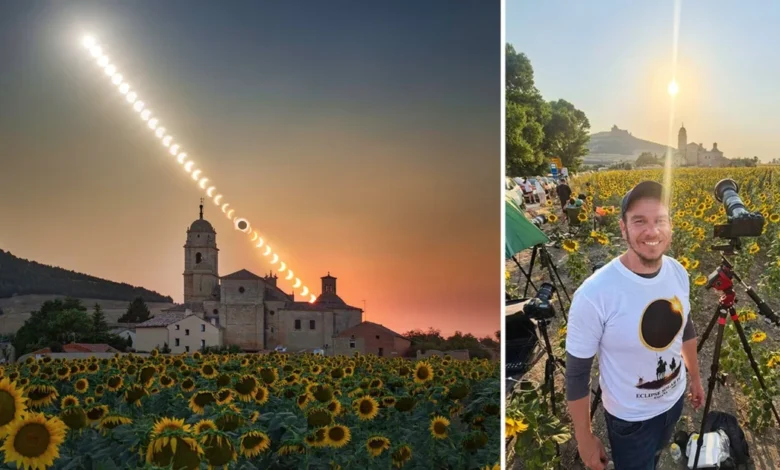
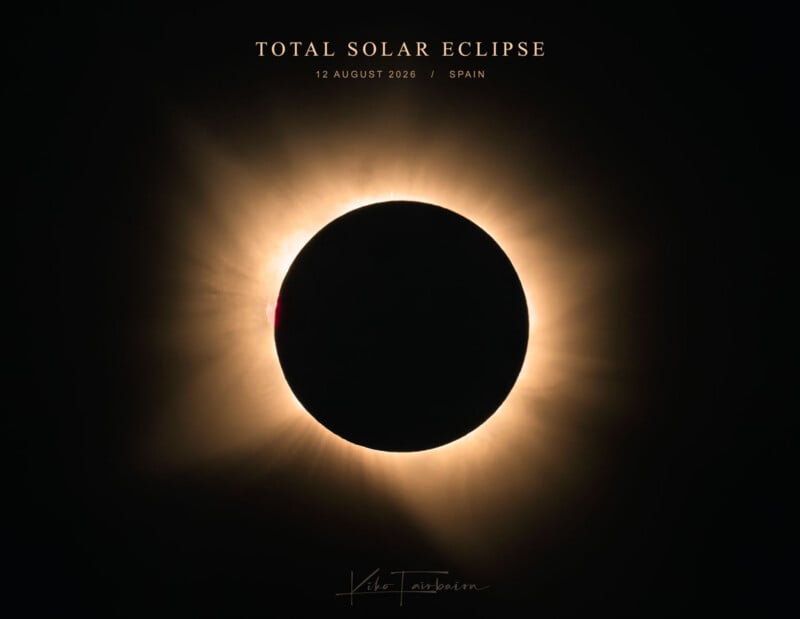
The total solar eclipse that swept across Northern Spain on August 12, 2026, was more than a mere celestial event; for professional photographers and amateur astronomers alike, it represented the culmination of years of meticulous preparation. Among those positioned to capture the phenomenon was acclaimed Brazilian photographer Kiko Fairbairn, whose work at the intersection of science and art has garnered international recognition. Fairbairn’s successful documentation of the eclipse near the historic town of Castrojeriz serves as a case study in the extreme technical requirements and logistical foresight necessary to capture fleeting astronomical events.
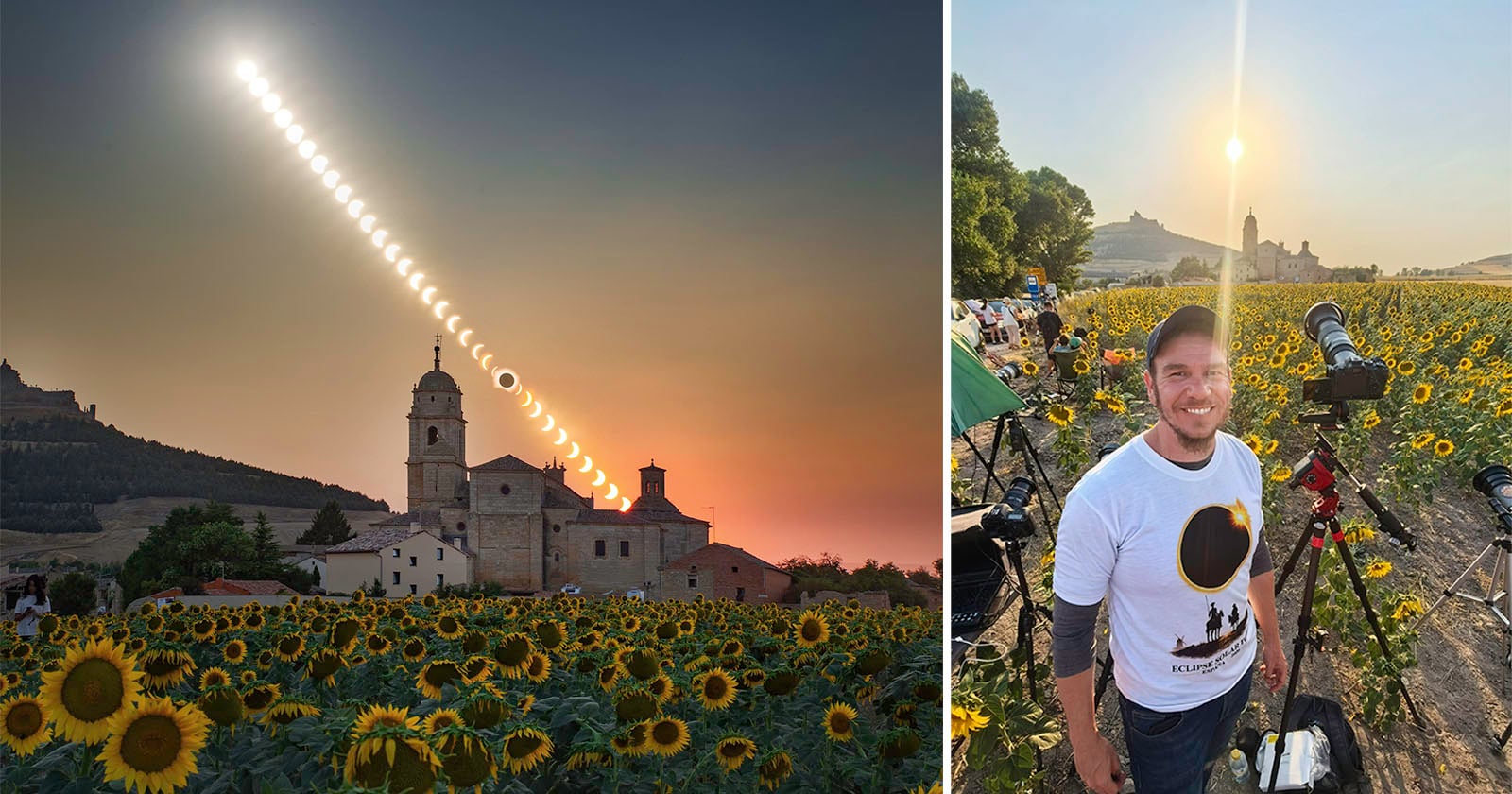
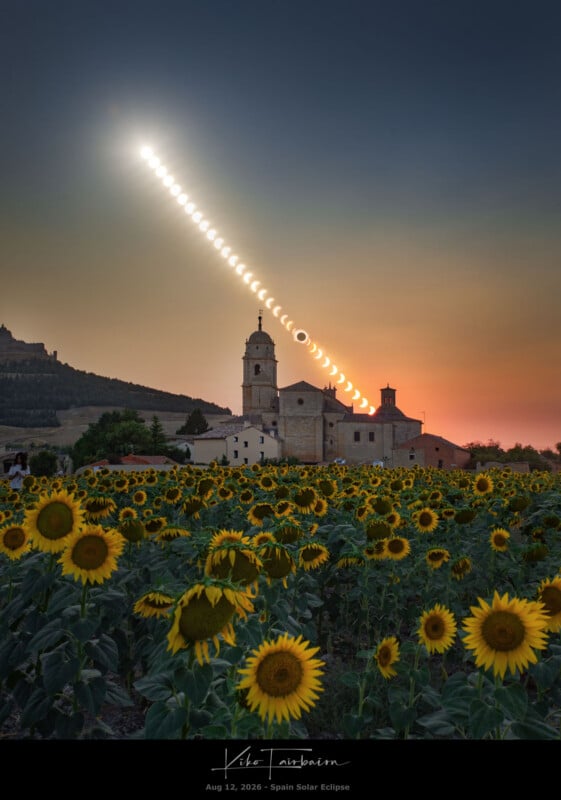
The 2026 event was significant as it marked the first total solar eclipse to traverse the European mainland in over two decades. The path of totality passed directly through the Iberian Peninsula, offering a rare opportunity for millions to witness the moon completely obscuring the sun. For a photographer, however, the challenge extends far beyond simply pointing a camera at the sky. The alignment required to capture the eclipse in relation to terrestrial landmarks—such as the stone churches and castle ruins of the Burgos province—demands a level of precision that pushes the boundaries of current photographic technology and planning software.
The Mechanics of Celestial Alignment
The scientific foundation of Fairbairn’s work relies on the "coincidental" geometry of the solar system. The sun’s diameter is approximately 400 times larger than that of the moon, yet it is also situated roughly 400 times farther from the Earth. This parity in angular size is the sole reason that the moon can perfectly mask the solar photosphere, thereby revealing the sun’s corona—the outermost part of the solar atmosphere that is usually invisible to the naked eye.
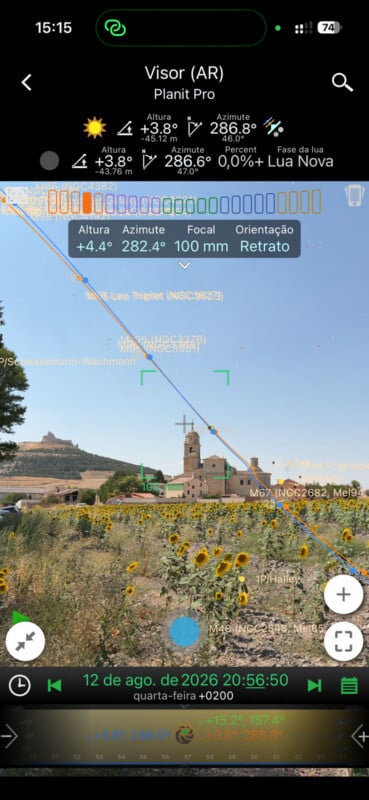
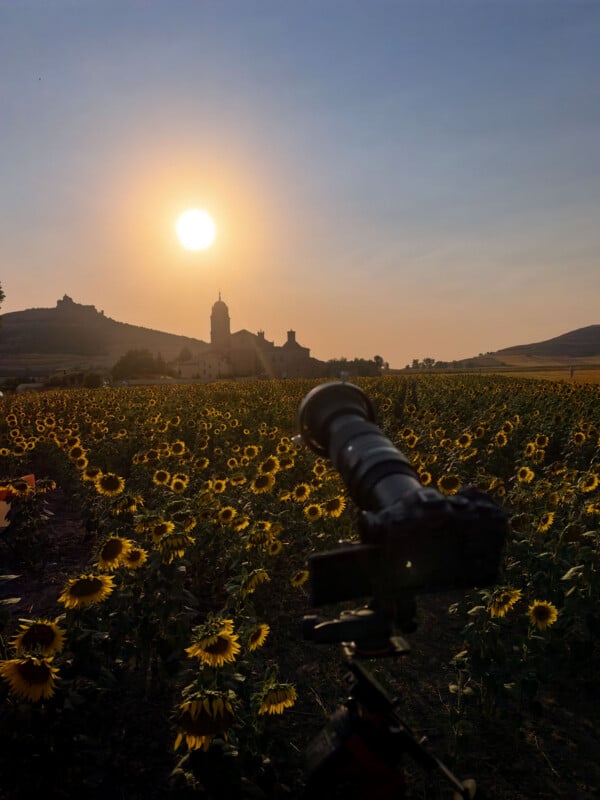
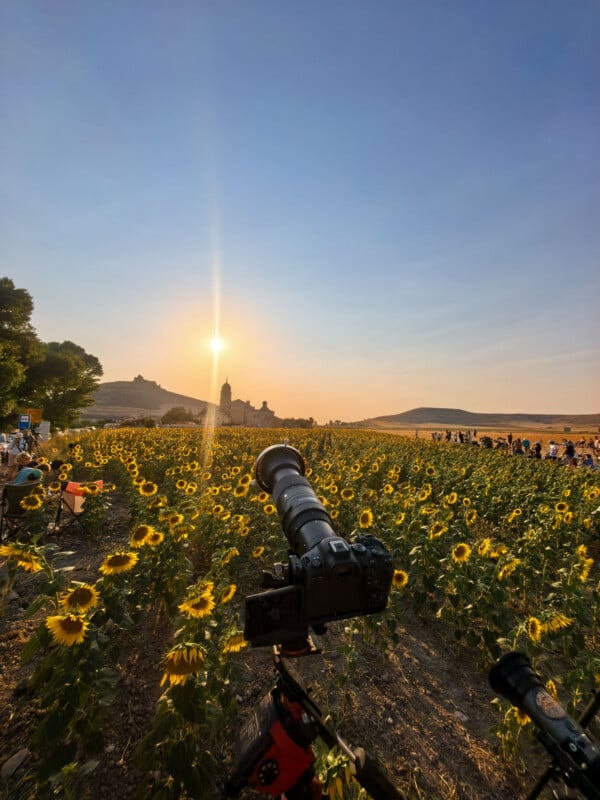
Fairbairn’s project began more than 12 months before the event. The process involved extensive use of high-precision planning applications that integrate GPS coordinates with topographic data to predict the exact path of the moon’s shadow. Despite the sophistication of these tools, Fairbairn emphasizes that the digital map is only the first step. "Once I arrived near Burgos, the real photographic search began," he notes. The challenge was to find a composition that balanced the celestial event with the local heritage of Spain. He eventually identified a sunflower field near Castrojeriz, which provided a poignant thematic foreground: flowers whose natural orientation is determined by the movement of the sun, now witnessing that very sun eclipsed by the moon.
Technical Infrastructure and Execution
Capturing a high-fidelity record of an eclipse requires a dual-camera strategy to mitigate the risks inherent in such a short window of time. Totality in the Burgos region lasted approximately 1 minute and 46 seconds. During this period, the ambient light levels drop precipitously, shifting from broad daylight to a twilight-like state in a matter of seconds.
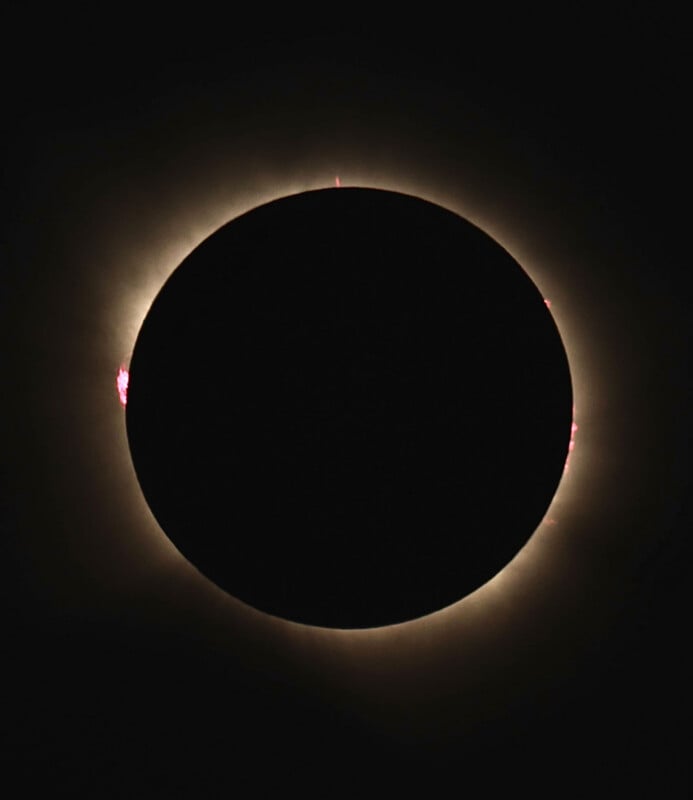
To address these extreme lighting shifts, Fairbairn employed two distinct camera systems. His first setup, a Canon EOS R6 Mark III, was mounted on a motorized tracker equipped with a solar filter. This system was dedicated entirely to close-up, long-exposure tracking of the sun, ensuring that the solar corona and prominences were captured without the blur caused by the Earth’s rotation.
His second setup—a Canon EOS 5D Mark III—served as the narrative lens, tasked with capturing the landscape. To ensure data richness, Fairbairn utilized an aggressive exposure-bracketing strategy. By shooting sequences of three frames—one base, one two stops under, and one two stops over—he ensured that he would have a wide dynamic range of RAW data to reconstruct the final image during post-processing. To prevent any mechanical failure during the critical 106 seconds of totality, he bypassed internal batteries in favor of a constant power bank supply and utilized specialized neutral density (ND) filters to protect his sensors during the partial phases.
A Chronology of the 2026 Eclipse
The timeline of the event was dictated by the movement of the lunar shadow across the landscape. In the hours leading up to the event, tension among photographers in the region was palpable. The unpredictability of local weather—specifically cloud cover—is the "wild card" of eclipse photography.
- Pre-Event Preparation (12 months prior): Selection of the geographic region based on duration of totality and historical weather data.
- On-Site Scouting (7 days prior): Physical arrival at Castrojeriz to verify the line-of-sight between the camera position, the church, and the projected path of the eclipse.
- Setup and Calibration (3 hours prior): Deployment of trackers, solar filters, and power supplies.
- First Contact (Initial partial phase): The moment the moon begins to obscure the solar disk.
- Totality (1 minute and 46 seconds): The period of total darkness where the camera systems transition to capturing the corona and the landscape illumination.
- Post-Event (Immediate): Verification of captured RAW files and securing of data.
The Human Element: Beyond the Lens
While the technical execution is the primary focus of professional astrophotographers, Fairbairn maintains that the most significant aspect of the 2026 eclipse was the psychological experience of witnessing it. He warns that the obsession with capturing the perfect image often leads photographers to ignore the event itself.
"One of the biggest mistakes we can make as photographers during an eclipse is becoming so focused on capturing it that we forget to actually experience it," Fairbairn stated. To manage this, he relied on his sister to document the "behind-the-scenes" process, allowing him to step away from the equipment during the final seconds of totality. This allowed him to witness the phenomenon with his own eyes, a moment he describes as being characterized by a profound sense of "shock and awe."
The presence of a support network, including other photographers from the Brazilian astrophotography community, provided both practical assistance and emotional support. In the moments before totality, when anxiety over potential equipment failures or clouds reaching the site is at its peak, this collaborative environment proved essential.
Broader Implications and Scientific Value
The 2026 total solar eclipse was one of the most documented astronomical events in history. Beyond the aesthetic value of the images captured by professionals like Fairbairn, such events provide significant public outreach opportunities for the scientific community. The documentation of the corona, in particular, remains a valuable exercise in understanding the solar atmosphere.
Furthermore, the surge in astrophotography interest has led to advancements in consumer-grade equipment. Modern trackers, high-dynamic-range sensors, and sophisticated planning software have democratized this type of photography, allowing individuals to capture phenomena that were previously the exclusive domain of professional observatories.
Fairbairn’s work is a testament to the synthesis of rigorous scientific planning and artistic vision. His career, which includes accolades such as the Sir Patrick Moore Prize in 2019 and features in major international publications like National Geographic and Scientific American, highlights the increasing importance of visual storytelling in science communication.
Conclusion
The images produced by Kiko Fairbairn from the sunflower fields of Castrojeriz do more than record an eclipse; they capture a specific moment in the human relationship with the cosmos. The juxtaposition of ancient stone architecture, the fleeting celestial shadow, and the sunflowers—earthly beings turning their heads to follow the light—creates a narrative that transcends the technical complexity of the shoot.
For the millions who watched the 2026 eclipse, the event served as a reminder of the precision of the solar system’s mechanics. For Fairbairn, it was the culmination of a career-long commitment to documenting the night sky and the rare instances when the celestial and terrestrial worlds align. As the photography community reflects on the 2026 event, the focus remains on the balance between technological mastery and the simple, human experience of looking up.
Related posts: