Antigravity A1 Drone Redefines Aerial Cinematography with Groundbreaking 360-Degree Capture and "Fly Now, Frame Later" Paradigm

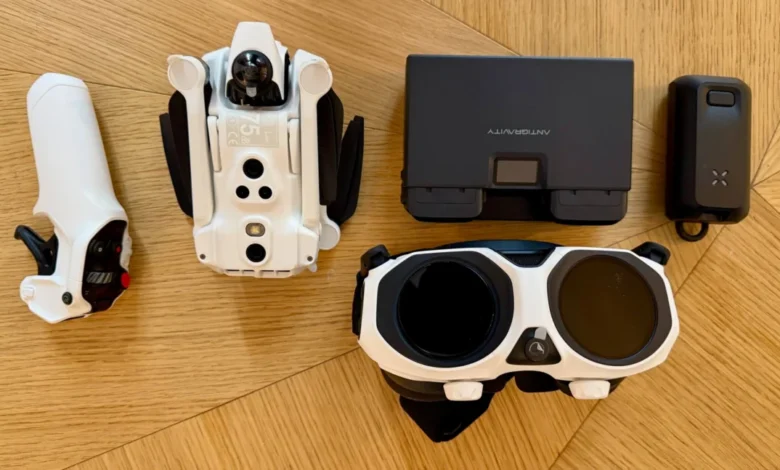
The Antigravity A1, a revolutionary drone released in late 2025, has made significant strides in aerial cinematography, fundamentally challenging the traditional gimbal-based drone design by introducing a dual-lens 360-degree capture system. This innovative approach aims to render conventional framing methods obsolete for a broad spectrum of creators, offering a "fly now, frame later" experience that transforms drone piloting into directing a virtual camera within a pre-recorded digital environment. This review delves into the A1’s technical specifications, user experience, and broader implications for the drone industry and content creation.
The Evolution of Aerial Imaging: Context and Innovation
The drone market has witnessed exponential growth over the past decade, driven by advancements in miniaturization, battery technology, and camera capabilities. Initially a niche for hobbyists and military applications, drones quickly permeated consumer and professional sectors, becoming indispensable tools for photography, videography, surveying, and inspection. Traditional consumer drones, largely dominated by companies like DJI, rely on mechanical gimbals to stabilize a single forward-facing camera, ensuring smooth footage despite aircraft movement. While highly effective, this method requires pilots to meticulously frame shots during flight, a skill that demands significant practice and precision.
The Antigravity A1 emerges against this backdrop, presenting a paradigm shift. Its development is rooted in the increasing sophistication of 360-degree camera technology, which has steadily gained traction in action cameras and virtual reality content creation. By integrating this immersive capture method into an aerial platform, Antigravity Tech aims to democratize complex aerial videography, allowing creators to focus on flight path and narrative rather than real-time framing constraints. This innovation is particularly pertinent given the rising demand for dynamic, immersive content across social media, advertising, and burgeoning VR/AR platforms. The late 2025 release positions the A1 as a cutting-edge entrant, leveraging mature 360-degree stitching algorithms and robust flight control systems.
Unpacking the A1’s Core Technology: Dual Lenses and Gimbal Obsolescence
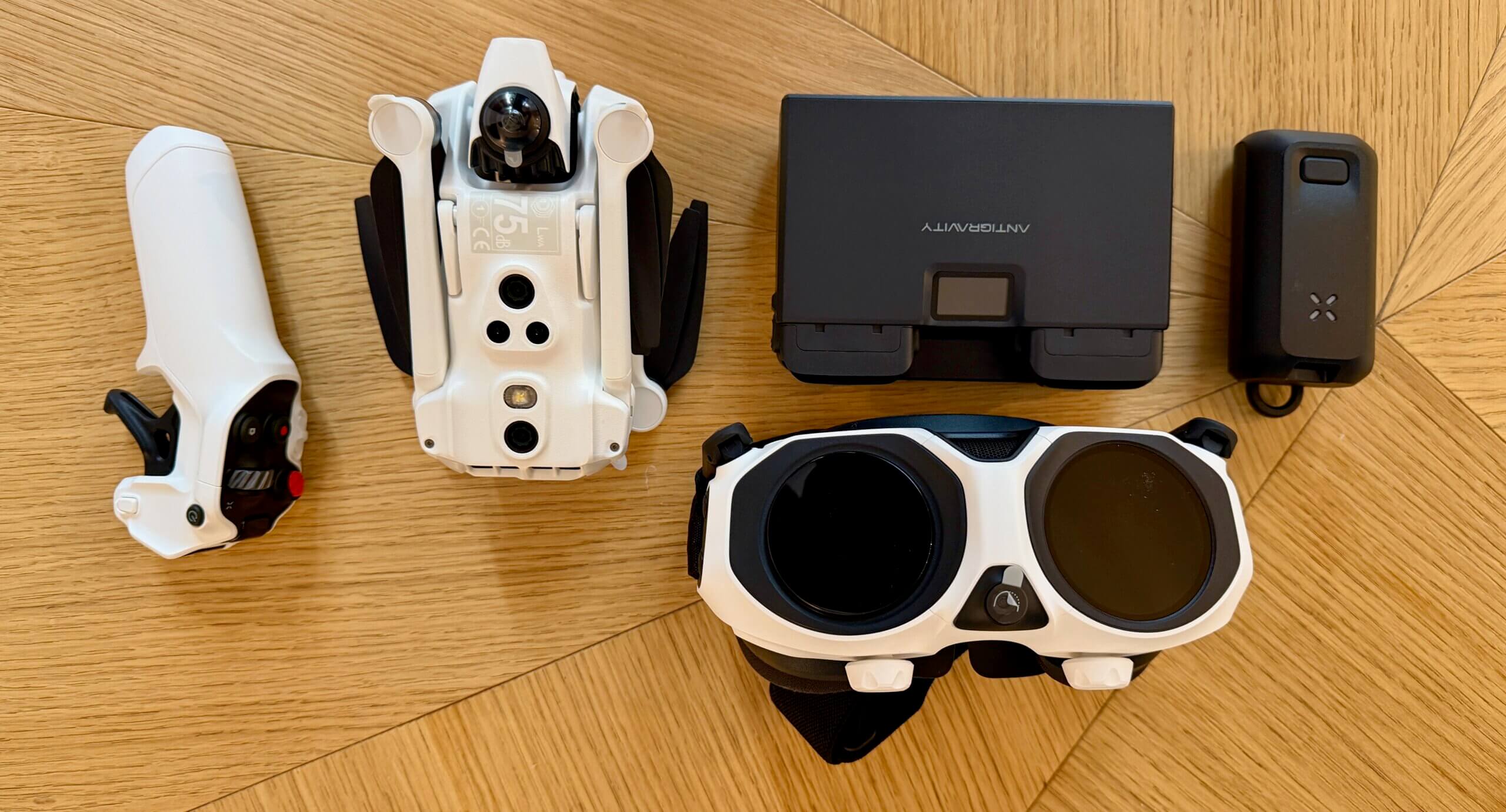
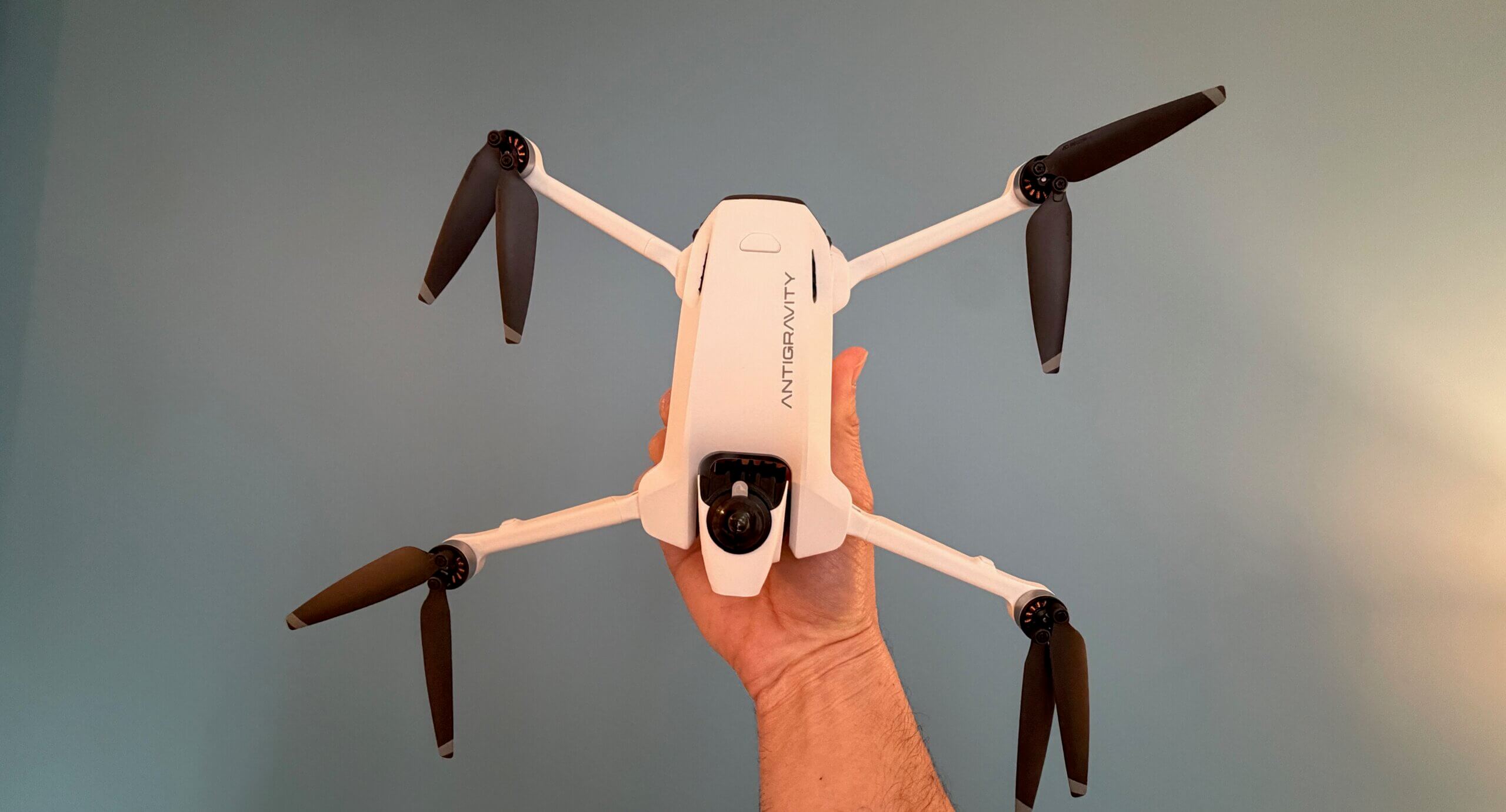
At the heart of the Antigravity A1’s distinction lies its unique imaging system. Unlike most drones that feature a single, forward-pointing lens, the A1 is equipped with two ultra-wide-angle lenses. These lenses are strategically positioned on the top and bottom of the central fuselage, each capturing an expansive 200-degree field of view. When combined, these images overlap seamlessly to construct a complete 360-degree spherical video. This dual-lens architecture is the cornerstone of its "fly now, frame later" promise, as it records every angle simultaneously, eliminating the need for a mechanical gimbal to adjust camera orientation during flight.
A significant design achievement is the digital removal of the drone itself from the final exported footage. This sophisticated post-processing creates the illusion of a camera floating unassisted in mid-air, offering an unprecedented perspective that enhances immersion and reduces visual distractions. The sensors powering this system are 1/1.28-inch CMOS units. While slightly smaller than the 1-inch sensors found in some "Pro" level photography drones, they represent a substantial leap over typical 360-degree action cameras. This larger sensor size translates directly into superior low-light performance and a higher dynamic range, enabling the A1 to capture intricate details in both brilliant highlights and deep shadows—a crucial advantage when filming in challenging lighting conditions, such as the harsh contrast of midday sun or twilight.
Regulatory Acumen and Robust Design
Antigravity Tech demonstrated astute awareness of the global regulatory landscape governing drones. Many countries mandate registration and stricter flight rules for drones weighing 250 grams or more. The A1’s standard configuration, including its battery, weighs precisely 249 grams. This strategic engineering decision allows the A1 to bypass many of the more stringent regulations typically applied to heavier drones, classifying it as a non-commercial or hobbyist drone in numerous jurisdictions. This significantly lowers the barrier to entry for many users, streamlining the operational process and expanding potential flight locations.
Beyond its regulatory compliance, the A1 boasts a remarkably sturdy construction. It utilizes a high-grade carbon-fiber-reinforced polymer, offering a superior strength-to-weight ratio compared to the standard ABS plastic commonly found in more affordable drone models. This choice of material not only contributes to its sub-250-gram weight but also enhances its durability, making it more resilient to minor impacts and general wear and tear. The drone’s folding mechanism is designed with tactile precision, clicking firmly into place, which suggests long-term reliability. When folded, the A1 is highly portable, roughly the size of a large smartphone, albeit three times thicker, making it an ideal companion for travelers and on-the-go creators.
An Immersive Flight Experience: Goggles and Intuitive Control
The flight experience with the Antigravity A1 is meticulously crafted for immersion and ease of use. Central to this is the inclusion of "Vision Goggles." These sleek, lightweight goggles feature dual 4K micro-OLED displays with an impressive 120Hz refresh rate, delivering a crystal-clear and fluid visual feed. The latency between drone and goggles is nearly non-existent, crucial for precise control and avoiding motion sickness. A standout feature is the integrated head tracking. Because the A1 records in 360 degrees, the pilot is not confined to a forward-facing view. Turning one’s head translates directly into panning the goggle feed, allowing the pilot to look left, right, up, or down, observing the terrain passing beneath or scanning the horizon. This level of spatial awareness and presence is unattainable with traditional fixed-camera drones, blurring the lines between piloting a drone and virtually soaring through the air.
Complementing the goggles is an innovative single-handed motion controller. This controller simplifies flight mechanics: pilots point it in the desired direction and pull a trigger to accelerate. Tilting the wrist banks the drone, while raising the nose of the controller initiates a climb. This intuitive system allows even novice pilots to navigate complex environments with remarkable agility within minutes. For seasoned FPV (First Person View) pilots who prefer the granular control of manual acrobatic flight, the A1 also supports a traditional "Mode 2" stick controller. However, the fluidity and responsiveness of the motion controls are so compelling that many users may find little reason to revert to conventional methods.
Camera Performance and Post-Production Workflow
The Antigravity A1’s marketing highlights "8K Resolution," a specification that requires careful interpretation in the context of 360-degree video. In a traditional 16:9 flat video, 8K denotes a fixed pixel count across a rectangular frame. For 360 video, these 8K pixels are distributed across a full spherical image. When a user "reframes" this 8K sphere into a standard flat video, they are effectively cropping a segment of the total image. While this means the resulting flat video may not retain the full 8K fidelity of a dedicated 8K flat camera, the sheer breadth of the captured data provides immense flexibility for reframing, zooming, and panning in post-production, offering multiple "virtual camera" angles from a single flight.
The A1 also demonstrates noticeable improvements in color science compared to previous 360-degree cameras. It offers a "Vivid" profile for users desiring punchy, social-media-ready colors, alongside a 10-bit "Log" profile. The latter is a professional-grade option that provides a flatter image with maximum dynamic range, allowing colorists greater latitude to match footage with other cameras and achieve a cohesive look in a color-grading suite. Furthermore, the drone’s stabilization, powered by Antigravity’s proprietary "FlowState" algorithms, is exceptionally robust. Even when subjected to challenging conditions like 20 mph winds, the recorded footage remains remarkably steady, mimicking the stability of a camera mounted on a tripod.
The "Antigravity Studio" editing application is integral to the "fly now, frame later" workflow. It enables wireless footage download at impressive speeds (up to 80MB/s) and intuitive video reframing using a smartphone’s gyroscope. Users can simply watch the captured 360 video and physically move their phone around to "film" the desired perspective in real-time. The app also integrates "Auto-Frame," an AI-powered tool that intelligently identifies subjects within the 360 sphere and automatically generates a compelling cut, ensuring subjects remain in focus. For solo creators, this effectively provides a virtual camera crew, significantly streamlining the editing process and minimizing the risk of missed shots.
Operational Efficiency and Battery Considerations
Battery technology continues to be a limiting factor for small drones. The A1’s standard Intelligent Flight Battery offers a theoretical flight time of 24 minutes. In practical, real-world conditions involving moderate wind and continuous recording, users can expect closer to 19 to 20 minutes of flight. While this duration might seem modest, the A1’s unique capture method significantly enhances its "work per minute." Because a single 360-degree flight captures all angles simultaneously, there’s no need to re-fly a path to obtain different perspectives. Consequently, a single 20-minute flight with the A1 can yield as much usable footage as three separate flights with a traditional gimbal-based drone, drastically improving operational efficiency. For those requiring extended flight times, an optional "Pro Battery" is available, extending flight duration to a staggering 39 minutes. However, it’s important to note that this larger battery pushes the drone’s weight over the 250-gram threshold, subjecting it to additional regulatory requirements and slightly compromising its agility.
In terms of flight dynamics, the A1 is characterized as a "cinewhoop" style flyer. This designation implies a focus on stability and predictable handling, prioritizing smooth, cinematic movements over aggressive, twitchy acrobatics. It achieves a respectable top speed of approximately 36 mph, which is ample for tracking subjects like bikes or cars for dynamic shots, though it won’t match the raw speed of a professional racing drone. A particularly valuable feature for real-world operations is "Turtle Mode." Should the drone crash and land upside down, this mode allows the A1 to use its propellers to flip itself back over, enabling a swift re-takeoff without the inconvenience and potential embarrassment of a manual recovery.
Market Impact and Future Implications
The Antigravity A1 is rapidly transitioning from a niche product to a potentially mainstream tool, particularly for content creators, travelers, and independent filmmakers. Its ability to simplify complex aerial cinematography, combined with its regulatory advantages and immersive flight experience, positions it as a significant disruptor in the drone market. Industry analysts have noted the A1’s potential to shift consumer expectations, pushing competitors like DJI to explore more integrated 360-degree solutions or enhance their existing offerings with similar "fly now, frame later" capabilities. The emphasis on user experience, from intuitive motion controls to AI-assisted editing, democratizes advanced aerial videography, making it accessible to a broader audience beyond seasoned drone pilots.
Inferred statements from Antigravity Tech would likely emphasize their vision of creative liberation, enabling storytellers to focus on narrative rather than technical complexities. The sub-250-gram weight strategy can be seen as a direct response to growing global drone regulations, reflecting a commitment to user accessibility. For content creators, the A1 offers a powerful new storytelling dimension, especially for immersive platforms and social media, where dynamic, reframed 360 content can captivate audiences. While acknowledging that the image quality might not rival high-end cinema drones and the lenses are delicate, these trade-offs are minor in light of the creative freedom the A1 provides. It effectively bridges the gap between traditional cinematography and the burgeoning world of virtual reality, pushing the boundaries of what is possible in aerial imaging. The Antigravity A1 is more than just a drone; it represents a significant step towards the future of accessible, immersive aerial content creation.