For decades, the global luxury travel industry was predicated on the geography of status: the specific zip code of a hotel, the exclusivity of a destination, or the prestige of a brand name. However, as we move through 2027, the traditional pillars of high-end tourism are undergoing a fundamental transformation. The modern affluent traveler is increasingly bypassing the conventional "bucket list" approach to vacation planning in favor of journeys defined by personal ambition, psychological state, and a desire for profound human connection. This shift marks a departure from the "checklist" mentality of the early 21st century and signals a new era where the value of a travel specialist is measured not by the reservations they can secure, but by the doors they can open to authentic, unscripted experiences.
The Changing Paradigm of High-End Travel
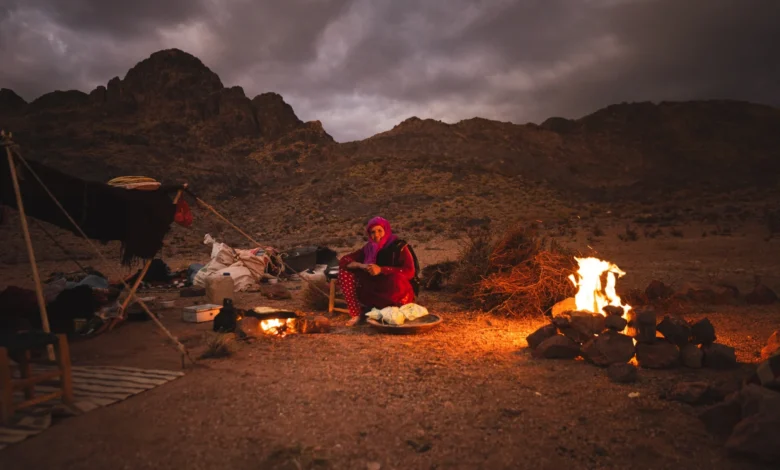
Industry experts are noting a distinct pivot in consumer sentiment. Carolyn Addison, head of product at the luxury travel firm Black Tomato, observes that the inaugural conversation between a client and an advisor has shifted. "One of the most interesting changes is that the conversation is increasingly starting with a feeling or an ambition rather than a destination," she says. This transition reflects a broader maturation of the luxury market. While the ability to secure a table at a Michelin-starred restaurant or a private, after-hours tour of the Louvre remains a baseline expectation for luxury service, these amenities are no longer considered the apex of travel. Instead, they are viewed as commoditized services. The new frontier of luxury is rooted in access to people, perspectives, and ways of life that exist entirely outside the traveler’s day-to-day reality.
The Evolution of Access: From Room Keys to Human Connection
The definition of "access" has evolved significantly over the last decade. Historically, access meant overcoming barriers—getting a room in a sold-out resort or a seat at a popular venue. Tom Barber, brand director at Voyageurs du Monde, argues that this model is being superseded by a more meaningful interpretation of the term. "For a while now, luxury travel has been about access," Barber notes. "What access looks like is transforming. In 2027, genuine access that is built on relationships and expertise will be much more attractive than getting a table or a room in a five-star hotel."

This sentiment is echoed by travel professionals who see a growing impatience with the "gilded cage" experience. There is a perceptible rise in the desire for cultural immersion that requires participation rather than observation. George Morgan-Grenville, founder and CEO of Red Savannah, points to a clear trend: the decline of passive sightseeing. Travelers are increasingly seeking out hands-on, hyper-local workshops. Whether it is learning the intricacies of ceramic making in Kyoto, the labor-intensive process of silk weaving in Laos, traditional hand block printing in Jaipur, or the technical mastery of croissant making in Provence, the modern traveler wants to do, not just see.
The Rise of the Anti-Optimization Itinerary
In an era of hyper-efficiency, where the modern professional’s life is often managed to the minute, there is a growing, paradoxical desire for "anti-optimization" in leisure. The traditional, meticulously curated itinerary—a staple of the luxury travel industry for years—is now being viewed with skepticism.
"We’re also seeing people question the idea that every moment of a trip needs to be optimized," explains Addison. "There’s something refreshing about slowing down, embracing a little uncertainty and allowing a place to reveal itself naturally." This approach represents a shift in the role of the travel specialist. Their expertise is no longer just about logistics; it is about providing the security that allows a traveler to be flexible. The modern UHNW (Ultra-High-Net-Worth) traveler values the capacity to change their plans based on a whim, a serendipitous conversation, or an unexpected discovery.
This fluidity brings a romantic, almost nostalgic quality back to travel. Barber notes that the ability to extend a trip by two weeks because one has made a meaningful connection in a local bar is now considered a hallmark of true luxury. This, he argues, is the ultimate manifestation of freedom: the ability to exist outside the constraints of a schedule.
The Concertina Effect: A New Booking Chronology

This newfound appetite for flexibility has birthed a phenomenon that industry analysts call the "Concertina Effect." This term describes the compression of the traditional booking timeline. The standard two-to-three-month lead time for a high-end trip is rapidly vanishing. Instead, travelers are polarizing into two distinct camps: the hyper-spontaneous and the hyper-prepared.
On one end of the spectrum, last-minute, high-budget travel is experiencing a boom. On the other, there is a surge in long-term planning that looks years ahead, such as bookings for the 2030 solar eclipse in Namibia. This dual-track behavior suggests that the modern luxury traveler is no longer interested in the "average" booking cycle. They either want the immediacy of a spur-of-the-moment escape or they are willing to wait years for a rare, once-in-a-lifetime event. The flexibility to facilitate both extremes has become the gold standard for travel agencies.
Moving Beyond the Five-Star Formula
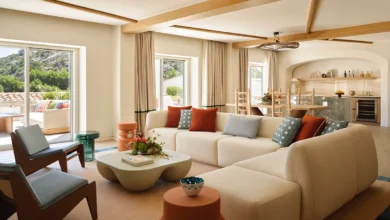
The shift in values is also impacting the hospitality sector. There is a palpable resistance to the "homogenized" five-star hotel experience. Travelers are increasingly wary of global chains that offer a consistent, albeit predictable, standard of luxury. Morgan-Grenville suggests that the most compelling properties today are small—ranging from four to 18 rooms—and are deeply rooted in their specific culture, landscape, and community.
Properties like Casa Bonavita in Malta, Binidufà in Menorca, and Kotona Manor in Finland are gaining traction because they offer a sense of place that a standard international hotel cannot replicate. Furthermore, there is a growing preference for private residences that offer the infrastructure and security of a hotel while providing the autonomy of a private home. This desire to "live" in a destination, rather than just "stay" in it, is a key indicator of the current shift in consumer values.
Data and Implications: The Economic Shift

The implications of these changes are profound for the luxury travel market. Data from industry analysts suggests that the spend per trip is not necessarily decreasing, but the allocation of that spend is shifting away from physical assets (e.g., room upgrades, branded amenities) toward human-centric experiences (e.g., expert-led guides, private workshops, and logistical flexibility).
Industry experts suggest that this trend is partially an antidote to the "influencer effect." The democratization of travel information through social media has led to the over-saturation of "storied" locations. When a place becomes a backdrop for an influencer’s content, it often loses its gravitas. Consequently, the wealthy traveler is seeking out "un-Instagrammable" or off-the-beaten-path experiences to reclaim the exclusivity that they feel has been diluted by mass digital exposure.
The Future of Luxury as an Intangible Asset
Ultimately, the luxury travel industry is recalibrating to provide an intangible product. As Addison concludes, "I don’t think travelers will stop wanting the best. I think they’re becoming more thoughtful about what ‘the best’ actually means."
Real luxury, by the standards of 2027, is defined by three primary elements: time, freedom, and access. It is the ability to move through the world without being a tourist, to engage with local cultures on an intimate level, and to maintain the agency to change one’s mind at a moment’s notice. As the industry looks toward the next decade, the companies that will thrive are those that recognize that the most valuable commodity in travel is not the destination itself, but the transformative nature of the journey. The future of luxury is not about what you can purchase, but how you can feel, who you can meet, and what you can learn while you are away from home.