Learning to Travel Again: A Reflection on Health, Resilience, and the Evolution of the Modern Journey

For nearly three decades, Michael Huxley, the veteran travel writer and founder of the resource platform Bemused Backpacker, advocated for a philosophy of urgency, urging his audience to prioritize exploration over deferment. However, a recent, undisclosed severe medical crisis has forced a fundamental shift in his approach to global travel. This transition highlights a broader trend within the travel industry: the move away from high-intensity, "bucket-list" tourism toward a more intentional, sustainable, and slower pace of life, often prompted by personal health reckonings.
Huxley’s career, spanning over 25 years and encompassing travel through more than 150 countries, was built on the premise that waiting for the "perfect time" to explore is a fallacy. As a former nurse specializing in emergency and tropical medicine, his perspective was informed not only by his own adventures but by witnessing the end-of-life regrets of patients who deferred their aspirations due to professional or financial obligations.
A Chronology of Change
The turning point in Huxley’s professional life occurred following a sudden, life-altering illness that abruptly halted his ability to traverse the globe with his customary vigor. Before this health event, his life was characterized by a rapid-fire succession of expeditions—trekking through jungles, scaling volcanoes, and maintaining a constant schedule of international movement.

The recovery process served as a de facto sabbatical, removing him from the digital content cycle that had defined his career for 16 years. This period of forced inactivity triggered a psychological shift. Where he once viewed travel through the lens of a creator—constantly evaluating locations for their potential as articles, photography subjects, or social media content—his return to the world has been marked by a return to "pure" travel, devoid of the pressure to monetize or document every encounter.
Supporting Data and Industry Context
The travel industry has seen a quantifiable surge in the "Slow Travel" movement, a trend that aligns with the shift Huxley describes. According to recent reports from the World Tourism Organization (UNWTO), there is a growing consumer preference for longer stays in single destinations, which reduces the carbon footprint of travel and increases the economic impact on local communities.
Data from travel analytics firms suggest that post-pandemic, travelers are increasingly prioritizing "meaningful" experiences over volume. The "Slow Travel" methodology—which emphasizes local immersion, public transport, and unscripted daily routines—has seen a 15–20% increase in search volume over the past three years. Experts in tourism studies suggest that this reflects a broader societal fatigue with the "performative" nature of travel often encouraged by social media platforms.
Professional and Clinical Implications
Huxley’s experience as a former nurse provides a unique, evidence-based backdrop to his narrative. Clinical psychology literature often cites the "anticipatory regret" phenomenon, where individuals feel profound distress at the prospect of missing out on life goals. Huxley’s pivot is not merely a lifestyle choice but a recognized method of rehabilitation for those recovering from major health setbacks.

Medical professionals often emphasize that for individuals recovering from chronic or acute illnesses, the reintroduction of physical activity and travel must be managed with a focus on "pacing." Pacing is a strategy frequently used in occupational therapy to manage energy levels, ensuring that the act of travel serves as a source of rejuvenation rather than a source of physiological stress.
The Shift from Content Creation to Presence
For professional travel creators, the blurring of lines between personal passion and commercial production is a well-documented phenomenon. Psychologists suggest that the "constant capture" of experiences can interfere with the brain’s ability to form deep, long-term memories of a location. By stepping back from the pressure to create "content," Huxley has described a phenomenon known as "re-experiencing," where the sensory input of a location—the sound of local conversations, the pace of a city, the nuances of regional customs—becomes the primary objective.
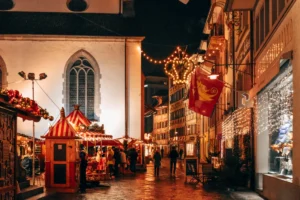
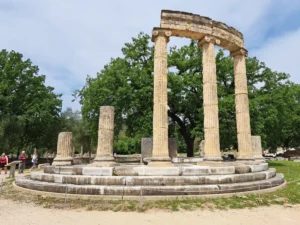
His recent visits to cities like Seville, Spain, and various locales in Greece, serve as case studies for this new approach. Instead of seeking "summit moments" or high-adrenaline activities, he has focused on observational travel: sitting in local cafes, engaging in spontaneous conversations with residents, and experiencing the cultural rhythms of daily life without the need for a documented outcome.
Broader Impact and Industry Trends
The transition Huxley is navigating reflects a wider maturation in the travel industry. The "Backpacker" culture of the late 20th and early 21st centuries, often characterized by the "ticking off" of countries and landmarks, is being superseded by a focus on quality and duration.

Industry analysts observe that this shift has several, often positive, outcomes:
- Sustainable Tourism: By spending more time in one location, travelers rely more on local services and less on high-frequency, carbon-intensive transport.
- Cultural Exchange: Slower travel allows for more authentic, less superficial interactions between tourists and host communities, reducing the friction often caused by "over-tourism."
- Mental Health Benefits: The removal of an itinerary-based approach has been linked to lower cortisol levels and higher subjective well-being in long-term travelers.
Official Perspectives and Future Directions
While Huxley acknowledges that he is not entirely finished with the more rigorous, adventurous style of travel that defined his younger years, he emphasizes that the "need" to conquer distance has been replaced by a "need" to observe depth. His journey serves as a poignant reminder that travel is not a static hobby, but a dynamic, evolving relationship between the individual and the world.
From a sociological perspective, this transition signifies a move toward "intentional living." The act of traveling slowly, or with a reduced agenda, is increasingly viewed as an antidote to the "hustle culture" that dominates many professional sectors. By sharing this transition publicly, Huxley is effectively setting a new standard for his audience: that travel’s value is found not in the quantity of countries visited or the difficulty of the terrain conquered, but in the individual’s capacity to be present within their own life.
In conclusion, Michael Huxley’s shift represents a significant, if personal, evolution in travel philosophy. As he continues to document his recovery and his re-entry into the global community, his work provides a roadmap for those looking to reclaim the simplicity and wonder of travel. His story underscores the fact that while the body may change and the capacity for physical exertion may fluctuate, the fundamental human drive to explore remains constant—provided we allow ourselves the grace to experience it on our own terms.

For the travel industry, this underscores a shifting market expectation. Future travelers will likely seek out destinations and experiences that facilitate deep, meaningful connection rather than simple accumulation of sights. As the industry moves forward, the "Slow Travel" model, pioneered by practitioners like Huxley, may well become the standard for the next generation of global citizens.