How Affordable Optical Snoots Are Transforming Creative Studio Lighting for Photographers and Videographers

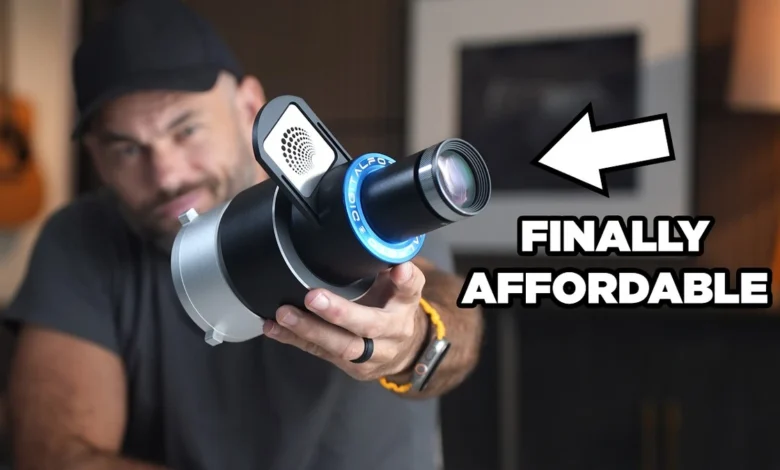
The recent integration of dark acoustic paneling into modern home offices and content creation studios has inadvertently introduced a distinct set of illumination challenges for digital creators. As creators increasingly prioritize sound dampening to achieve broadcast-quality audio, they often find themselves contending with light-absorbing backgrounds that swallow ambient illumination. This exact spatial dilemma recently spurred a broader industry examination of studio lighting accessories, most notably the unexpected democratization of optical snoots and projection spotlights. Once considered a luxury reserved for high-end commercial photo shoots with expansive budgets, optical snoots have undergone a dramatic pricing and accessibility shift, fundamentally changing how independent creators shape and direct light.
The Physics of Light Projection and the Limitations of DIY Solutions
To understand the industry significance of accessible optical snoots, one must examine the optical physics governing projected light. For decades, independent photographers and videographers attempted to bypass the high cost of professional projection systems by employing rudimentary do-it-yourself methods. The most common approach involved cutting custom shapes or patterns out of cardboard, foam board, or cardstock and positioning the makeshift stencil between a continuous light source and the subject or background wall.
However, optical principles dictate that a simple cutout placed freely in front of a light source fails to produce a crisp, well-defined silhouette or pattern. Without precise lens focusing, light scatters diffraction-wise, causing edges to blur and intricate details to dissolve into an indistinct gradient. Achieving a sharp, high-contrast projection requires a dedicated optical system—commonly known as a gobo (derived from "goes before optics") projector or optical snoot—which utilizes a condenser lens and a secondary focusing lens to capture the light passing through a stenciled metal or glass pattern and project it sharply onto a distant surface.
Historically, this level of optical precision demanded heavy, specialized manufacturing processes, keeping equipment costs prohibitively high for hobbyists and mid-tier professionals. Cinematic lighting brands held a near-monopoly on these systems, pricing entry-level projection attachments well out of reach for individual creators working out of home studios.
The Historical Evolution and Market Disruption of Projection Spotlights
The trajectory of optical projection attachments in professional photography began to shift significantly in the late 2010s and early 2020s. Established lighting manufacturers recognized a growing demand from content creators for advanced cinematic techniques scaled down for smaller studio footprints. Brands such as Westcott introduced pioneering mid-tier options like the Westcott Optical Spot, which successfully bridged the gap between ultra-expensive cinema gear and consumer-grade modifiers.
Despite these iterative advancements, price points remained a substantial barrier to entry, frequently hovering in the several-hundred-dollar range excluding the mandatory strobe or continuous light fixture. The landscape shifted dramatically over the past twenty-four months as manufacturing efficiencies, competitive market pressures, and the proliferation of standard Bowens mounting systems allowed third-party engineering firms to scale production. Today, specialized optical snoots are entering the marketplace at a fraction of their historical cost, with functional, high-performing units now available to consumers for roughly one hundred dollars.
Technical Innovations in Budget-Friendly Studio Equipment
The introduction of budget-conscious optical snoots, exemplified by market offerings such as the DigitalFoto FS-100S, illustrates how engineering innovations are trickling down to consumer-grade price points without sacrificing essential utility. Priced at approximately $108, units of this class utilize standard Bowens mounts, ensuring compatibility with a vast ecosystem of studio strobes and continuous LED monolights commonly found in modern content creation setups.
Beyond mere affordability, recent iterations introduce practical workflow solutions to long-standing ergonomic hurdles associated with projection modifiers. Traditional optical snoots operate under intense thermal stress, absorbing high levels of heat from powerful modeling lamps or continuous LED arrays. Consequently, metal gobo inserts become exceptionally hot during operation. In legacy systems, changing a projected pattern required halting production, powering down the light fixture, and waiting a considerable length of time for the metal insert to cool sufficiently before handling.
Modern designs mitigate this workflow bottleneck through magnetic, multi-slot gobo retention systems. By allowing a secondary gobo to sit in an integrated cooling chamber directly above or below the active light path, operators can cycle through patterns efficiently. While one pattern projects onto the background, the standby insert stabilizes in temperature, enabling rapid, continuous swaps without thermal delays.
Engineering Compromises and Market Segmentation
Despite the impressive performance-to-price ratio of entry-level optical snoots, industry analysts and technical reviewers emphasize that lower-cost units require specific engineering compromises. The most notable limitation among sub-$150 projection spotlights is the absence of an integrated optical zoom mechanism.
In professional-grade systems offered by manufacturers like Godox (such as the Godox BLP) or high-end cinema lighting brands, internal lens configurations allow the user to expand or contract the projected image size without physically moving the entire light fixture relative to the target surface. Budget-tier units typically feature fixed-lens designs, meaning that adjusting the scale of a projected light pattern requires physically repositioning the heavy light stand forward or backward within the studio space.
For fixed installations—such as illuminating a dedicated accent wall behind a creator’s desk—a fixed-throw optical snoot presents virtually no operational drawback. However, commercial photographers and dynamic television studios requiring rapid, on-the-fly scaling flexibility may still find higher-end, variable-zoom projection systems to be a necessary investment.
Compatibility Across Lighting Ecosystems and Industry Implications
The versatility of modern optical snoots extends to their compatibility across various lighting modalities. While traditionally paired with continuous LED "hot lights" for video production and real-time background styling, these projection modifiers integrate seamlessly with studio strobe units. Provided the flash unit utilizes the universally adopted Bowens mount configuration, photographers can leverage the high output of flash tubes to freeze motion or achieve narrow apertures within portraiture and commercial product photography.
Industry observers note that the democratization of optical snoots signals a broader trend within the photographic equipment sector. As production technologies mature, tools once confined to high-budget Hollywood sets or commercial advertising studios are rapidly becoming standard consumer commodities. This accessibility empowers independent creators to elevate their production values, utilizing cinematic shadowplay, geometric background textures, and precise spotlighting to differentiate their visual content in an increasingly saturated digital media landscape.
Complementary Studio Infrastructure and Data Security Considerations
As independent studios expand their technical capabilities with advanced lighting modifiers, creators must simultaneously address the underlying infrastructure supporting their digital output. The accumulation of high-resolution video footage, multi-track audio files, and high-bitrate photographs places extraordinary demands on local and network-attached storage (NAS) systems.
Industry data underscores the vulnerability of digital archives within creative workflows. Hardware failures, electrical surges, and mechanical degradation of traditional hard disk drives pose constant threats to irreplaceable client projects and historical media assets. In the event of catastrophic storage failure—such as a compromised RAID array in a multi-bay NAS or legacy external drives—professional data recovery services play a critical critical role in business continuity. Organizations specializing in advanced data retrieval, such as SalvageData, frequently report intervening in complex recovery scenarios involving failed enterprise storage systems and legacy wedding photography archives, underscoring the necessity of robust, multi-tiered backup strategies alongside physical studio investments.
Broader Economic and Creative Impact on Content Creation
The convergence of affordable optical lighting modifiers and accessible storage recovery solutions highlights a maturing era for independent media production. No longer restricted by prohibitive capital expenditure requirements, individual creators can experiment with sophisticated visual techniques that were economically unfeasible just a decade ago. As manufacturers continue to refine optical performance and lower production costs, tools like the optical snoot are transitioning from niche specialty items into foundational components of the modern digital creator’s toolkit.