Learning to Travel Again: A Shift in Perspective Following a Life-Altering Health Crisis

For nearly three decades, Michael Huxley, a prominent figure in the independent travel community and the founder of the long-running platform Bemused Backpacker, has championed the philosophy of "seizing the moment." Having spent his career advocating for the urgency of exploration, Huxley’s work has centered on the premise that life is fleeting and that travel—rather than being a luxury to be deferred—is a fundamental component of a life well-lived. However, a recent, severe health crisis has fundamentally altered his approach to the world, marking a transition from high-intensity, career-focused exploration to a philosophy of "slow travel."
The Chronology of a Life-Changing Event
Huxley’s career in travel writing and international advocacy was built on the foundation of his background as a nurse, specializing in emergency and tropical medicine. Over 25 years, he visited more than 150 countries, often prioritizing rugged, adventurous, and physically demanding environments. His professional trajectory was defined by an unrelenting pace, driven by the dual pressures of maintaining a successful digital platform and a genuine, insatiable curiosity for the unknown.

The turning point occurred recently when a sudden, serious illness necessitated a prolonged period of medical recovery. This period of incapacitation served as a forced pause, effectively halting the momentum that had defined his adult life. For a seasoned traveler who equated movement with existence, the recovery process provided an unexpected, forced transition from the external, high-stakes world of content creation back to an internal, introspective reality. This shift challenged his established identity as a "backpacker" who measured success by mountains climbed, borders crossed, and the logistical challenges overcome.
The Evolution of Travel Philosophy
In the wake of his recovery, Huxley has begun to distance himself from the traditional, content-driven model of travel that dominates the digital landscape. Historically, professional travel blogging has demanded a constant cycle of consumption and documentation. The act of visiting a location often carries the secondary, implicit requirement of transforming that experience into a "product"—photographs, articles, or social media campaigns.
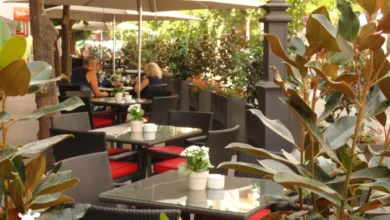
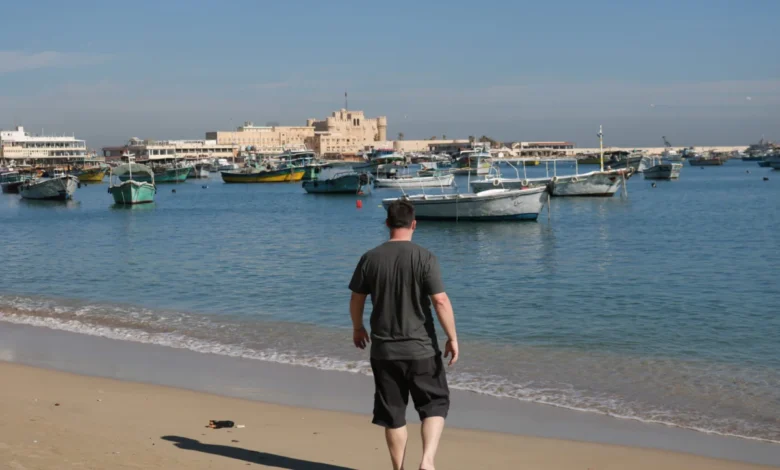
Huxley’s recent experiences, specifically in cities such as Seville, Spain, and various locations in Greece, highlight a shift toward "slow travel." This movement emphasizes quality of engagement over the quantity of locations visited. Unlike his previous travel style, which involved logistical endurance and physical exertion, his current approach prioritizes:

- Intentional Presence: Engaging with local cultures without the immediate compulsion to document or monetize the moment.
- Reduced Pacing: Allowing for extended periods in single locations, facilitating a deeper understanding of local customs and community dynamics.
- Decoupling Experience from Output: Learning to appreciate environments as they exist, rather than viewing them through the lens of potential creative assets.
Supporting Data and Industry Context
The travel industry has seen a measurable shift in post-pandemic consumer behavior, with a growing segment of travelers moving away from "bucket-list" tourism toward sustainable, slow travel. According to industry analysis, the rise of "slow tourism" is driven by a desire for deeper connection and the mitigation of burnout, a phenomenon that has increasingly affected both travelers and professional content creators.
Psychological studies on the "traveler’s mindset" suggest that the act of constant documentation can interfere with memory consolidation. When an individual focuses on capturing a moment for external consumption, the brain’s ability to store the emotional and sensory details of that experience is often diminished. By stepping back from the demands of "content creation," Huxley is aligning his current practice with the principles of mindful travel, which aim to enhance personal well-being and cultural appreciation.
Clinical and Professional Perspectives
Huxley’s background as a former nurse provides a unique, evidence-based perspective on the fragility of life. In his professional analysis, he has frequently observed the "regret cycle" common among patients in end-of-life care. Research into patient feedback in palliative and hospice settings consistently shows that the most frequent regrets are not related to actions taken, but to opportunities deferred or social and personal connections neglected in favor of professional obligations.

By reflecting on his own illness, Huxley has effectively conducted an audit of his life’s mission. His conclusion—that he had indeed lived the life he advised others to pursue—has provided him with a sense of closure, yet it has also spurred a new, more refined hunger for life. This suggests that the "reckoning" experienced by individuals who face significant health challenges often leads to a recalibration of values, prioritizing internal fulfillment over external validation.
Broader Implications and Future Outlook
The implications of Huxley’s pivot are significant for both the digital travel industry and the broader discourse on health and lifestyle. As a veteran of the industry, his transition signals a potential trend among senior travel professionals who are beginning to prioritize longevity and mental health over the relentless demands of the attention economy.
His ongoing recovery process serves as a case study in the necessity of adapting to changing physical and mental realities. The "old" version of his travel, characterized by the physical endurance required for mountain climbing or jungle trekking, has been superseded by a more patient and deliberate engagement with the world. This is not a cessation of travel, but rather a maturation of the practice.

For his audience, this shift offers a reminder that travel is not a monolithic activity defined by physical prowess or the number of countries visited. Instead, it is a malleable practice that can—and perhaps should—evolve in tandem with one’s personal circumstances.
Conclusion
Michael Huxley’s return to travel is marked by a deliberate departure from his previous professional habits. By prioritizing the "ordinary magic" of daily life—such as observing local coffee culture or enjoying spontaneous community events—he is redefining the purpose of his journeys. The transition from an active, performance-based travel style to a slower, more observational approach reflects a broader, more sustainable philosophy.
As he continues to document this evolution, the focus remains on the intrinsic value of the experience itself. In an era where digital presence often supersedes physical reality, Huxley’s journey highlights the profound, healing potential of simply being present in the world. Whether or not he returns to the high-intensity travel of his youth is, as he acknowledges, secondary to the realization that he is now moving through the world with greater intentionality, patience, and appreciation for the fragility and beauty of his current, changed reality. This approach offers a compelling model for travelers who find themselves at a crossroads, suggesting that the most meaningful journeys are not always the ones that take us furthest, but the ones that allow us to arrive, fully, at our current destination.
Related posts: