Stepping Back in Time: The Historic Transformation of New Zealand’s Brewer’s Night Inn and the Gold Rush Revival of Reefton

The evolution of modern travel reflects a distinct shift from rapid, checklist-driven city-hopping toward deliberate, slower-paced immersions in localized history and culture. Nowhere is this transition more evident than on the rugged West Coast of New Zealand’s South Island, a region defined by its dramatic landscapes, rich industrial heritage, and small, resilient communities. At the center of this cultural and tourism renaissance is the Brewer’s Night Inn, a meticulously restored 1870s heritage property located in the historic inland town of Reefton. Once home to legendary New Zealand brewer Stewart Monteith, the transformed cabin serves as both a luxury boutique retreat and a physical archive of the nation’s nineteenth-century gold mining epoch.

Main Facts and Architectural Preservation
The Brewer’s Night Inn represents a bridge between nineteenth-century industrial architecture and contemporary hospitality. Originally constructed during the height of the West Coast gold rushes, the structure has undergone a comprehensive, period-sensitive restoration led by local developer and host Tim. The design philosophy centers on authenticity, utilizing historical building materials and interior elements that mirror the aesthetic of a nineteenth-century mining camp while incorporating modern comforts.

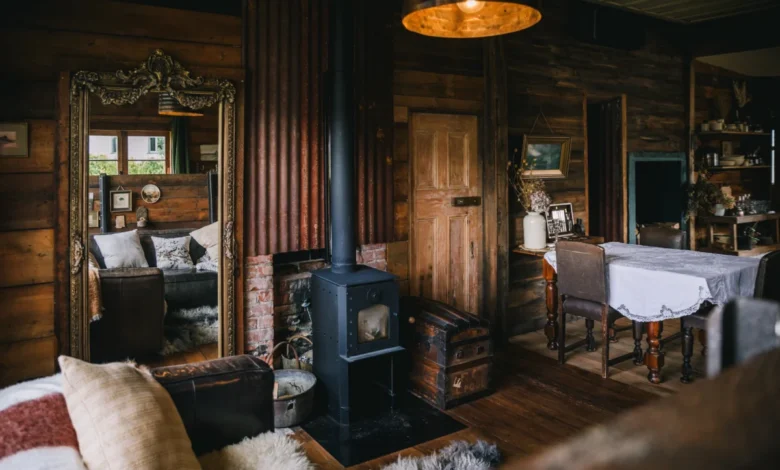
Key architectural and interior features include historic Rimu timber walls lined with authentic period newsprint and vintage wallpaper, copper furnishings, a large concrete soaking tub, and custom lighting. The property also houses a dedicated music room featuring a century-old West Coast piano, a turntable, and a curated vinyl collection. Despite its Victorian-era aesthetic, the accommodation operates as an exclusive-use private getaway rather than a shared guest house, catering to travelers seeking isolation and historical immersion.
Chronology of the West Coast Gold Rush and Reefton’s Rise

The historical significance of Reefton and the broader West Coast is rooted in a concentrated period of frenetic economic expansion and population growth that fundamentally altered New Zealand’s demographics.
The chronology of settlement and industrial development in the region unfolded across several key milestones:

- 1864–1867: The initial discovery of gold triggered a mass migration to the West Coast, drawing thousands of domestic and international prospectors. During this period, settlements appeared overnight. By 1866, Hokitika emerged as New Zealand’s largest settlement, boasting a population exceeding 25,000 residents and more than 100 licensed pubs—a stark contrast to its contemporary population and infrastructure.
- 1870: The discovery of the first quartz reefs bearing gold in the interior of the West Coast gave rise to the settlement originally dubbed "Reef Town," which later became known as Reefton. Unlike alluvial gold mining, quartz reef mining required heavy machinery, capital investment, and permanent infrastructure, leading to a more stable, industrialized community.
- August 4, 1888: Reefton achieved a major technological milestone by becoming the first town in New Zealand—and the entire Southern Hemisphere—to supply a public electricity supply from a hydro-electric plant. This innovation earned the settlement the moniker "Town of Light," predating electric street lighting in many major global cities.
- Late 19th to Early 20th Century: As mineral extraction peaked and subsequently declined due to the exhaustion of easily accessible ore veins, Reefton’s population contracted significantly, following a trajectory common among historic mining hubs globally.
Supporting Data and Demographic Shifts
The demographic landscape of the West Coast highlights the dramatic scale of historical migration versus contemporary realities. During the peak of the 1860s gold rushes, regional settlements supported tens of thousands of residents within tight geographic corridors. Today, the entire West Coast region maintains a sparse population of approximately 32,000 residents, with Reefton accounting for fewer than 1,000 permanent inhabitants.

This low population density has shielded the area from the pressures of mass tourism, preserving its historical integrity and natural environment. Economic data from regional development agencies indicate a growing reliance on domestic tourism, niche heritage preservation, and artisanal manufacturing to stabilize the local economy. Projects such as the establishment of boutique distilleries and heritage accommodations have diversified employment opportunities beyond traditional forestry and mining sectors.
Community Impact and Regional Renaissance

In recent years, Reefton has experienced a measured economic and cultural revival driven by adaptive reuse initiatives and community-led investment. Local enterprises have capitalized on the town’s distinct heritage, leveraging historical narratives to attract travelers interested in slow tourism.
A prominent example of this localized revitalization is the Reefton Distillery Co., which launched through a successful crowdfunding campaign to establish a manufacturing presence in the historic town center. The distillery’s flagship product, Little Biddy Gin, pays direct homage to Bridget Goodwin, a renowned historical figure known as a tenacious, four-foot-tall gold prospector of the nineteenth century.

Initiatives like the Brewer’s Night Inn and local artisanal ventures reflect a broader strategy among West Coast stakeholders to transform historic industrial liabilities into cultural assets. By maintaining strict architectural guidelines and emphasizing the region’s unique past—ranging from early electrification to legendary brewing figures—the community has created a sustainable tourism model that respects the environment and the local heritage.
Broader Implications for New Zealand Tourism

The resurgence of inland West Coast destinations underscores a wider trend in post-pandemic global travel: the decentralization of tourism away from major metropolitan centers and heavily congested national parks toward secondary and tertiary historical regions.
Analysts note that investments in high-end, low-impact accommodations—such as private heritage cabins equipped with modern amenities—cater to a growing demographic of travelers seeking digital disconnection and cultural depth. Furthermore, pet-friendly and self-contained tourism models address changing consumer preferences for privacy and autonomy.

As New Zealand continues to market its regions through narratives of sustainability, heritage, and authentic local engagement, towns like Reefton offer a case study in how small communities can leverage their historical legacy to secure economic resilience without compromising their cultural identity.