Sony a7R VI Review: How the First Stacked Sensor Redefines High-Resolution Mirrorless Photography

The mirrorless camera market has long demanded a delicate balance between absolute resolution and high-speed processing capabilities. For a decade, Sony’s distinguished a7R lineage has anchored the high-resolution landscape, serving as a primary tool for commercial portraiture, high-end fashion, and wedding documentation. Yet, despite commanding a loyal professional following, successive iterations of the a7R body frequently necessitated operational compromises. Photographers routinely traded sensor readout speeds, electronic shutter reliability, or robust video performance in exchange for massive megapixel counts.
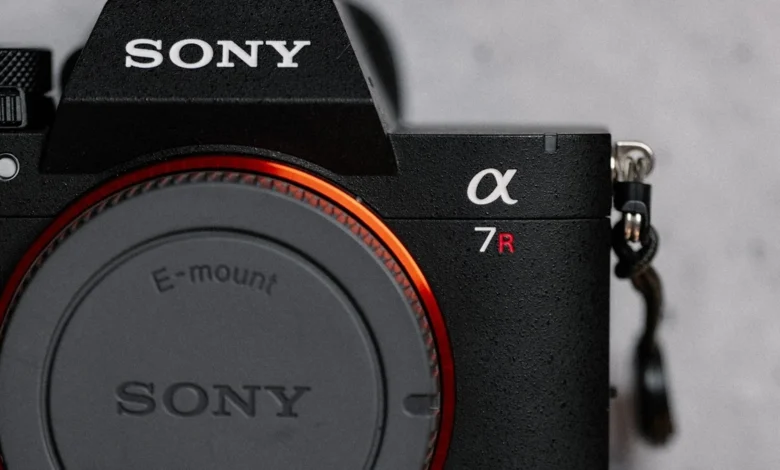
With the introduction of the Sony a7R VI, priced at an MSRP of $4,500, Sony has systematically addressed these historical constraints. By integrating a fully stacked sensor into its flagship high-resolution chassis for the first time, the manufacturer has fundamentally altered the operational parameters of high-megapixel imaging. This architectural shift recalibrates exposure strategies, expands the viability of silent electronic shutters, and bridges the historical gap between uncompromising still photography and professional-grade cinema production.
Evolution of the a7R Series: A Decade of High-Resolution Dominance
To contextualize the engineering leap represented by the a7R VI, one must examine the decade-long trajectory of Sony’s high-resolution mirrorless division. Launched in an era when digital camera manufacturers were locked in a relentless pursuit of pixel density, the a7R line quickly established a reputation for extracting extraordinary micro-detail from static scenes. However, early models like the a7R II and a7R III were plagued by sluggish mechanical operations, pronounced rolling shutter artifacts during electronic shooting, and limited processing power that restricted burst rates and video utility.
By the time the Sony a7R V debuted, the camera boasted an impressive 61-megapixel sensor bolstered by advanced dedicated artificial intelligence processing units for subject tracking. While the a7R V excelled in autofocus tenacity and menu design, it retained a traditional, non-stacked sensor architecture. Consequently, high-resolution readout speeds remained a bottleneck, preventing professionals from utilizing the silent electronic shutter for fast-paced action without risking severe geometric distortion.
The a7R VI arrives at a juncture where the broader camera industry has spent several years aggressively eliminating mechanical shutters in favor of high-speed electronic alternatives. In 2021, Nikon eliminated the mechanical shutter entirely with the flagship Nikon Z9, betting that lightning-fast sensor readout speeds could govern every photographic scenario. Canon followed suit in 2024 by embedding a stacked sensor into the 45-megapixel EOS R5 Mark II, while Sony itself demonstrated the pinnacle of this technology with the global shutter system in the specialized a9 III. The introduction of the a7R VI confirms that stacked sensor technology is no longer exclusive to sports-centric, lower-resolution bodies; it has officially claimed the high-resolution throne.
Resolution Gains and Dynamic Range Breakthroughs
In terms of raw pixel count, the a7R VI represents an evolutionary step rather than a revolutionary leap. The sensor resolution moves moderately from 61 megapixels to 66.8 megapixels. According to industry analyses and field tests conducted by veteran Miami-based portrait photographer Alex Barrera—who has utilized nearly every iteration of the a7R system since the second generation—the true value of the a7R VI lies not in the nominal addition of five megapixels, but in the exponential improvements in readout speed and dynamic range latitude.
Barrera notes that the dynamic range delivered by the a7R VI’s new stacked architecture now matches, and in certain controlled lighting conditions exceeds, the performance of traditional digital medium format systems. This expanded latitude fundamentally modifies professional fieldwork. For years, standard professional practice with high-resolution sensors dictated deliberate underexposure by approximately one full stop to safeguard volatile highlights, followed by aggressive shadow recovery in post-processing pipelines. This workflow often meant that image previews shown to clients on the rear LCD appeared unnaturally dark and muddy.
With the a7R VI, the sensor’s advanced photon-collection capabilities and superior tonal graduation allow photographers to execute normal exposures while effortlessly retaining highlight details. Consequently, the in-camera preview accurately reflects the final artistic intent, streamlining communication between photographer and subject during live tethered or untethered shoots.
The Practical Liberation of the Electronic Shutter
One of the most consequential engineering achievements of the a7R VI’s stacked sensor is the drastic mitigation of rolling shutter distortion. On previous models like the a7R V, employing the silent electronic shutter meant that any sudden movement within the frame—or any rapid panning of the camera body—would introduce severe gelatin or skew effects, rendering professional files unusable for active environments.
Because the new sensor reads out data at a fraction of the time required by its predecessors, the electronic shutter transitions from a specialized, high-risk option to a reliable, default operational mode. Field evaluations indicate that rolling shutter artifacts are now virtually non-existent during normal portraiture, wedding ceremonies, and street documentation, appearing only under extreme conditions such as tracking a high-speed golf swing or a baseball pitch. Professionals can now capture 66.8-megapixel imagery at burst rates up to 30 frames per second in complete silence, expanding the camera’s utility into sensitive environments such as intimate wedding vows, theatrical performances, and quiet corporate boardrooms.
Advanced Color Science and AI-Driven White Balance
Beyond raw technical metrics, the a7R VI benefits from the latest generation of Sony color science, which began rolling out with the a7 V. Historically, Sony raw files possessed a reputation among commercial retouchers for requiring more intricate color grading and white balance correction than competing systems from Leica or Nikon.
The newest sensor generation alters this dynamic significantly. Skin tones emerge from the camera with a refined, near-finished quality that dramatically reduces post-processing hours. Many standard portrait files require minimal intervention—often described by field testers as requiring little more than a single adjustment click to achieve commercial viability.
Furthermore, features that initially appeared as marginal spec-sheet additions, such as AI-assisted automatic white balance, have proven exceptionally reliable in practice. Driven by advanced machine learning algorithms running on dedicated processing hardware, the camera’s auto white balance system accurately interprets mixed color temperatures and ambient lighting conditions in real-time. This eliminates the traditional reliance on manual grey cards or extensive post-shoot color balancing, ensuring that both electronic viewfinder (EVF) and LCD previews maintain high fidelity to the physical environment.
Autofocus Tenacity and the Human Element
Autofocus performance has long been a hallmark of modern Sony mirrorless bodies, but the a7R VI introduces a level of subject recognition and tracking stickiness that redefines operational trust. Utilizing deep-learning algorithms capable of recognizing human skeletal structures, animal eyes, vehicles, and insects, the tracking system maintains persistent lock even when subjects are partially obstructed or moving erratically.
This technological leap has sparked nuanced philosophical discussions within the professional community. Some photographers argue that hyper-intelligent autofocus systems remove a degree of traditional craftsmanship from the image-making process, shifting the discipline closer to automated capture. Conversely, practitioners like Barrera view the technology as a vital reliability tool that eliminates technical anxiety. By ensuring that missed focus is virtually impossible due to camera error, the system allows the photographer to concentrate entirely on lighting, composition, and psychological connection with the subject, leaving the mechanics of tracking entirely to the hardware.
Bridging the Gap: Video Performance in a High-Resolution Body
Historically, the a7R series treated video capture as a secondary feature—functional enough for occasional b-roll, but consistently hampered by hardware limitations. Slow sensor readout speeds introduced pronounced rolling shutter artifacts in video modes, forcing hybrid shooters to carry dedicated cinema bodies or lower-resolution full-frame alternatives.
The a7R VI effectively shatters this historical compromise. Thanks to the rapid data-transfer speeds of the stacked architecture, the camera’s video readout speed surpasses that of both the general-purpose Sony a7 IV and specialized cinema tools like the Sony FX2. While it may not challenge ultra-specialized, low-resolution high-speed cinema rigs, rolling shutter in video is now largely neutralized during standard handheld and tripod-mounted movements, becoming a factor only during aggressive, deliberate camera whips.
Adding to its cinematic credentials, the a7R VI introduces a sophisticated dual-gain ISO mode, operational between ISO 800 and ISO 3,200. This system intelligently combines two distinct native exposure circuits into a single file, preserving extreme dynamic range in high-contrast lighting scenarios without introducing unacceptable electronic noise. Field tests confirm that handheld footage captured natively on the a7R VI—even when paired with demanding optics such as an 85mm G Master prime lens and evaluated without auxiliary digital stabilization in post-production—exhibits remarkable stability, crisp spatial resolution, and rich tonal gradations.
Industry Implications and Market Position
At a retail price point of $4,500, the Sony a7R VI occupies an elite tier of the digital imaging market. It is engineered explicitly for commercial studios, high-end wedding photographers, and hybrid content creators who refuse to compromise between ultra-high resolution and blazing processing speeds.
The broader implications of the a7R VI’s release signal a definitive industry-wide milestone: stacked sensor technology has officially trickled down from specialized sports flagships to become the baseline expectation for flagship high-resolution systems. By resolving historical weaknesses in electronic shutter distortion, dynamic range recovery, color science, and video fidelity, Sony has effectively eliminated the traditional dichotomies that forced photographers to maintain multiple camera bodies for distinct professional tasks. As competitors continue to refine their own high-resolution offerings, the a7R VI establishes a formidable benchmark for what a modern, all-in-one professional mirrorless camera can achieve.
Related posts: