The Ultimate Photo News Fix: Sigma Teaser, Canon Macro Rumors, and the Truth Behind the Sony a7S IV

The global photography and digital imaging industry is experiencing a period of intense speculation as autumn announcements shape the gear landscape for the upcoming year. In this week’s comprehensive industry overview, major developments surrounding three of the world’s leading camera and lens manufacturers—Sigma, Canon, and Sony—have captured the attention of professionals and hobbyists alike. As manufacturers prepare for end-of-year financial quarters and crucial trade showcases, rumors and official teasers are dictating market sentiment. Industry observers are closely monitoring an impending October 24 product launch from Sigma, analyzing a controversial lens classification leak from Canon, and examining the factual reality behind rumored Sony sensor registrations that briefly set online forums abuzz.
The Sigma October 24 Announcement: Anticipation and Industry Speculation
The most immediate focal point for the photographic community centers on an official teaser released by independent lens and camera manufacturer Sigma. The company has officially scheduled a major product announcement for October 24, igniting widespread debate across digital forums, editorial outlets, and trade analysis groups regarding the nature of the upcoming hardware.
Historically, Sigma has utilized mid-autumn announcement windows to introduce high-performance art-series glass, specialized compact prime lenses, or occasionally, updates to its unique fp mirrorless camera line. However, the ambiguity of the recent teaser campaign has left analysts divided. The primary question dominating discussions is whether the Japanese manufacturer will unveil a groundbreaking new lens, an entirely new camera body, a combination of both, or an entirely unexpected piece of imaging technology.
Sigma’s recent trajectory in optical engineering has been defined by the aggressive expansion of its proprietary Contemporary, Art, and Sports lens lines for multiple mirrorless mounts, including Sony E-mount, Leica L-mount, and Fujifilm X-mount. Market analysts note that if Sigma chooses to announce a new camera body, it would mark a significant strategic pivot, as the company has not introduced a major new camera platform since the compact, modular Sigma fp and fp L models. Conversely, a high-aperture zoom or an innovative telephoto prime lens would align more closely with their recent manufacturing momentum. Competitively, Sigma’s ability to deliver exceptional optical performance at price points often lower than first-party manufacturers makes any October 24 reveal a high-stakes event for the broader interchangeable-lens camera market.
Canon Rumors and the Macro Lens Controversy
While Sigma dominates anticipation, Canon is currently navigating a wave of lukewarm reception regarding its projected product roadmap. Recent intelligence from industry tracking sites, notably Canon Rumors, indicates that an upcoming macro lens anticipated by the enthusiast community will utilize a stepping motor (STM) rather than the higher-end Ultrasonic Motor (USM) technology typically reserved for professional-grade L-series optics.
This revelation has sparked considerable dissatisfaction among macro photography purists, commercial shooters, and dedicated ecosystem users. Macro photography demands extreme precision, instantaneous autofocus tracking, and manual override capabilities that historically benefit from ring-type USM architecture or advanced dual-nano USM systems. The utilization of an STM design generally implies a lower production cost and a lighter physical footprint, suggesting that Canon is targeting entry-level to mid-tier creators rather than professional studio photographers and field specialists.
The debate highlights a broader philosophical divide in modern lens design between affordability and uncompromising professional performance. Canon’s RF mount system has expanded rapidly since its inception, yet critics frequently point to a perceived gap in affordable, high-performance specialized glass compared to the legacy EF mount catalog. The inclusion of an STM mechanism in an upcoming macro offering suggests that Canon is prioritizing market accessibility and lightweight ergonomics over the heavy-duty weather sealing and rapid autofocus response demanded by professional macro practitioners who frequently shoot moving subjects such as insects, flora, and detailed commercial products.
The Sony a7S IV Rumors: Fact Versus Fiction in Sensor Registration
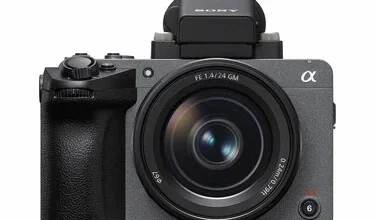
Rounding out the trifecta of major industry talking points is the persistent rumor concerning the potential development and impending release of the Sony a7S IV. The "S" series within Sony’s acclaimed Alpha lineup has long held a legendary status among videographers and low-light cinematographers, largely due to the groundbreaking performance of the 12-megapixel sensor architecture found in the Sony a7S III.
Recent online speculation suggested that a new Sony camera body had been officially registered with regulatory bodies, leading many to jump to the conclusion that the long-awaited a7S IV was finally imminent. However, rigorous fact-checking and supply-chain analysis have revealed a more nuanced reality. While sensor and device registrations do occur months ahead of commercial product rollouts, closer inspection of recent filing data indicates that the registered hardware does not point directly to a successor to the a7S III.
This clarification serves as a reminder of the volatility surrounding camera industry rumors, where standard regulatory filings are frequently misinterpreted by enthusiasts eager for generational upgrades. The a7S III, launched in 2020, set a high industry benchmark for 4K video recording, internal codecs, and dynamic range in low-light environments. Because competing manufacturers have since introduced advanced hybrid cameras capable of high-resolution 8K capture and open-gate recording, demand for an a7S IV remains high. Nevertheless, verified data confirms that consumers will likely have to exercise patience before Sony officially pulls back the curtain on its next-generation low-light video powerhouse.
Broader Implications for the Digital Imaging Market
The confluence of Sigma’s upcoming October event, Canon’s strategic lens categorization, and Sony’s regulatory pacing illustrates the complex dynamics driving the modern digital camera industry. As mirrorless systems mature, manufacturers face the dual challenge of satisfying an increasingly demanding professional base while capturing a growing demographic of content creators and hybrid shooters.
From an economic perspective, the photographic equipment sector continues to adapt to shifting global supply chains and fluctuating consumer spending habits. Manufacturers are increasingly utilizing strategic teaser campaigns and controlled leaks to maintain brand momentum and consumer interest in an era where product life cycles are extending. The decisions made by companies like Sigma, Canon, and Sony over the coming months will establish the baseline benchmarks for optical performance, sensor technology, and pricing strategies well into the subsequent fiscal year, ultimately dictating the tools available to visual storytellers worldwide.
Related posts: