The Gold Coast Travel Guide: A Comprehensive Overview of Australia’s Coastal and Hinterland Destination

The Gold Coast, located in Southeast Queensland, has solidified its reputation as one of Australia’s premier tourism hubs, attracting millions of domestic and international visitors annually. Spanning approximately 57 kilometers of coastline, the region is characterized by its high-rise urban density, extensive surf beaches, and a rapidly expanding hinterland tourism sector. For travelers planning a visit, understanding the logistical requirements, geographical diversity, and regional infrastructure is essential to navigating this multifaceted destination.

Entry Requirements and Visa Compliance
International travel to Australia is subject to strict border control regulations governed by the Department of Home Affairs. Contrary to common misconceptions regarding visa-free entry for certain nationalities, the Australian government mandates that all non-citizens, with the exception of New Zealand passport holders—who are eligible for a Special Category visa upon arrival—must obtain a valid travel authority or visa prior to departure.

The Electronic Travel Authority (ETA) is the most common authorization for short-term tourism or business visitor activities. Failure to secure this documentation before boarding a flight can result in denied boarding or significant processing delays upon arrival. Travelers are advised to complete their applications well in advance, as even minor clerical errors in passport details or biographical information can lead to rejection or extended review periods. While private third-party services like iVisa facilitate the application process, all final adjudication rests with the Australian government. Data indicates that accuracy in application submission is the primary factor in maintaining high approval rates, emphasizing the necessity for meticulous preparation.
Geographical and Urban Profile

The Gold Coast serves as a distinct transition point between the bustling metropolitan environment of Brisbane—located approximately 75 kilometers to the north—and the northern reaches of New South Wales. The region’s urban design is bifurcated into two primary experiences: the high-intensity tourist corridors of Surfers Paradise and the more subdued, residential-focused hubs of Broadbeach, Mermaid Beach, and Coolangatta.
Surfers Paradise functions as the central business and entertainment district, defined by its iconic skyline and proximity to high-density retail and nightlife venues. In contrast, suburbs like Broadbeach offer a more measured integration of urban amenities and recreational space, frequently serving as a preferred base for travelers seeking a balance between accessibility and residential tranquility. This structural variation allows the Gold Coast to cater to diverse demographics, ranging from families and retirees to international backpackers and high-net-worth leisure travelers.

The Hinterland and Environmental Diversity
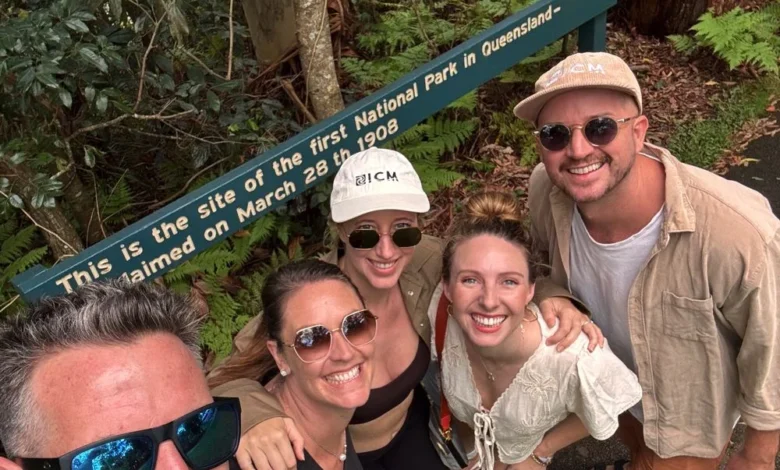
Beyond the coastal strip, the Gold Coast Hinterland—specifically the Tamborine Mountain region—offers a significant shift in environmental and economic focus. Tamborine National Park, which holds historical significance as Queensland’s first national park, provides a crucial ecological contrast to the coastal dunes. The area is marked by subtropical rainforests, basaltic mountain formations, and a micro-climate that supports viticulture, as seen in the localized wine production at sites such as Witches Falls.

The economic implications of this hinterland development are substantial. By diversifying from a purely "sun and surf" model to include ecotourism, agritourism, and wellness retreats, the Gold Coast has successfully extended the average length of stay for international tourists. The integration of the bathhouse and wellness industry, particularly in the Tallebudgera and Currumbin valleys, reflects a global shift toward health-conscious tourism, providing a sustainable revenue stream that is less dependent on seasonal beach weather.
Logistics and Transportation Analysis

The efficacy of a visit to the Gold Coast is heavily dependent on the mode of transport utilized. While the Gold Coast Light Rail (G:link) provides efficient connectivity between the northern coastal hubs and the southern central districts, its utility is limited to the shoreline.
For tourists intending to explore the regional geography, such as the Currumbin Valley or the Tamborine Mountain ranges, the procurement of a private vehicle is statistically shown to be the most efficient method of transit. Public transport connectivity to the mountainous regions is fragmented, often requiring multiple transfers and significant time investment. Consequently, the car rental industry in Southeast Queensland plays a pivotal role in the local tourism economy, facilitating access to areas that would otherwise remain isolated from the primary visitor circuit.

The Surf Economy and Coastal Management
The surf culture of the Gold Coast is not merely a recreational pursuit but a central pillar of its international brand. Locations such as Snapper Rocks, Kirra, and Rainbow Bay are world-renowned, frequently hosting professional surfing competitions that contribute significant capital to the local economy. The management of these areas involves complex environmental monitoring, including beach nourishment programs to combat coastal erosion and the maintenance of artificial reefs to optimize surf conditions.

From a sociological perspective, the surf clubs—such as the Rainbow Bay Surf Club—serve as critical community centers. These establishments, often operated as non-profit entities, provide a venue for local social cohesion and public safety through their support of Surf Life Saving Australia. For the average visitor, these clubs offer a localized experience that transcends the commercialized nature of the central hotel districts, providing a deeper insight into the regional culture.
Chronology of a Typical Visit

A standard seven-day itinerary for a first-time visitor typically follows a structured progression:
- Days 1–2: Orientation in the central coastal corridor, including Surfers Paradise and Broadbeach, focusing on coastal infrastructure and public beach accessibility.
- Days 3–4: Southern expansion into the Coolangatta and Snapper Rocks region, emphasizing the historical development of surf culture and the border dynamics between Queensland and New South Wales.
- Days 5–6: Inward migration to the Currumbin and Tallebudgera valleys, focusing on natural biodiversity, wildlife interaction, and the growing wellness sector.
- Day 7: Highland excursion to Tamborine Mountain, integrating ecological tours with the local viticulture and artisanal food industries.
Broader Economic and Social Implications

The Gold Coast’s transition from a seasonal resort town to a year-round destination has been facilitated by significant infrastructure investment, including the expansion of the Gold Coast Airport and the continued development of the light rail network. However, this growth brings challenges, particularly regarding urban sprawl and the environmental preservation of the hinterland.
Local government policies have increasingly shifted toward "smart growth" initiatives, aiming to consolidate development within existing urban footprints to protect the surrounding natural landscapes. The success of these initiatives is essential for the long-term viability of the Gold Coast as a global tourist destination. Furthermore, the reliance on tourism necessitates a delicate balance between providing a high-quality visitor experience and maintaining the quality of life for the permanent resident population, who contend with increased traffic, housing demand, and the seasonal volatility of the service sector.

Conclusion
The Gold Coast represents a sophisticated study in regional tourism diversification. By successfully leveraging its natural coastal assets while simultaneously developing its inland environmental and cultural offerings, the region has created a resilient, multifaceted product. For the informed traveler, the Gold Coast offers more than a conventional beach holiday; it provides a comprehensive experience that requires careful logistical planning, an appreciation for ecological diversity, and an understanding of the regional infrastructure that supports this complex and dynamic destination. Success for the visitor is predicated on the ability to move beyond the high-rise facades and engage with the diverse environmental and social tapestry that defines the modern Gold Coast.