Andrzej Bargiel Abandons Dhaulagiri Ski Attempt Amid Severe Weather and Unstable Conditions

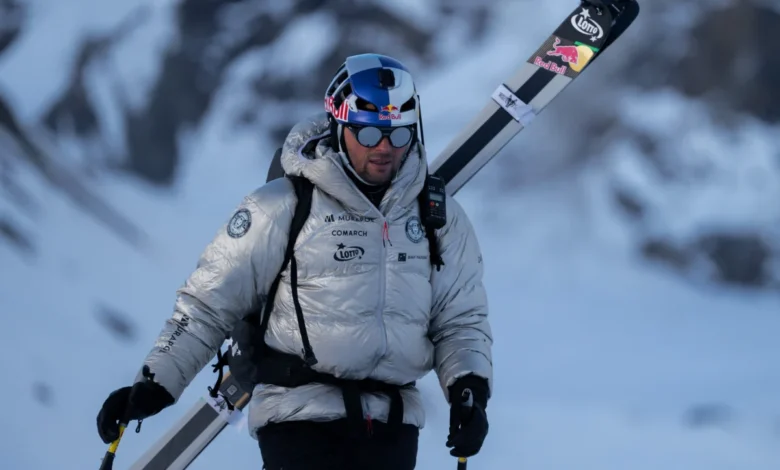
The ambition to achieve a historic ski descent of Dhaulagiri has come to a premature end this season, as world-renowned mountaineer and skier Andrzej Bargiel confirmed his withdrawal from the 8,167-meter peak. Bargiel’s decision to retreat follows a series of meteorological setbacks that have effectively shut down climbing operations across one of the most formidable mountains in the Himalayas. His departure marks the second major 8,000-meter peak this season to remain unclimbed, joining the list of mountains that have proved impassable due to extreme, late-season weather patterns.
A Chronology of the Failed Attempt
The expedition began with high hopes, supported by the logistics expertise of Seven Summit Treks. As the season progressed, the window for a successful summit push narrowed significantly. While many commercial climbing teams were forced to retreat to Base Camp early due to the absence of essential fixed ropes, Bargiel maintained his pursuit. His strategy involved a methodical ascent, keeping his exact location largely private to maintain focus, with his support team relaying progress reports periodically.
By mid-week, reports indicated that Bargiel had successfully reached Camp 2. The plan was to push for Camp 3 and attempt a summit bid, followed by a technical ski descent. However, the mountain’s temperament shifted rapidly. Throughout the latter part of the week, the upper reaches of Dhaulagiri were subjected to significant snowfall and hurricane-force winds. By yesterday evening, reports confirmed that Bargiel had abandoned his ascent and successfully descended to the safety of Base Camp.
The Impact of Meteorological Instability
The primary driver behind the mass exodus from Dhaulagiri is the high avalanche risk, a byproduct of the recent, intense weather systems. Andrzej Bargiel, in a statement released by his team, emphasized the necessity of the retreat: "Unfortunately, I had to give up on reaching the summit given the conditions we encountered. Over the past few days, we’ve had significant snowfall accompanied by extremely strong, almost hurricane-force winds, and this created a high avalanche risk, which was the main reason I decided to turn back."
This assessment aligns with the observations of the rope-fixing crews who, several days prior, had ceased their work on the mountain. The lack of fixed ropes on the upper slopes creates a dangerous environment for both professional athletes and commercial clients, effectively neutralizing the safety margin required for high-altitude mountaineering. While Bargiel noted that he enjoyed a successful ski descent from Camp 2, the reality of the mountain’s upper sections—specifically the treacherous traverse below the summit ridge and the final couloirs—remained far too volatile for a safe ascent.
Operational Challenges and Official Responses
The failure to summit Dhaulagiri has raised questions regarding the management of high-altitude expeditions. Seven Summit Treks, the outfitter responsible for the logistics on the mountain, issued a formal statement to address the mounting criticisms from the climbing community. There had been allegations that the rope-fixing team lost their motivation after major commercial clients withdrew.
Chhang Dawa Sherpa, the expedition’s director, refuted these claims, characterizing the decision to halt operations as a standard safety protocol. The outfitter maintained that the "guide’s decision" to turn around was based solely on a professional risk assessment of the mountain’s condition. By clarifying that the upper sections were deemed unsafe, the outfitter sought to pivot the narrative from one of organizational failure to one of responsible mountain management in the face of nature’s volatility.
Broader Implications for Himalayan Mountaineering
The closure of the Dhaulagiri expedition serves as a microcosm of the challenges currently facing the Himalayan climbing season. Dhaulagiri, at 8,167 meters, is one of the "White Mountains" that requires precise weather windows and stable snow conditions to navigate safely. The fact that the highest point reached by any climber this season was approximately 7,100 meters—barely above Camp 3—highlights the severity of the conditions encountered.
This outcome follows a similar trend observed on Manaslu, where a record number of expeditions were forced to abandon their plans due to excessive snowfall. The trend of "unsummited" peaks is becoming a defining characteristic of this year’s post-monsoon season. With no significant summit activity on Makalu and the absence of climbing permits for peaks like Kangchenjunga or Lhotse, the focus of the mountaineering world has shifted almost entirely away from Nepal’s highest summits.
At present, the only remaining high-profile activity in the region is a Russian team currently attempting Everest. The lack of success across the 8,000-meter range suggests that the high-altitude weather patterns in the region have been uncharacteristically aggressive, potentially signaling a shift in regional climate stability that could affect future expedition planning.
Analysis of the "Ski-Alpinism" Strategy
Andrzej Bargiel’s attempt on Dhaulagiri was not merely a climb; it was an attempt to merge elite mountaineering with high-altitude ski-alpinism. This discipline requires an even greater margin of safety than traditional climbing, as the skier must not only reach the summit but also safely navigate steep, snow-covered terrain during the descent.
When a skier of Bargiel’s caliber, known for his previous success on K2, decides that conditions are too dangerous to continue, it serves as a bellwether for the mountain’s objective danger. His decision to prioritize safety over the summit reflects a growing trend among professional mountaineers to emphasize long-term survival over the completion of a specific objective. By documenting his safe return, Bargiel continues to reinforce the importance of decision-making in extreme environments.
The Future of Dhaulagiri Expeditions
As the teams pack their gear and prepare to leave the Base Camp area, the mountain will remain silent for the remainder of the season. The failure of this year’s efforts does not diminish the status of Dhaulagiri as one of the most challenging peaks in the world, but it does highlight the increasing reliance of commercial operations on fixed infrastructure. When that infrastructure fails, or when nature makes it impossible to maintain, the entire ecosystem of the mountain’s climbing industry stalls.
For now, the focus shifts to the debriefing of these expeditions. The data gathered during the failed attempts—information on snow depth, wind speed, and avalanche frequency—will be invaluable for future planning. However, the season remains a sobering reminder that, despite advancements in forecasting and gear, the Himalayan peaks remain the final arbiters of success.
In conclusion, the retreat of Andrzej Bargiel and the subsequent closure of the Dhaulagiri season by Seven Summit Treks marks a definitive end to what was a highly anticipated attempt. While the climbing community may be disappointed by the lack of successful summits, the consensus remains that the decision to turn back was the correct one. The safety of the personnel involved in these expeditions, from the professional athletes to the high-altitude workers, remains the primary objective of any mountain operation. As the teams head home, the mountains remain, waiting for a more favorable window in the seasons to come.