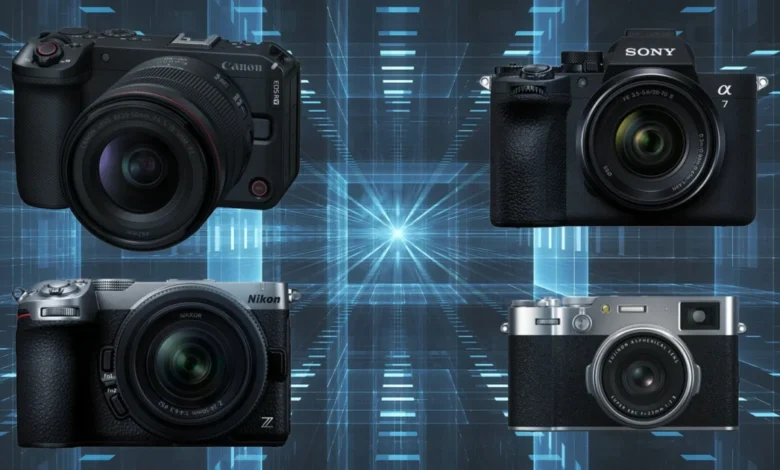
The global digital camera industry is currently navigating a period of profound transition. As the market shifts away from the high-volume, commodity-driven era of the early 2000s, the world’s four most prominent camera manufacturers are pivoting toward radically different philosophies to ensure long-term viability. A recent series of interviews conducted by the Japanese publication Nikkei has shed light on how the leadership at Canon, Nikon, Sony, and Fujifilm envisions the next decade of imaging, revealing a divergence in strategy that ranges from tactical hardware diversification to high-concept integration with artificial intelligence.
A Shifting Landscape: From Utility to Experience
The current camera market stands in stark contrast to the period between 2010 and 2015, which represented the peak of unit sales before the widespread adoption of high-end smartphone photography. According to industry data from the Camera & Imaging Products Association (CIPA), while the number of interchangeable lens cameras sold has stabilized, the industry’s revenue is increasingly derived from high-margin, professional-grade equipment rather than mass-market entry-level models.
This shift has forced manufacturers to reconsider their core value propositions. For younger consumers, who are increasingly fueling a resurgence in compact digital camera sales, the utility of a camera—namely, its raw megapixel count or burst rate—is no longer the primary driver of purchase. Instead, the "shooting experience" has become a central commodity. This demographic shift is at the heart of the latest strategic maneuvers by the "Big Four" Japanese camera giants.
Canon’s Pivot to Hybrid Workflow and Lifestyle Integration
Go Tokura, a senior executive at Canon, recently articulated a strategy that balances the company’s traditional technical prowess with a new emphasis on lifestyle-oriented imaging. Canon’s approach recognizes that the modern camera is no longer just a tool for professional photographers; it is an extension of personal expression.
Tokura noted that Canon is observing a cultural movement where younger users value the tactile, intentional process of photography over the instantaneous, automated nature of smartphone image processing. To capitalize on this, Canon is doubling down on its "V Series" lineup. This series, designed specifically for content creators and videographers, signals an attempt to bridge the gap between dedicated photography enthusiasts and the burgeoning "creator economy."
Central to Canon’s roadmap is the concept of lens versatility. The company is actively working to harmonize its optical engineering, ensuring that lenses optimized for high-end video production perform with equal efficacy during still photography. This "hybridization" is a critical response to the rise of multi-hyphenate creators who must produce both high-fidelity video and high-resolution stills within a single workflow.
Nikon’s "Smartphone Plus One" Strategy
Nikon, under the guidance of Hiroyuki Ikegami, is adopting a more pragmatic, foundational approach. Nikon’s strategy is currently defined by the transition from its flagship Z9 technology to the broader, more accessible segments of its product stack. The company acknowledges that the pace of this rollout has been deliberate, necessitated by the need to invest heavily in next-generation image processing engines and sensor architecture.
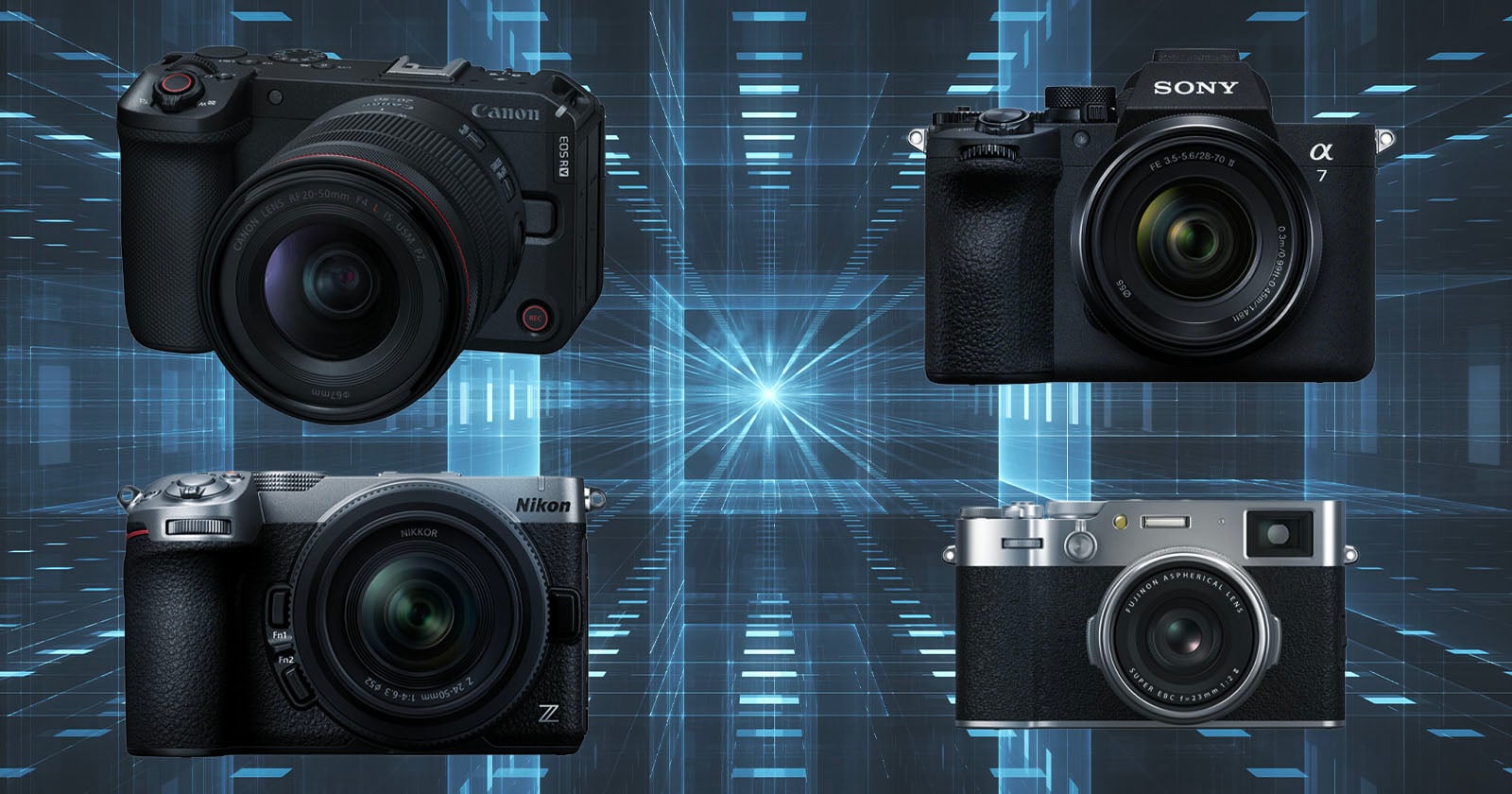
Nikon’s market positioning relies on the "smartphone + 1" philosophy. The company acknowledges that while the smartphone is the primary imaging device for most of the population, it suffers from significant hardware limitations, most notably in battery life and optical reach. Nikon aims to position its entry-to-mid-level mirrorless cameras as the essential companion device for the mobile-first generation—a tool that offers the creative control and battery longevity that smartphones simply cannot provide. By investing in these foundational technologies, Nikon is positioning itself to be the preferred choice for enthusiasts who eventually "graduate" from the limitations of their phones.
Sony and the Rise of Spatial AI
Perhaps the most ambitious vision comes from Sony, which is viewing the future of its Alpha camera series through the lens of spatial computing and AI integration. Kenji Tanaka, speaking for the company, moved the conversation beyond the traditional definitions of a camera. For Sony, the camera is merely an input device for a broader digital ecosystem.
Sony’s "Spatial AI" strategy is rooted in the creation of "digital twins"—using image sensors to map physical space and translate it into digital content that can be manipulated, simulated, or enhanced. This is a departure from the traditional capture-and-display model. Sony’s objective is to integrate the Alpha series into the entertainment industry at large, serving creators who go far beyond the conventional photographer. By treating dancers, musicians, and athletes as "creators" who require specialized imaging tools to express their craft, Sony is expanding the addressable market for its hardware into sectors that were previously tangential to the camera industry.
Fujifilm’s Emphasis on Tactile Authenticity
Fujifilm continues to occupy a distinct niche, focusing on the sensory and emotional aspects of photography. As Koji Matsumoto has emphasized, the democratization of photography through social media has led to a more discerning consumer base. This group does not simply want to capture a scene; they want to engage with the act of capturing.
Fujifilm’s success in recent years can be attributed to its commitment to the analog aesthetic—dials, physical controls, and proprietary color science that mimics the look and feel of film stock. For Fujifilm, AI is a tool for automation, but it cannot replicate the "subjective sense of feeling" that a photographer experiences when they are physically connected to their equipment. The company’s marketing strategy centers on hands-on experiences, retail engagement, and the celebration of the camera as an instrument of artistic intent.
The Broader Implications: A Multi-Polar Future
The divergence in these strategies reveals a maturing industry that is no longer trying to beat the smartphone at its own game. Instead, the manufacturers are defining what the smartphone is not.
- Hardware as a Service: Sony’s focus on spatial recognition indicates that cameras will increasingly become data-gathering nodes for digital content creation rather than just standalone image capture devices.
- The Hybridization of Skills: Canon’s focus on the "V Series" and dual-purpose lenses acknowledges that the barrier between professional cinematography and amateur vlogging is dissolving.
- Tactile Differentiation: Fujifilm and, to an extent, the retro-inspired designs of other manufacturers, suggest that as digital images become more synthetic and AI-generated, the "real-world" experience of using a physical camera will become a luxury good.
- The Infrastructure Phase: Nikon’s emphasis on "laying foundations" highlights that the camera industry is currently in a capital-intensive phase, where research and development into proprietary sensor and processing technology is the only way to remain competitive against the massive scale of smartphone manufacturers like Apple and Samsung.
Conclusion: The Future of the Shutter
The path forward for the imaging industry is not a monolith. While Sony pursues a future of integrated AI and spatial data, Fujifilm is betting on the enduring human desire for tactile, analog experiences. Canon and Nikon represent the middle ground, focusing on the evolution of the hybrid workflow and the necessity of high-performance gear that augments, rather than replaces, the modern smartphone.
As these companies continue to invest in their respective visions, the end user stands to benefit from a highly fragmented, specialized market. Whether one seeks the high-tech precision of a spatial sensor, the ergonomic joy of a tactile dial, or the versatility of a hybrid video-stills powerhouse, the future of photography is less about the hardware itself and more about the diverse ways in which individuals choose to engage with the world around them. The "death of the camera" narrative, popular a decade ago, has been soundly replaced by a new reality: the camera is evolving into a more specialized, intentional, and diverse tool than ever before.