Unearthing Culinary Heritage at Nasi Lemak Tanglin: A Landmark of Malaysian Gastronomy in Kuala Lumpur

The culinary landscape of Southeast Asia is anchored by iconic dishes that reflect the complex cultural tapestries of their regions, and few preparations hold as prominent a place in the national consciousness of Malaysia as nasi lemak. Often heralded as Malaysia’s national dish, this seemingly humble pairing of coconut-infused rice and assertive accompaniments is a daily staple for tens of millions across the Malay Peninsula, spilling over borders into southern Thailand and Singapore. Within the bustling capital of Kuala Lumpur, few institutions have championed this tradition with the longevity and precision of Nasi Lemak Tanglin. Operating continuously since 1948, this landmark stall at the Kompleks Makan Tanglin represents a living archive of post-war Malaysian culinary history, drawing daily queues that test the resolve of locals and international gastronomes alike.
Historical Evolution and Cultural Significance
To understand the enduring appeal of Nasi Lemak Tanglin, one must examine the socio-historical context of the dish itself. Originating as a nutrient-dense, field-side meal for Malay farmers, traditional nasi lemak—literally translating to "fat rice"—relies on the meticulous steeping of rice in rich coconut milk, punctuated by the distinct, grassy aromatics of pandan leaves. The baseline composition is intentionally sparse, historically engineered to provide sustained energy through salted fish, roasted peanuts, crisp cucumber slices, and a hard-boiled egg. The unifying element is the sambal, a labor-intensive chili paste that balances heat, sweetness, and umami.
Founded in the wake of the Second World War in 1948, Nasi Lemak Tanglin emerged during a formative period for Malaysia’s urban food culture. Hawker centers and communal food complexes began formalizing the street food economy, transitioning mobile vendors into semi-permanent neighborhood anchors. Over more than seven decades of continuous operation, Tanglin has maintained its foundational recipes while adapting to the shifting demographics and expanding palates of Kuala Lumpur’s cosmopolitan populace. The stall’s longevity is a testament to the resilience of traditional hawker heritage in the face of rapid modernization and corporate fast-food expansion.
Operational Dynamics and Daily Chronology
The rhythm of a morning at Kompleks Makan Tanglin is strictly calibrated. Operations commence daily at 7:00 AM, drawing a steady stream of early risers, office workers, and culinary tourists. By mid-morning, the surrounding parking infrastructure experiences peak congestion, frequently requiring multiple rotations for incoming vehicles as the venue fills to capacity.
Despite the installation of weather-mitigating awnings to shelter patrons from tropical downpours and intense midday sun, seating remains a coveted commodity. The operational ethos of the stall is defined by a strict supply-and-demand reality: preparation quantities are fixed daily, and ingredients routinely exhaust themselves well ahead of the official 1:00 PM closing time, with sell-outs frequently occurring as early as 11:30 AM. This rapid turnover ensures absolute freshness, eliminating the stagnation of prepared proteins and gravies.

The atmosphere during peak operating hours is distinctly atmospheric, often accompanied by the live performance of "Pop Yeh Yeh"—a uniquely regional genre of Malay pop and psychedelic rock popular during the 1960s. This cultural auditory backdrop bridges generational divides, framing the dining experience as a celebration of local heritage rather than a purely transactional meal.
Gastronomic Architecture and Ordering Protocol
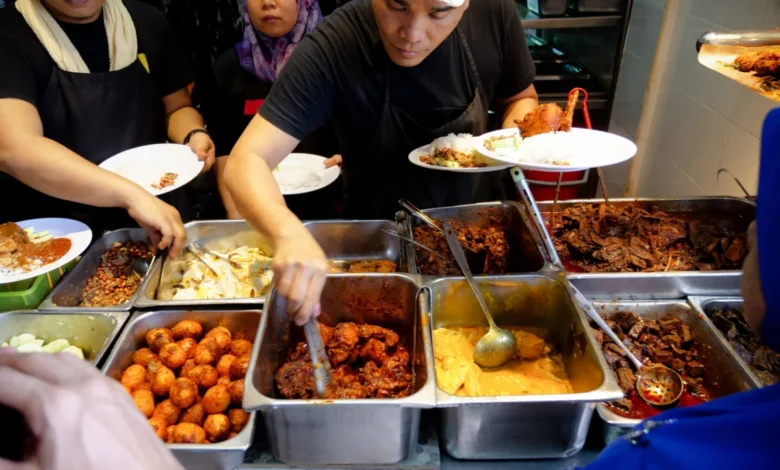
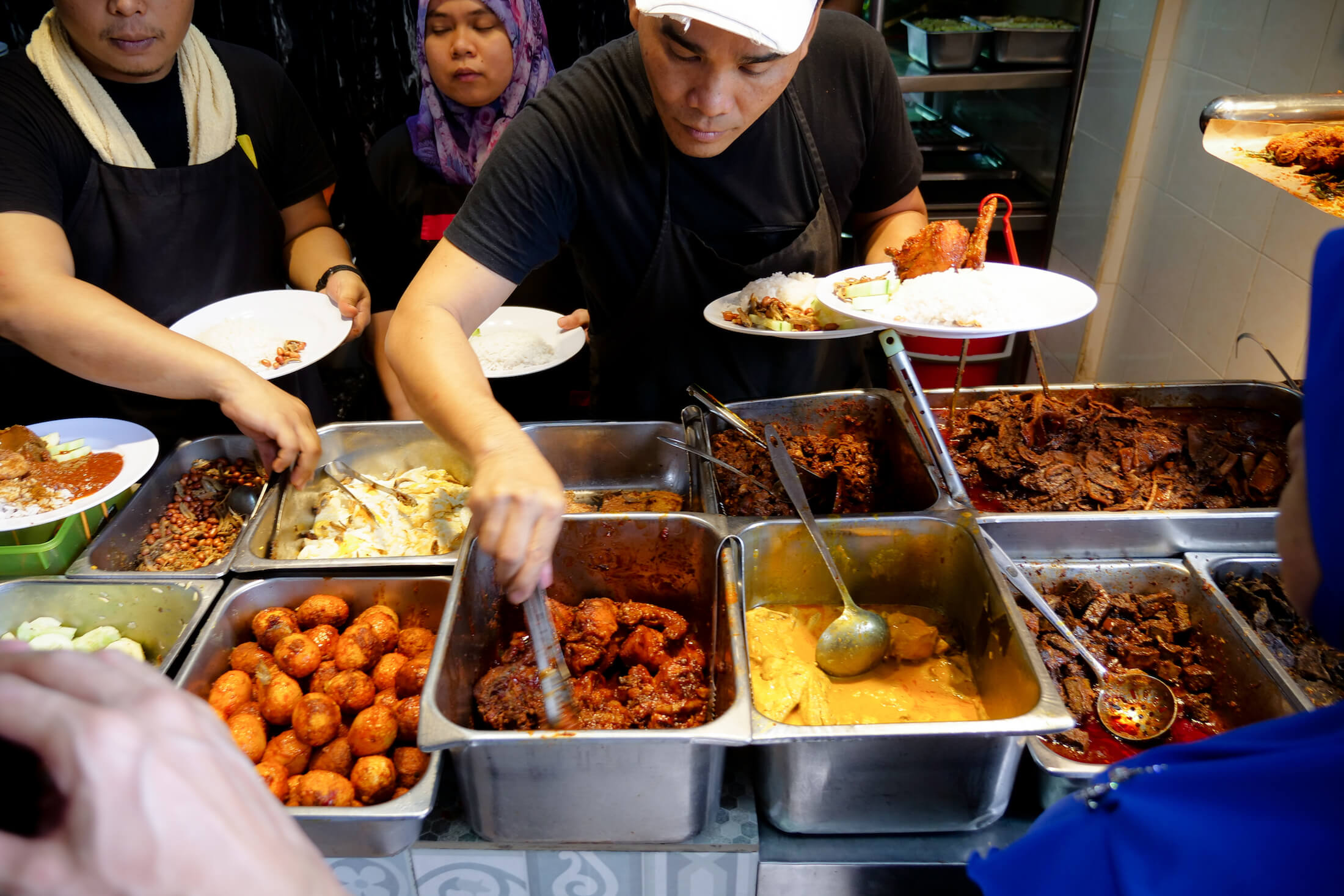
Navigating the service counter at Nasi Lemak Tanglin requires adherence to an established communal protocol. Patrons queue at a central service station where a bed of aromatic coconut rice is portioned onto reusable plates. The architectural integrity of the meal is subsequently customized through an extensive selection of curries, braised meats, and traditional side dishes ladled directly by attending staff.
While the fundamental components of nasi lemak remain present, Tanglin has distinguished itself through the variety and depth of its protein offerings. Standard pairings include beef rendang—slow-cooked in coconut milk and spices until tender—and traditional sambal cockles. However, culinary regulars frequently advocate for specialized inclusions such as beef spleen (sotong or local offal variants) and kolong (beef intestines). The spleen, in particular, is noted for its rich, velvety texture, absorbing the dark, complex notes of the surrounding spiced gravy.

In keeping with traditional dining customs, patrons are encouraged to consume the meal by hand. Culinary analysts and local purists note that tactile engagement with the food allows the individual grains of rice to absorb warmth and moisture differently than when utilizing metal cutlery, ensuring that the thick curry broths coat every surface of the dish.
Environmental Policies and Modern Adaptations
In recent years, institutional dining operations in Malaysia have faced mounting pressure to align with national sustainability initiatives. Historically, nasi lemak was exclusively wrapped in banana leaves—a practice prized for imparting a subtle, earthy fragrance to the rice while remaining completely biodegradable.
At Nasi Lemak Tanglin, modern operational efficiency has necessitated a transition to reusable ceramic and melamine plates. While traditionalists occasionally mourn the absence of the classic banana leaf wrapper, this adaptation directly supports broader municipal and federal mandates aimed at curbing the proliferation of single-use plastics. Furthermore, environmental advocates point out that moving away from widespread single-use leaf harvesting alleviates pressure on protected jungle ecosystems where wild banana trees are vulnerable to over-foraging.

Economic Impact and Accessibility
From an economic perspective, nasi lemak remains one of the most egalitarian and accessible food categories in the Malaysian marketplace. At Nasi Lemak Tanglin, baseline pricing reflects this commitment to affordability: a standard foundational plate of rice, sambal, and basic aromatics is priced at approximately 2 Malaysian Ringgit (MYR). Supplementary proteins, eggs, and specialized curries add modest increments of 1 to 5 MYR per item. A comprehensive communal meal for four people typically totals approximately 35 MYR (roughly $8.50 USD), underscoring the high value proposition of traditional hawker cuisine in urban centers.
This pricing structure ensures that historical working-class foods remain accessible across socioeconomic strata, functioning as a cultural equalizer in a rapidly developing metropolitan economy where the cost of living continues to rise.
Broader Implications for Urban Tourism

The enduring prominence of Nasi Lemak Tanglin highlights the critical role that heritage food establishments play in shaping Kuala Lumpur’s tourism sector. As global culinary tourism shifts away from fine dining toward authentic, hyper-local experiences, destinations like Kompleks Makan Tanglin serve as vital cultural ambassadors.
Industry observers note that establishments preserving pre-independence recipes provide essential economic stimuli to local supply chains, supporting independent producers of coconut milk, spices, and fresh poultry. Furthermore, the sustained popularity of legacy stalls validates the municipal government’s ongoing efforts to protect traditional hawker centers from commercial displacement.
As Nasi Lemak Tanglin looks toward its upcoming decades of operation, it stands as a case study in culinary preservation—balancing the unyielding demands of modern urban logistics with an unwavering commitment to a foundational national recipe. For travelers and residents alike, a morning spent navigating the queues at Tanglin offers a direct, unvarnished encounter with the living heritage of Malaysian gastronomy.