Beyond Sustainability: How the Regenerative Tourism Movement is Redefining Global Travel

For decades, the mainstream framework of sustainable travel has asked tourists to tread lightly. Guided by the principles of minimizing environmental footprints, reducing single-use plastics, lowering carbon emissions, and respecting local cultures, the sustainable tourism model sought to protect vulnerable destinations from the blunt force of mass human movement. However, as the compounding pressures of climate change, over-tourism, and rapid globalization continue to strain ecosystems and local infrastructures, industry stakeholders are increasingly recognizing that "doing less harm" is no longer enough.
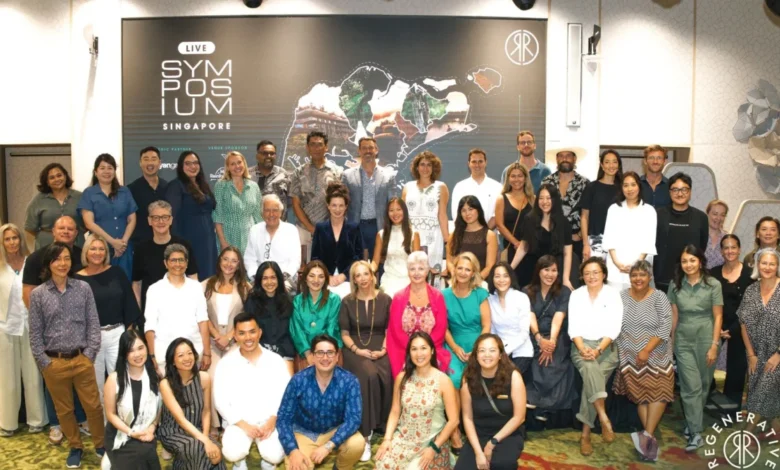
This growing consensus took center stage at the recent Regenerative Travel Asia Symposium held in Singapore. Gathering at the state-of-the-art Mandai Rainforest Resort by Banyan Tree, hospitality executives, environmental scientists, community leaders, and travel advocates convened to grapple with a paradigm-shifting question: What if the global travel and tourism industry could actively restore ecosystems, strengthen local communities, and fundamentally rebuild humanity’s relationship with the natural world?
The Shift from Consumption to Contribution
Historically, the architecture of global tourism has been built on a foundation of consumption—treating destinations, cultures, and natural resources as finite commodities to be enjoyed and discarded. The regenerative tourism movement seeks to dismantle this extractive model.
Setting the tone for the symposium, Amanda Ho, co-founder and CEO of Regenerative Travel, described the necessary evolution as a transition from "head to heart, scarcity to abundance, and individual to collective." Ho challenged attendees to reframe travel not merely as a service-based commercial industry, but as an active, living relationship between people, places, and nature.
This sentiment was reinforced by keynote speaker Juliet Kinsman, who reminded participants that human beings are not separate from planetary biodiversity, but are instead integral components of an interconnected living system. In an era increasingly dominated by digital saturation, artificial intelligence, and virtual detachment, Kinsman emphasized the critical need for "regenerating humanity" by intentionally rebuilding physical and emotional connections with the planet and local populations.
Consumer Demand Meets Implementation Gaps
The philosophical pivot toward regeneration is not occurring in a vacuum; it is heavily underscored by shifting consumer attitudes. Presenting data compiled by travel platform Booking.com, Jeremy Tran of Sustainable Travel Asia highlighted a profound psychological shift among modern vacationers. According to the research, an overwhelming 85% of global travellers express a desire for more sustainable travel options, while 69% explicitly state that they want to leave the destinations they visit better off than they found them.
Despite this clear mandate for positive impact, a significant chasm remains between good intentions and practical execution. Tran pointed to the outsized influence of social media in dictating contemporary travel patterns. In an ecosystem where a hidden beach or remote village can become a viral trend overnight, travellers face a complex behavioral hurdle: determining whether their itineraries are chosen with deliberate intention or simply driven by algorithmic conformity.
To bridge this gap, industry experts suggest that modern travellers must move beyond passive sightseeing and critically evaluate their underlying motivations. Transitioning to regenerative travel requires asking fundamental questions before departure: Why are we travelling to this specific destination, and how will our presence alter the local fabric upon arrival?
The Complexities of Wellness and Cultural Extraction
Another prominent theme at the symposium was the intersection of wellness tourism and ecological regeneration. Historically, wellness travel has focused narrowly on restoring the individual—often leveraging local healing traditions, indigenous knowledge, and ancient practices. Regenerative tourism, however, expands this scope, asking whether the wellness of the traveller can be achieved simultaneously with the economic, social, and ecological wellbeing of the host community.
Experts at the event cautioned against cultural extraction, noting that communities must be treated as centers of enduring wisdom and cultural heritage rather than mere backdrops for tourist experiences. Maitri Fischer, a leader in environmentally sustainable design with Eco-Mantra, addressed the stark realities of unmitigated tourism growth, using Bali as a cautionary tale. Fischer detailed how rapid, unregulated over-development has placed severe strains on local waste management systems, water tables, and civil infrastructure, illustrating the friction that occurs when industry expansion outpaces community needs.
For tourism to be genuinely regenerative, analysts argue that local populations cannot simply be passive recipients of economic trickle-down benefits. Instead, they must serve as active decision-makers who hold agency over their land, cultural heritage, and long-term futures.
Case Studies in Regeneration: Industry Leaders in Action
While systemic transformation requires broad policy shifts, several pioneering hospitality groups are already demonstrating what regenerative tourism looks like in practice. Throughout the Singapore symposium, operators such as Banyan Group, The Datai Langkawi, and Potato Head Bali showcased operational models that prioritize net-positive impacts.
A notable benchmark in this regard is Song Saa Private Island in Cambodia. Developed on a previously degraded marine and terrestrial landscape, the resort was conceived with a mandate to restore the local ecosystem rather than merely build upon it. Through the establishment of the Song Saa Foundation, the property helped create Cambodia’s first officially recognized Marine Protected Area, reviving coral reef ecosystems and local marine life.
Furthermore, the resort operationalizes social equity by hiring approximately 75% of its workforce from surrounding villages, ensuring that local families share directly in the economic upside. Daily operations incorporate aggressive waste management protocols, food waste reduction programs, and rainwater harvesting systems. Crucially, Song Saa integrates guests directly into these preservation efforts, inviting visitors to participate in coral restoration dives and community outreach projects—thereby transforming tourists from spectators into active stewards.
Economic Accessibility and the Risk of Greenwashing
As momentum behind regenerative travel accelerates, industry veterans have issued important warnings regarding market integrity. Without rigorous transparency, verified community participation, and measurable long-term ecological metrics, "regeneration" risks devolving into little more than a sophisticated corporate marketing buzzword or a new iteration of greenwashing. Both corporate operators and individual travellers carry the responsibility of holding the industry accountable to verifiable standards.
Moreover, accessibility remains a vital ethical hurdle. If regenerative travel is restricted solely to ultra-luxury eco-resorts with high nightly rates, it risks becoming an exclusive elitist pursuit. To achieve true systemic change, regenerative principles must permeate all strata of the tourism economy—from budget accommodations and local public transit to community-run homestays and mass-market tour operators.
The Path Forward: From Consumption to Contribution
As the global climate crisis intensifies alongside a steady post-pandemic rebound in international travel, the imperative for systemic industry reform has never been more urgent. Nick Hardman, a marine biologist and Head of Sustainability at Banyan Group, underscored the unique potential of the tourism sector during his address at the symposium.
"Tourism has a huge power to be part of the healing process," Hardman noted, adding that inspiring behavioral change ultimately depends on emotional resonance. "You have to make it personal. Whether through a hands-on conservation initiative or an authentic cultural exchange, people instinctively protect what they feel personally connected to."
Ultimately, the transition toward regenerative travel does not demand perfection from the modern tourist; rather, it demands deliberate intention. By demanding corporate transparency, supporting community-led enterprises, choosing businesses with localized supply chains, and critically evaluating who benefits most from an itinerary, travellers can help steer the industry toward a future defined by mutual flourishing. In doing so, travel ceases to be a transactional act of consumption and becomes what its advocates envision: an enduring framework for global connection, ecological healing, and human reciprocity.