Morocco’s Al-Boraq High-Speed Rail: A Milestone in African Infrastructure and Connectivity

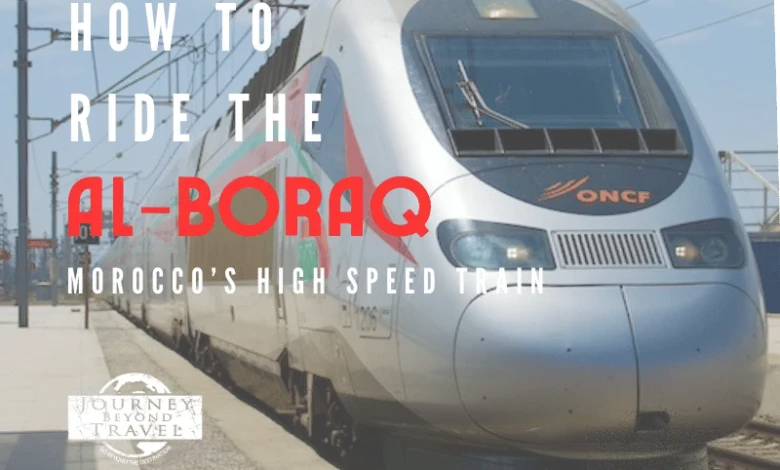
The inauguration of the Al-Boraq high-speed railway on November 18, 2018, marked a transformative moment in African transportation history. By establishing the first high-speed rail network on the continent, the Kingdom of Morocco signaled its intent to modernize its national infrastructure, integrate its major economic hubs, and set a new standard for passenger rail travel. Named after the mythical creature from Islamic tradition that symbolizes swiftness and transcendence, Al-Boraq has evolved from a controversial multi-billion dollar project into a cornerstone of the country’s logistical and tourism strategy.
Historical Context and Development
For decades, the rail narrative in Morocco was defined by the legacy of the "Marrakesh Express," a train route that gained international fame in the 1960s as a romanticized, rustic connection between the West and the East. While culturally significant, the aging infrastructure of the 20th century could not sustain the demands of a rapidly developing modern economy.

The conceptualization of a high-speed line began in the early 2000s, with official feasibility studies and bilateral agreements between Morocco and France taking shape around 2007. The project was viewed as a strategic necessity to alleviate pressure on the congested highway systems connecting the northern port of Tangier to the commercial capital, Casablanca. Following years of construction, civil engineering challenges, and significant financial investment—largely funded through a mix of Moroccan government capital, the Hassan II Fund for Economic and Social Development, and loans from the French Development Agency (AFD)—the line was officially inaugurated by King Mohammed VI and French President Emmanuel Macron.
Technical Specifications and Operational Reality
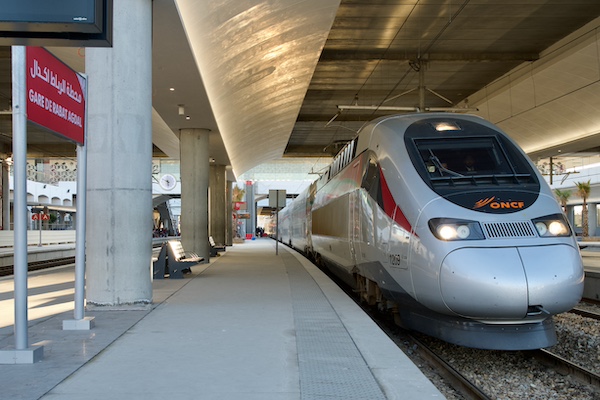
The Al-Boraq system operates on a dual-track strategy. The northern segment, spanning 186 kilometers (116 miles) between Tangier and Kenitra, consists of a dedicated high-speed track where trains reach operational speeds of 320 km/h (199 mph). This makes it the fastest train in Africa. Upon reaching the outskirts of Kenitra, the train transitions to an upgraded conventional mainline for the final 137 kilometers (85 miles) through the Rabat metropolitan area, concluding at the Casa-Voyageurs station in Casablanca.
The total transit time of two hours and ten minutes represents a drastic improvement over the previous conventional rail service, which often took nearly five hours to traverse the same distance. The rolling stock consists of double-decker TGV-derived trainsets, which offer a standard of comfort, air conditioning, and quietude that rivals the high-speed networks of Europe.

Chronology of the Network
- 2007: Bilateral agreements signed between the Moroccan government and France to explore high-speed rail feasibility.
- 2011: Official commencement of construction works.
- 2018: Formal inauguration of the Tangier-Casablanca line on November 18, coinciding with Morocco’s Independence Day.
- 2019: Full-scale commercial operations begin, serving over 3 million passengers in its first full year.
- 2024-2030: Expansion planning phase, including proposed lines to Marrakech and Agadir, aimed at meeting the logistical demands of the 2030 FIFA World Cup co-hosting requirements.
Economic and Environmental Implications
The introduction of Al-Boraq has had measurable impacts on the national economy and regional development. By reducing travel time by more than 50 percent, the rail line has effectively shrunk the distance between the industrial zones of Tangier—which include the massive Tanger-Med port complex—and the financial heart of Casablanca. This has facilitated greater labor mobility and eased the movement of business professionals.
From an environmental standpoint, the transition to high-speed rail aligns with Morocco’s aggressive national strategy to reduce carbon emissions. By shifting a significant percentage of short-haul travel from private vehicles and buses to electric-powered trains, the ONCF (Office National des Chemins de Fer) has contributed to a lower carbon footprint per passenger-kilometer. The project also serves as a proof-of-concept for the country’s green energy goals, as the rail network is increasingly powered by wind energy, consistent with Morocco’s position as a regional leader in renewable energy generation.
Challenges and Operational Logistics
Despite its success, the project has faced criticism, primarily regarding its cost and accessibility. The total project cost was estimated at approximately $2.4 billion USD, leading to debates among local stakeholders regarding the prioritization of high-speed infrastructure over rural rail development. Furthermore, the digitalization of the ticketing process has presented hurdles for international travelers.
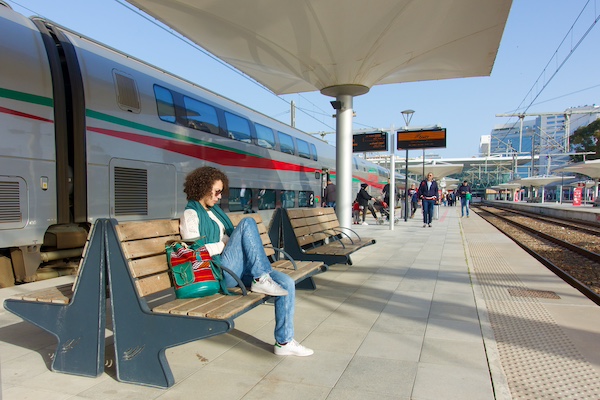
The ONCF platform, while functional, occasionally struggles with international credit card processing, leading to instances where foreign tourists find themselves unable to book in advance. Consequently, many travelers rely on walk-up purchases at stations. While this is generally feasible, peak travel periods—such as the Eid holidays, summer vacation months, and national school holidays—frequently result in sold-out trains and long queues at ticket counters. Passengers are advised to arrive at stations well ahead of departure times during these high-traffic windows.
Navigating the System: Key Stations
For travelers utilizing the Al-Boraq, navigating the specific terminal stations is essential. The line is not a singular, sprawling network but a targeted corridor connecting four primary hubs:
- Tanger Ville: The gateway to the north, serving as the Mediterranean terminus.
- Kenitra: A critical stop connecting the high-speed track to the traditional rail network.
- Rabat Agdal: Located in the political capital, this station was extensively renovated to accommodate the high-speed trains and serves as a major passenger node.
- Casa-Voyageurs: The southern terminus in Casablanca, designed to handle high volumes of commuter and long-distance traffic.
The Road Ahead: The 2030 Expansion
Looking toward the future, the Moroccan government has outlined ambitious plans to extend the high-speed network. With the selection of Morocco as a co-host for the 2030 FIFA World Cup alongside Spain and Portugal, the pressure to expand the rail footprint has intensified. Current development plans prioritize the extension of the line southwards from Casablanca to Marrakech, with further feasibility studies underway for a continuation to the coastal city of Agadir.
This expansion is viewed by government officials as an essential component of the country’s "Global Rail Master Plan," which envisions a 1,500-kilometer high-speed network by 2040. If realized, this would place Morocco in a unique position globally, as one of the few nations in the developing world to maintain a comprehensive high-speed rail backbone.
Conclusion
The Al-Boraq high-speed train is more than a mere convenience for travelers; it is a manifestation of Morocco’s long-term developmental strategy. By bridging the distance between the northern coast and the central interior, the network has successfully married the historical romance of Moroccan travel with the efficiency of modern technology. As the country prepares for the global stage in 2030, the Al-Boraq will likely serve as the primary artery for internal connectivity, reinforcing Morocco’s status as a gateway to Africa and a leader in regional infrastructure innovation. While challenges regarding booking accessibility and project financing remain points of discussion, the operational reality of the line suggests that the high-speed rail experiment has transitioned successfully from a speculative project to an indispensable national asset.