The Netflix "VHS Special Edition" of Stranger Things Season 1 is a deliberate artistic choice, not a glitch.

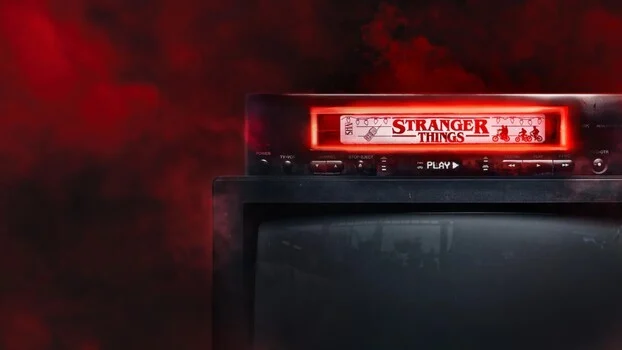
The streaming giant Netflix, a pioneer in high-definition content delivery, has intentionally embraced a lower-fidelity aesthetic for its most popular series, "Stranger Things." In a surprising move that eschews the pursuit of pristine digital clarity, Netflix released a "VHS Special Edition" of the first season, complete with the visual artifacts characteristic of vintage videotapes. This decision, alongside Christopher Nolan’s decision to film his latest blockbuster entirely on physical film, signals a significant shift in audience preferences, a trend that photographers and videographers worldwide should closely observe.
Netflix’s Calculated Step Back to Analog Charm
To commemorate the 10th anniversary of "Stranger Things," Netflix rolled out a retro-infused version of its inaugural season. This "VHS Special Edition" meticulously recreated the visual hallmarks of 1980s home video, incorporating the characteristic 4:3 aspect ratio with pan-and-scan cropping, the occasional tracking glitches, and the ubiquitous tape grain. The Duffer Brothers, the creators of the series, explained their rationale, stating, "If Stranger Things existed in Hawkins, sitting on a shelf at Family Video, it would look just like this – complete with pan-and-scan." They further hinted at the possibility of extending this treatment to subsequent seasons if the "VHS Special Edition" of Season 1 garners sufficient viewership.
While seemingly a marketing stunt, this initiative is deeply telling. A company with access to unlimited 4K and HDR mastering capabilities has deliberately invested engineering resources to produce an intentionally degraded version of its flagship show. This move warrants contemplation for professionals in the visual arts, particularly those who invest heavily in acquiring sharper lenses and cleaner sensors. The fact that Netflix deemed the creation and distribution of this retro-styled version of all eight episodes of the first season a worthwhile endeavor underscores a growing cultural appreciation for analog imperfections.
Nolan’s "The Odyssey" and the Resurgence of Physical Film
Netflix is not an isolated entity in its embrace of analog. This summer also saw the wide release of Christopher Nolan’s latest cinematic achievement, "The Odyssey," a film notably shot entirely on IMAX film cameras. This endeavor required IMAX to develop an entirely new, quieter camera model to accommodate Nolan’s exacting standards. The underlying narrative, as previously reported, is consistent with the broader trend: significant financial investment is being directed towards embracing, rather than eradicating, perceived imperfections in media creation.
The implications of these high-profile projects extend beyond mere aesthetic choices. They represent a strategic decision by major entertainment players to tap into a perceived demand for a more tangible, less polished viewing experience. For an industry that has long championed technological advancement towards ultimate digital fidelity, this deliberate step backward signifies a profound understanding of evolving audience desires.
Gen Z’s Unexpected Affinity for Vintage Camcorders
The inclination towards analog is not confined to large studios with substantial marketing budgets. A burgeoning demographic of younger creators is actively seeking out and acquiring older camcorders from brands like Sony (Handycams), JVC, and Panasonic, dating from the 1980s through the early 2000s. Their purpose is not to restore these devices to pristine condition but to intentionally capture footage with the characteristic grain and degraded quality that defines analog video. This trend is evident in the music videos of artists such as Sabrina Carpenter, $UICIDEBOY$, and PinkPantheress, who have incorporated camcorder-style visuals into their artistic expressions. For professionals transitioning from stills photography to motion picture work, this phenomenon highlights a crucial area of audience taste formation.
Data from Fortune supports this observation, indicating that in 2025, 35% of the approximately 42 million active film-camera users globally were between the ages of 18 and 30. Furthermore, searches for analog photography saw a year-over-year increase of 41%. Rotem Rozental, a lecturer at USC specializing in student media consumption, challenges the simplistic notion that this is solely a product of nostalgia. She posits that it is more of an "aesthetic rebellion" against the hyper-sharp, overproduced content that saturates the digital landscape. In this context, lo-fi aesthetics are being reinterpreted as a marker of authenticity.
While there isn’t a direct retail pipeline for these vintage camcorders, they are predominantly available through the secondhand market, with prices typically ranging from $18 to $300, depending on their condition. Understanding this market is crucial for anyone aiming to connect with a significant segment of the contemporary audience’s visual preferences.
The Warm Embrace of Analog Audio
The same inclination towards analog can be observed in the realm of audio production. Engineers, podcasters, and musicians are increasingly opting for vintage-style microphones over their modern, clean digital counterparts. The Royer R-121 ribbon microphone, for instance, is specifically chosen for its "warmer timbre," which is said to counteract the "analytical nature" of digital recording formats. This microphone is a favored choice for capturing the sound of guitar amps, brass instruments, and vocals, often referred to as a "desert island" mic for its versatility.
Similarly, microphones like the Warm Audio WA-47 and WA-251 are reproductions of vintage Neumann U47 and Telefunken ELA M251E tube condenser microphones. These are engineered to replicate the sought-after vintage tone at a fraction of the cost of the originals, which can command prices exceeding $8,000. Even the Shure SM7B, a dynamic microphone rather than a ribbon, has become a benchmark for a "warm-over-clean" sound. Famously used on Michael Jackson’s "Thriller" and now a standard in podcasting and streaming, its gently rolled-off high frequencies are perceived as more forgiving compared to the bright, sometimes harsh sound of modern USB condensers. This preference for warmth and character in audio mirrors the visual preference for texture and imperfection in imagery.
Instax’s Dominance: A Testament to Tangible Memories
Looking beyond professional creators, the broader consumer market provides further evidence of this analog resurgence. Fujifilm announced in April 2025 that it had cumulatively sold 100 million Instax cameras and printers since their introduction in 1998. Instax now contributes over half of Fujifilm’s imaging division revenue. The company itself frames the appeal of Instax around its "unique texture and nostalgic analog feel." This is particularly noteworthy for a company built on some of the most advanced digital sensors in the industry, yet deriving significant revenue from a format engineered to produce imperfect outputs. The current Instax Mini 12 is readily available for under $100, making this analog experience accessible to a wide audience.
The Enduring Appeal of Vinyl, Cassettes, and Film
The resurgence of vinyl records and film photography has been a subject of extensive coverage. However, the latest figures underscore the continued momentum of these analog formats.
Vinyl sales experienced their most robust year on record in 2025. The RIAA’s year-end report for 2025 revealed that vinyl revenue surpassed $1 billion for the first time, marking a 9.3% year-over-year increase. Unit sales climbed from 43.4 million to 46.8 million, representing the 19th consecutive year of growth and a significant outperformance against CDs, which sold 29.5 million units. RIAA Chairman Mitch Glazier attributed this success to "a resurgence of vinyl as both a listening experience and collectible art." For those looking to engage with vinyl, the Audio-Technica AT-LP60X remains a recommended entry-level turntable.
Cassettes are also experiencing a peculiar revival. U.S. cassette sales reached 446,500 units in 2025, an increase of 17.5% year-over-year, and approximately five times the volume sold a decade prior. Gen Z has emerged as the primary demographic for cassette purchases, with resale prices on sought-after tapes escalating by as much as 1,000%. Artists such as Taylor Swift, Chappell Roan, Sabrina Carpenter, and Charli XCX have seen strong sales for their cassette releases. French startup We Are Rewind is capitalizing on this trend with new Walkman-style Bluetooth cassette players. Founder Romain Boudruche aims to create products that are "not plastic, something closer to the original TPS-L2 from Sony," projecting approximately 30% annual market growth for his company.
On the manufacturing front, film remains a significant story. Harman, the parent company of Ilford, has made its largest investment in film manufacturing since the 1990s, commissioning new machinery to more than double its annual 35mm film output. Despite this expansion, U.S. prices for film, paper, and chemicals increased by 11% in April 2025 due to tariffs and high demand. Kodak Portra 400 saw a price increase of 64% between 2019 and 2022, rising from $7.80 to $12.80 per roll, while Ektar 100 rose by 137%, from $6.75 to $16 per roll. The introduction of the Pentax 17, Ricoh’s first new film camera in two decades, is a direct response to what Ricoh terms "the growing popularity lately of film photography among younger photographers."
The Broader Implications for Visual Creators
This trend towards analog extends beyond cameras and audio equipment. Even the market for basic mobile phones has seen a significant shift. Purchases of "brick phones" by individuals aged 18 to 24 increased by 148% between 2021 and 2024. Psychotherapist Phil Lane offers a term for much of the underlying motivation: "adaptive regression." This describes a deliberate, healthy retreat into tactile, single-purpose objects as a counterbalance to constant digital overstimulation. This impulse is also evident in the craft industry, where a major retailer reported a 1,200% surge in searches for yarn kits.
It is important to clarify that these developments do not diminish the value or utility of digital technology. Instead, they highlight a powerful cultural current: an appetite for texture, friction, and visible imperfection that is increasingly valued over the frictionless polish of purely digital output. This phenomenon is manifesting across a wide spectrum of cultural products, from multi-million dollar film productions to inexpensive cassette players. For any individual or entity involved in creating images for a living, understanding the underlying reasons for this audience preference for the unpolished, human element is paramount, regardless of their personal engagement with analog formats. This evolving landscape demands a nuanced approach to content creation, one that acknowledges and potentially incorporates the resonant appeal of the analog.
Related posts: