Holafly Launches Global eSIM Subscription Service to Challenge Traditional International Roaming

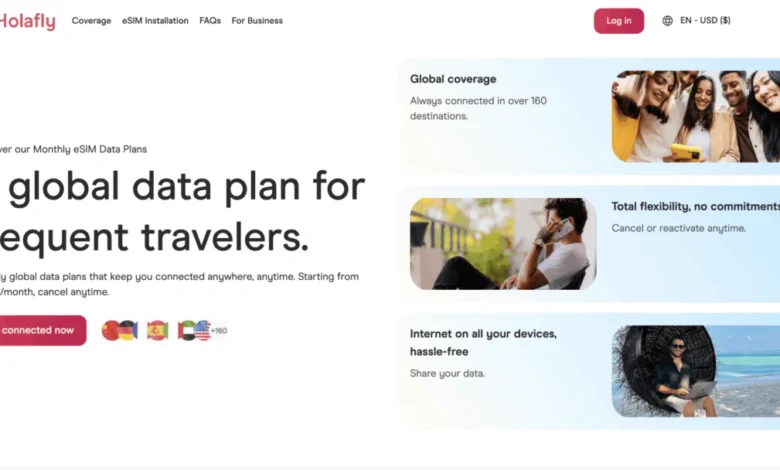
The international telecommunications and travel technology sector has witnessed a significant shift with the introduction of Holafly Plans, an ongoing global eSIM subscription service designed to provide continuous connectivity across more than 160 destinations. Unveiled to address the logistical friction of traditional mobile roaming and single-trip digital SIM cards, the service represents an evolution in how long-term travelers, digital nomads, and frequent flyers manage cross-border mobile data. By eliminating the necessity for physical SIM swaps, localized QR code redeployments, and expensive major carrier roaming passes, the product positions itself as a direct competitor to conventional international mobile infrastructure.
Background Context and Evolution of eSIM Technology
The proliferation of embedded SIM (eSIM) technology over the past decade has fundamentally altered the consumer telecommunications landscape. Unlike physical subscriber identity module (SIM) cards, which require manual insertion and hardware swapping, an eSIM is a programmable module integrated directly into a smartphone’s motherboard. Users activate profiles digitally by scanning a quick response (QR) code or through dedicated mobile applications, permitting multiple carrier profiles to be stored simultaneously on a single device.
Initially adopted by major smartphone manufacturers in the late 2010s, eSIM technology gained widespread commercial traction as travel restrictions lifted following the COVID-19 pandemic. Travel technology startups capitalized on this shift, offering regional and country-specific data packages that significantly undercut legacy cellular providers. However, a distinct market gap persisted for individuals who travel continuously without a fixed return date. Standard travel eSIMs are engineered for finite durations—typically ranging from 7 to 30 days—requiring users to purchase new packages, scan new installation codes, and manage multiple digital accounts upon entering new jurisdictions. Holafly Plans was developed to mitigate this friction by introducing a unified, standing subscription model that functions similarly to a domestic mobile plan while operating on a global scale.
Structure and Tiering of Holafly Plans

The newly introduced subscription model is structured around two primary consumer tiers: the Light Plan and the Unlimited Plan, alongside a recently integrated comprehensive option known as the Ultra Plan.
The Light Plan is tailored for moderate data consumers, providing 25 gigabytes of high-speed data monthly across the complete 160-plus country footprint. It maintains hotspot capabilities, allowing subscribers to tether secondary devices such as laptops and tablets, making it suitable for navigation, messaging, and routine web browsing.
Conversely, the Unlimited Plan targets heavy data users and remote professionals. It removes data caps entirely and includes unrestricted hotspot functionality for tethering. Additionally, subscribers to the Unlimited tier receive a localized virtual phone number originating from the United States, the United Kingdom, or Canada, enabling the direct receipt of SMS verification codes and text messages—a critical feature for banking, authentication, and professional communication while abroad.
Both tiers incorporate Holafly’s proprietary "Always On" safety feature. This utility automatically allocates one gigabyte of backup data on a monthly, perpetual basis, remaining active even if the primary subscription is temporarily suspended or permanently canceled. Billing structures offer flexibility through monthly, quarterly, or annual commitments, with quarterly billing yielding approximately a 10 percent discount and annual commitments reducing overall costs by up to 15 percent.
Comparative Economic Analysis: Subscriptions Versus Legacy Roaming
The economic viability of global eSIM subscriptions becomes apparent when evaluated against legacy international roaming charges levied by domestic tier-one carriers. Historically, travelers from major markets such as the United States have faced daily international roaming fees averaging $10 per day, accumulating to monthly expenditures between $100 and $300 for throttled or restricted data access.
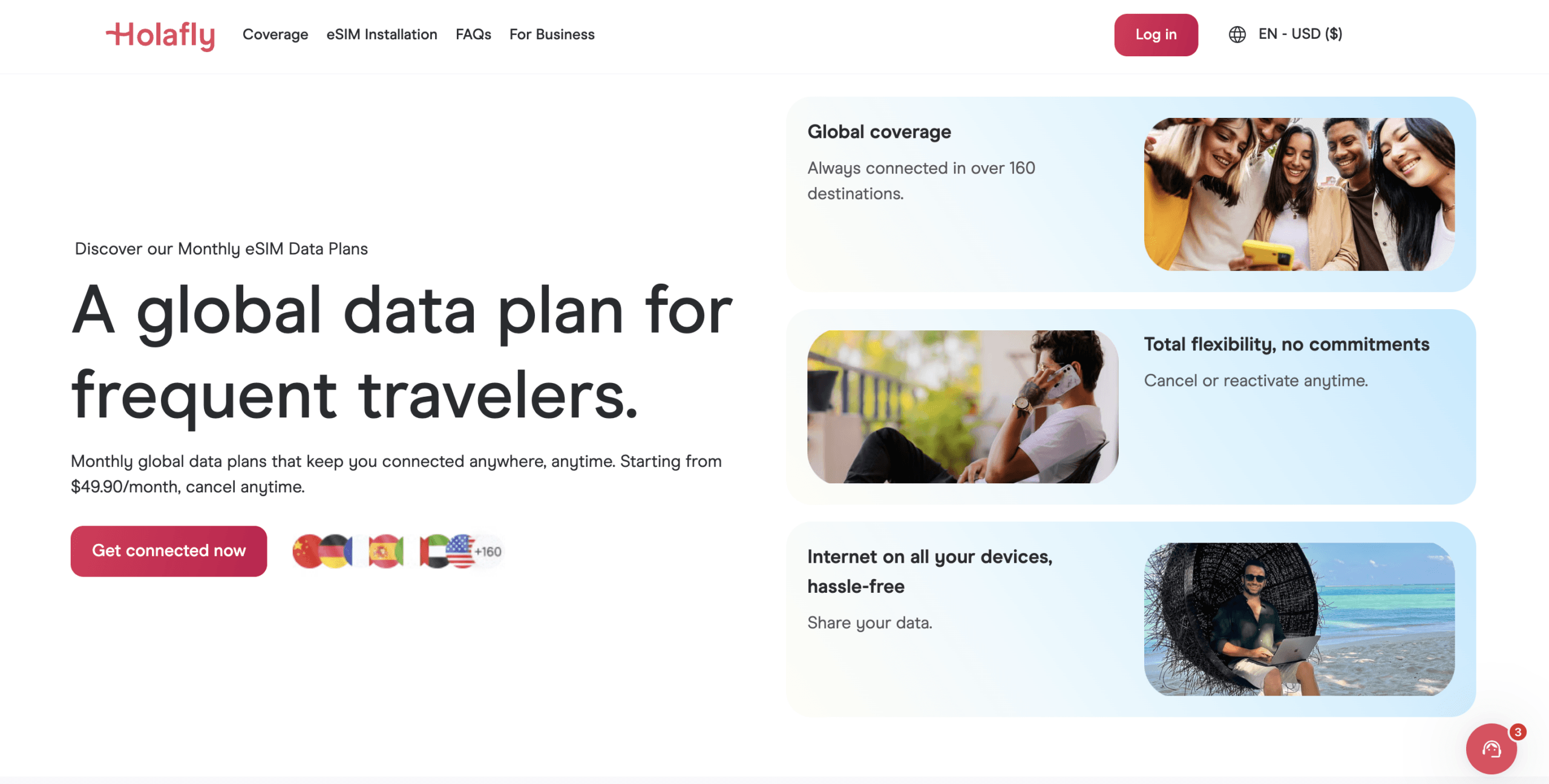
In contrast, long-term international data plans provided by specialized eSIM providers introduce significant cost efficiencies. For example, comprehensive unlimited annual subscriptions average between $55 and $65 per month depending on the exact payment structure chosen. This pricing model substantially undercuts domestic carrier packages while offering superior bandwidth allocations, unfettered hotspot tethering, and multi-country continuity.
While traditional local physical SIM cards purchased upon arrival at foreign airports remain economically viable for single-destination trips lasting several weeks, their utility degrades rapidly for multi-destination itineraries. Travelers crossing borders frequently face service interruptions, language barriers at kiosks, and administrative hurdles when registering foreign SIM cards under local telecommunications laws—regulations that frequently mandate passport registration and identity verification.
Integration of Value-Added Travel Services: The Ultra Plan
Expanding beyond core telecommunications, the introduction of the Ultra Plan integrates minor trip-related auxiliary benefits into the cellular subscription framework. Priced moderately higher than the standard Unlimited tier—averaging between $73 and $90 per month depending on the billing cycle—the Ultra Plan incorporates baseline protection products, including compensation allowances for delayed or lost baggage, alongside digital access to remote wellness, nutritional, and psychological support services.
Industry analysts emphasize that while these supplementary benefits do not replace comprehensive commercial travel insurance policies—which remain mandatory for major medical emergencies, hospitalizations, medical evacuation, and high-value theft—they provide administrative and financial mitigation for common, low-tier travel disruptions. By embedding these services directly into a connectivity subscription, the product model blurs the traditional lines between telecommunications and travel assistance services.
Market Implications and Industry Outlook
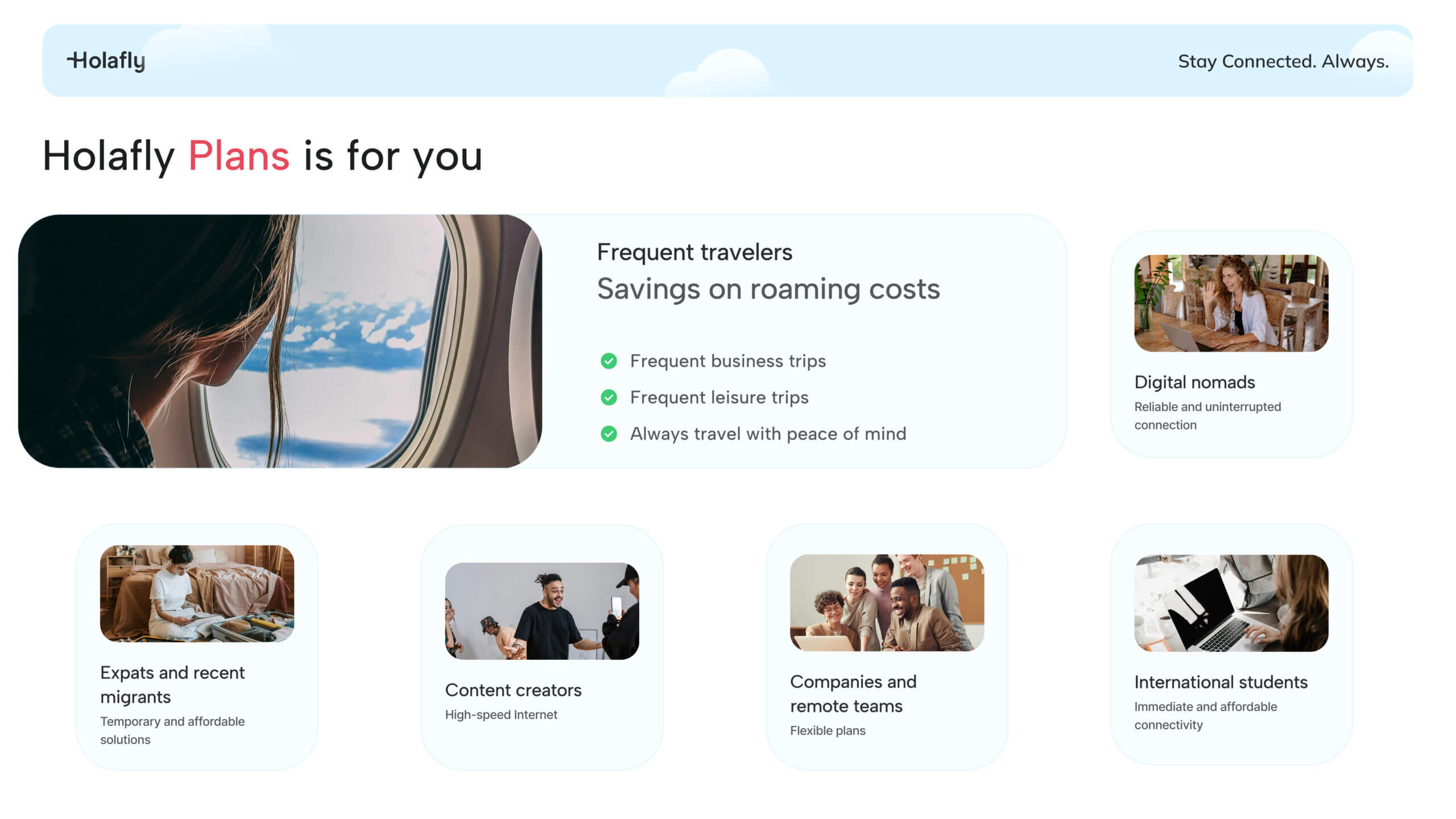
The rollout of continuous, multi-country eSIM subscriptions reflects a broader transition within the travel tech sector toward ecosystem-based services. As the global digital nomad demographic expands—bolstered by remote work policies and the introduction of specialized digital nomad visas by dozens of national governments—the demand for frictionless, cross-border infrastructure continues to surge.
Telecommunications experts project that traditional mobile network operators (MNOs) will face increasing pressure to revise their international roaming models. The ability of agile over-the-top eSIM providers to negotiate localized roaming agreements with tier-one cellular networks worldwide enables them to deliver high-speed data at fractions of legacy carrier costs.
Consumer adoption patterns indicate that while short-term vacationers will likely continue utilizing single-trip, destination-specific eSIM packages due to their simplicity and minimal upfront commitment, long-term travelers and expatriates are rapidly migrating toward standing subscription models. As network coverage expands and 5G deployment matures globally, products that unify international voice, data, and travel utility under a single digital profile are anticipated to become the industry standard for mobile global connectivity.