You Have Seen the Barcelona Highlights Now What: Navigating the City Beyond the Tourist Trail

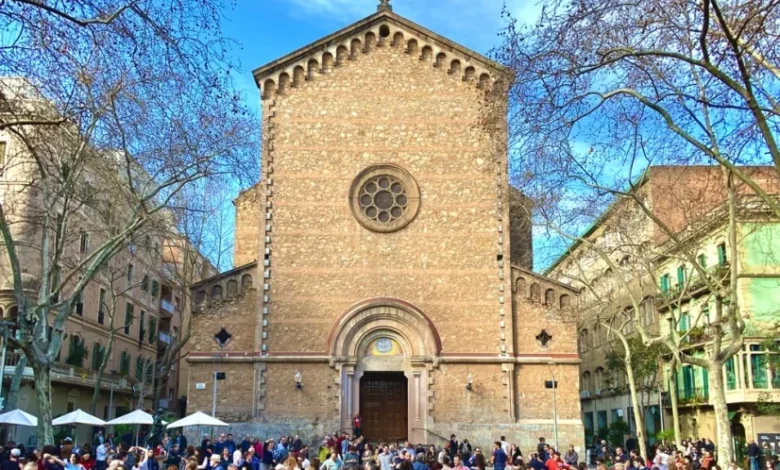
For the millions of travelers who visit Catalonia’s capital annually, the initial itinerary is almost universally defined by the architectural legacy of Antoni Gaudí and the medieval labyrinth of the Ciutat Vella. Data from the Barcelona Tourism Observatory indicates that over 12 million visitors arrive in the city each year, with the vast majority gravitating toward the Sagrada Família, Park Güell, and the bustling promenade of La Rambla. While these landmarks serve as the foundational pillars of the city’s global brand, they represent only a fraction of its cultural and socio-economic complexity. For the returning visitor, the challenge lies in transitioning from a passive observer of iconic monuments to an active participant in the city’s neighborhood-level evolution.
A Chronology of Urban Transformation
The architectural and cultural landscape of Barcelona has been shaped by distinct historical phases that extend far beyond the Modernist movement. The Roman foundation of Barcino, established in the 1st century BCE, remains visible in the Gothic Quarter, but the 19th-century Industrial Revolution arguably did more to define the current urban layout. The 1859 Eixample plan by Ildefons Cerdà revolutionized urban planning, creating the characteristic grid that facilitates the distinct identities of today’s districts.

The 1992 Olympic Games served as a critical turning point in the city’s modern history. Prior to the games, the waterfront area, specifically Poblenou, was largely an industrial wasteland. The subsequent "Olympic renovation" catalyzed the conversion of factories into technology hubs and cultural spaces, effectively rebranding the city as a center for innovation rather than just a historic tourist destination. Understanding this timeline allows visitors to view areas like Poblenou not merely as new districts, but as outcomes of a deliberate, multi-decade economic pivot.
Neighborhood Deep-Dives: Shifting the Focus
Beyond the primary tourist core, the city’s district-level economies offer a more authentic engagement with Catalan life. El Raval, historically categorized by its working-class roots and migrant history, now functions as the city’s primary crucible for contemporary art and social diversity. The Museum of Contemporary Art (MACBA), established in 1995, acted as a catalyst for urban renewal in the area, yet the neighborhood retains its gritty, eclectic charm.
Similarly, the district of Gràcia offers a study in municipal autonomy. Before its annexation by Barcelona in 1897, Gràcia was an independent village. Its architecture—characterized by low-rise residential buildings and narrow, pedestrian-friendly streets—contrasts sharply with the expansive boulevards of the Eixample. This physical layout influences the local economy, which is dominated by small, independent retailers and family-run cafés rather than international franchises, offering a more sustainable model of tourism.

Economic and Culinary Integration
The shift toward "slow travel" in Barcelona is supported by the city’s market-based culinary culture. While La Boqueria is globally recognized, the Mercat de Sant Antoni provides a clearer picture of local consumption habits. Following a nearly decade-long renovation that concluded in 2018, the iron-wrought market stands as a testament to the city’s commitment to preserving traditional commerce amidst modern gentrification pressures.
Economic analysts suggest that directing tourist spending toward these neighborhood markets and local pintxo bars in Poble Sec reduces the inflationary pressure on the historic center. By diversifying the footprint of international visitors, the local government aims to mitigate the "over-tourism" phenomenon that has strained municipal infrastructure in recent years. Engaging with the culinary scene in Poble Sec—known for its concentrated density of small-plate dining—provides a more direct contribution to the local economy than dining within the high-rent, high-traffic corridors of the tourist center.
Regional Connectivity and Secondary Destinations
For those looking to expand their scope, the Catalonia region serves as an extension of the urban experience. The proximity of Alella, a wine-producing region just 20 kilometers from the city, highlights the intersection of Mediterranean climate and agricultural heritage. The region’s D.O. Alella (Denominació d’Origen) is one of the smallest and oldest in Spain, focusing on white wines like Pansa Blanca. A visit here is not merely an excursion but an exploration of the rural economic drivers that underpin Catalan identity.

Day trips to Girona and Montserrat represent a logical progression for the repeat visitor. Girona, situated approximately 100 kilometers north, offers a high-density historic experience that is geographically distinct from the coastal landscape of Barcelona. The preservation of its medieval Jewish quarter and the 12th-century city walls provides historical context to the formation of the Catalan state. Meanwhile, Montserrat serves as both a site of religious pilgrimage and a significant geological landmark, illustrating the dramatic topography that defines the region’s borders.
Analytical Perspective: The Future of Responsible Tourism
The trend of returning visitors seeking "non-standard" experiences is an essential component of Barcelona’s long-term sustainability strategy. Tourism officials have increasingly signaled that the city’s future viability depends on shifting visitor interest toward the periphery. This is not merely a matter of convenience, but an imperative to preserve the livability of the city’s residential zones.
Sociological research conducted within the city suggests that the most positive interactions between residents and visitors occur in spaces where the "tourist gaze" is replaced by shared social activities—such as frequenting neighborhood squares (plaças) or participating in local festivals. When visitors move away from the "must-see" checklist, they often discover that the essence of Barcelona is found in the everyday: the pace of a lunch in Gràcia, the community atmosphere of a Sunday market in Sant Antoni, or the quietude of a coastal sailing trip.

Practical Considerations for the Seasoned Visitor
Navigating the city on a secondary or tertiary visit requires a shift in logistical planning. The integration of high-speed rail (AVE) makes regional transit to Girona or the coast efficient, while local digital infrastructure—such as the widespread availability of eSIM services—ensures that travelers can navigate the dense, non-linear street layouts of older neighborhoods without relying on major thoroughfares.
The use of local, specialized guides can also transform a routine visit into an educational one. Companies specializing in contextualized history provide insights that are often missing from standard guidebooks, such as the political history of the Montjuïc Castle. Once a site of state-sanctioned repression, the castle now functions as a historical monument that challenges the visitor to reconcile the city’s celebratory modern image with its complex, sometimes violent, past.
Conclusion
Returning to Barcelona allows for the dismantling of the "highlight reel" mentality. By focusing on neighborhoods like Poblenou, El Raval, and Poble Sec, or venturing into the wine country of Alella, visitors contribute to a more distributed and equitable tourism model. The true value of a repeat visit to this city lies in the ability to move at a slower, more deliberate pace, favoring depth of experience over the volume of sights visited. Whether exploring the remnants of industrial history or participating in the daily rituals of a local market, the traveler who looks beyond the icons discovers a city that is far more nuanced, layered, and resilient than the brochures suggest. The city does not change, but the visitor’s perspective does, transforming Barcelona from a static destination into a dynamic, evolving home away from home.
Related posts: