Conquering Wat Phu Tok: A Journey Up Thailand’s Most Perilous and Awe-Inspiring Cliffside Temple

Nestled deep within the remote reaches of Thailand’s northeastern Isan region, the province of Bueng Kan remains one of the country’s most geographically isolated and least commercialized territories. Far from the bustling tourist corridors of Bangkok, Chiang Mai, or the southern islands, this frontier province offers vast expanses of tranquil nature, agricultural plains, and sweeping views of the Mekong River basin, which marks the natural border with neighboring Laos. Rising abruptly from this flat, verdant landscape is an arresting geological anomaly: a massive, isolated red sandstone formation known locally as Phu Tok, which translates literally to "Lonely Mountain." Perched upon and intricately carved into the sheer faces of this 359-meter-high monolith sits Wat Jetiyakhiri, universally recognized by travelers and locals alike as Wat Phu Tok—arguably the most visually striking, architecturally daring, and genuinely terrifying temple complex in the Kingdom of Thailand.
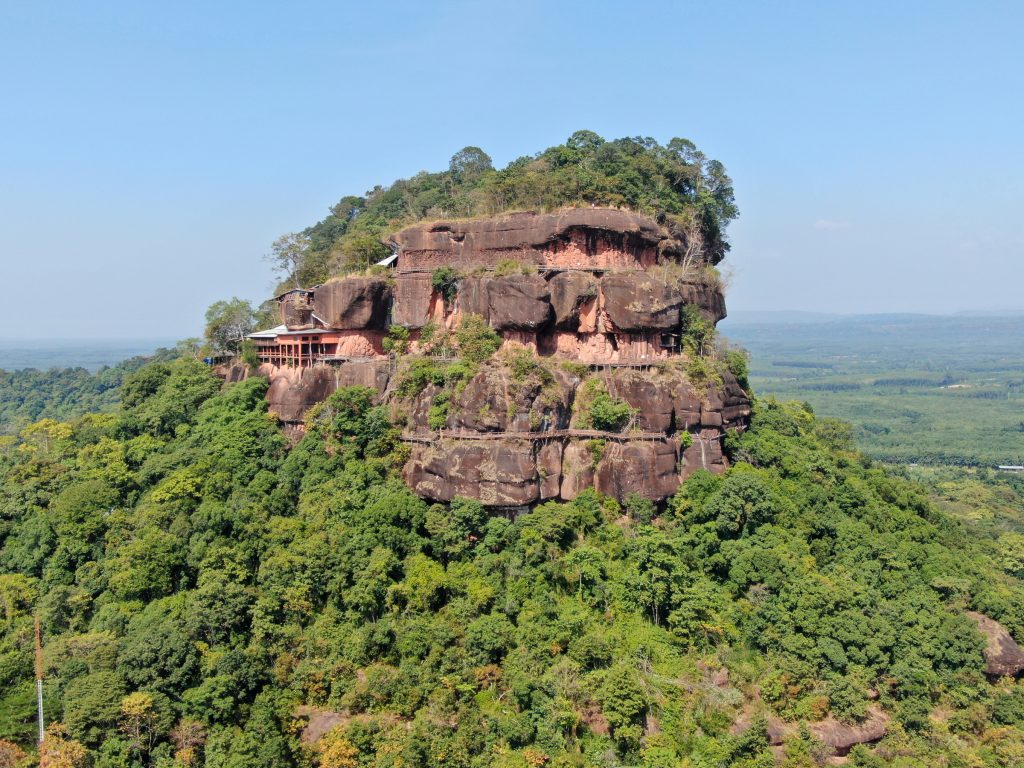
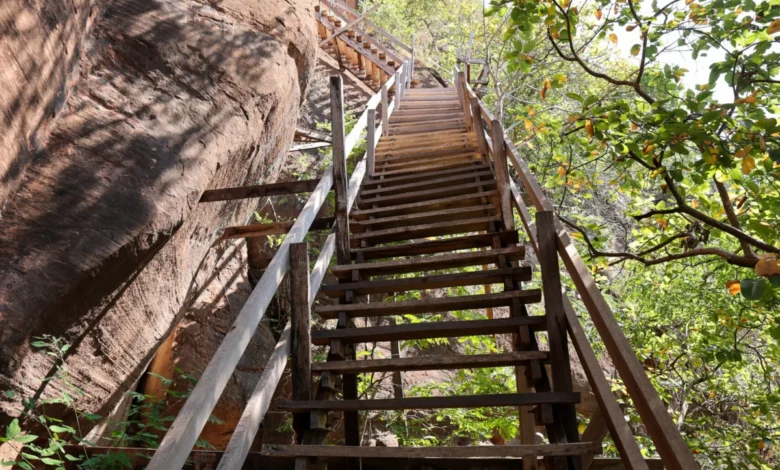
Architecturally and visually, the site frequently draws comparisons to the ancient rock fortress of Sigiriya in Sri Lanka, albeit on a more intimate, spiritual scale. Yet, Wat Phu Tok is distinct not merely for its topography, but for the engineering feat that defines it. The complex is an exercise in vertical devotion, constructed entirely of precarious-looking wooden staircases, ladders, and cantilevered walkways anchored directly into vertical rock faces. For travelers seeking an off-the-beaten-path destination that merges adrenaline-fueled exploration with deep Buddhist symbolism, Wat Phu Tok stands as a monumental achievement of human labor and religious dedication.
Historical Origins and the Path of Meditation

The origins of Wat Phu Tok are deeply rooted in the ascetic traditions of Thai Buddhism. Historically, the rugged terrain, dense surrounding forests, and extreme isolation of the Lonely Mountain rendered it a formidable wilderness teeming with wildlife, most notably dense populations of venomous snakes. For forest monks seeking the ultimate environment for solitary meditation, however, these very perils presented a profound spiritual opportunity. The remote landscape offered silence, spatial vastness, and a physical manifestation of the detachment from worldly comforts.
The foundational vision for the temple was realized by the revered monk Luang Pu Juan, who arrived at the mountain to establish a secluded sanctuary for meditation. Recognizing the need to connect the various natural caves, rock shelters, and elevated plateaus utilized by meditating monks, Luang Pu Juan orchestrated the construction of a comprehensive network of wooden staircases and walkways. This monumental undertaking was designed intentionally to comprise seven distinct vertical tiers. In Buddhist theology and cosmology, these seven levels correspond directly to the seven stages of spiritual awakening and mental purification required to transcend earthly illusions and attain enlightenment.

While the construction of the walkways transformed the mountain into a navigable sanctuary, the site’s history is also marked by tragedy. Luang Pu Juan ultimately lost his life in a heavily publicized commercial aviation accident in 1980—an event that deeply shook the Thai Buddhist community. Despite the loss of its visionary founder, the temple has been meticulously maintained by subsequent generations of monks and local devotees, ensuring that the architectural marvel remains structurally sound and accessible to intrepid pilgrims and travelers.
Navigating the Seven Tiers of Wat Phu Tok

A visit to Wat Phu Tok is as much a physical challenge as it is a cultural excursion. Located approximately a 30-minute drive from Bueng Kan city, the temple complex greets visitors with a sprawling baseline infrastructure, featuring a large parking area, a serene lake, and secondary temple buildings that serve as a gentle introduction to the site. The ascent, however, begins abruptly as visitors transition from paved grounds to the timber pathways that hug the base of the red rock massif.
The lower tiers of the mountain serve as a gradual physical acclimation. The initial staircases are relatively wide and stable, though they steadily grow steeper, eventually transitioning into near-vertical wooden ladders bolted into the stone. While the timber planks occasionally flex or angle underfoot, indicating the weathered nature of the infrastructure, the overall engineering remains robust. The first few levels feature scattered shrines and quiet grottos, but structural density increases significantly as one approaches the middle tiers.

The Fifth Level: The Heart of the Complex
Upon reaching the fifth level of Wat Phu Tok, the character of the journey shifts dramatically. Unlike the narrow cliffside paths of the upper tiers, the fifth level opens into a more expansive, ground-level plateau. This tier serves as the administrative and ceremonial heart of the mountain monastery, housing the primary ordination hall, numerous secondary shrines, and dedicated quarters for resident monks.

Visitors navigating the fifth level frequently encounter branching trails that lead away from the main path. One notable detour guides travelers along elevated stone walkways that connect the central massif to an isolated, subsidiary rock outcropping. Crossing a narrow wooden bridge to reach this secondary formation offers an intimate look at the ingenious integration of sacred architecture within the natural sandstone topography. This level provides a vital respite for climbers, allowing them to traverse solid ground and observe the daily monastic life of the resident clergy before tackling the ultimate structural challenge of the upper ascent.
The Sixth Level: Engineering Marvel and Adrenaline Peak

Ascending yet another steep flight of wooden stairs brings visitors to the sixth level, universally acknowledged as the spatial and experiential highlight of Wat Phu Tok. Approximately half of the sixth level’s circumference consists of cantilevered wooden walkways meticulously anchored into sheer cliff faces high above the forest canopy.
Walking the sixth level requires both a steady nerve and acute spatial awareness. The timber planks are suspended over abysses that offer unobstructed, panoramic views of the sprawling Mekong River basin and the verdant agricultural plains of Bueng Kan province below. Despite the visual vertigo induced by looking down through gaps in the wooden framework, the design allows for a complete 360-degree circuit of the mountain. Cool mountain breezes sweep across the cliffside, providing a stark contrast to the humid tropical climate at the base. While regular visitors with mild heights aversions can successfully navigate the path by maintaining focus and utilizing handrails, safety officials and local guides consistently emphasize the absolute necessity of attentiveness; a single misstep on the exposed sections could result in a fatal fall.

The Seventh Tier and Ecological Realities
The final ascent leads to the seventh and highest level of Wat Phu Tok. Unlike the intricate architectural labyrinth of the sixth level, the summit offers no wooden walkways, elaborate shrines, or manufactured infrastructure. Instead, it represents the raw, untamed apex of the Lonely Mountain.

Access to the seventh tier is regulated with a caveat emptor approach by local authorities and monks, owing to the high concentration of venomous snakes that inhabit the overgrown summit plateau. Historically revered as a zone of ultimate ascetic isolation, the top of the mountain is rarely visited by casual tourists. Those who make the brief climb to the summit are greeted primarily by dense wilderness and, depending on the chosen vantage point, sweeping views of the surrounding region. Most travel analysts and tourism boards stress that the seventh tier is strictly an optional expedition, as the architectural and cultural pinnacle of the Wat Phu Tok experience remains firmly anchored to the remarkable engineering of the sixth level.
Broader Impact, Tourism, and Safety Implications

The existence of Wat Phu Tok highlights a broader trend within Thailand’s tourism sector: the strategic promotion of secondary provinces to alleviate overcrowding at world-famous heritage sites like Chiang Mai or Ayutthaya. Bueng Kan, established as a formal province as recently as 2011, relies heavily on unique ecological and cultural landmarks such as Wat Phu Tok to draw domestic and international ecotourists.
From an infrastructure perspective, the ongoing maintenance of aging wooden staircases on sheer rock faces presents a continuous logistical challenge for the local monastic community and provincial authorities. Because the pathways are constructed primarily from timber subject to seasonal monsoon rains, intense heat, and high humidity, rigorous safety inspections and periodic reconstruction are vital to prevent structural failures. Regional tourism boards frequently collaborate with local volunteers to ensure that the walkways meet safety thresholds while preserving the rustic, low-impact aesthetic that defines the site.

For prospective visitors, safety guidelines emphasize the importance of appropriate footwear, hydration, and adherence to posted warnings during the monsoon season, when wooden planks can become slick with rain and algae. Despite these physical demands, Wat Phu Tok continues to serve as a premier destination for adventurous travelers seeking a harmonious intersection of extreme topography, architectural ingenuity, and profound Buddhist spirituality in Thailand’s most remote northeastern frontier.