11 Remarkable Ancient Archaeological Sites Across Africa That Define Human History


Africa, the cradle of civilization, remains home to an unparalleled density of archaeological sites that offer a window into the evolution of human society, from the earliest stone tool-makers to the sophisticated empires of the medieval era. These sites, ranging from mysterious subterranean caves to sprawling stone cities, serve as physical manifestations of the continent’s resilience, architectural ingenuity, and complex political development. While some remain pristine, others face the ongoing challenges of preservation, looting, and the volatile geopolitical realities of the modern age.
The Nok Caves: A Sanctuary Against Enslavement
In the northern cliffs of Togo, the Nok Caves—the name itself translating to "hidden" in the Moba language—serve as a poignant reminder of the 18th and 19th-century transatlantic slave trade. During this period, the Moba people sought refuge in these treacherous cliffside dwellings to evade the Tchokossi, an ethnic group that collaborated with European slave traders. Historical records indicate that the Moba were often hunted to be exchanged for firearms and livestock. Today, the site contains 134 ancient granary vessels and remnants of weaponry, though it has suffered significant loss due to illicit looting. Accessing the site requires a descent via a metal ladder, a physical barrier that mirrors the historical necessity of its concealment.
Volubilis: A Crossroads of Antiquity
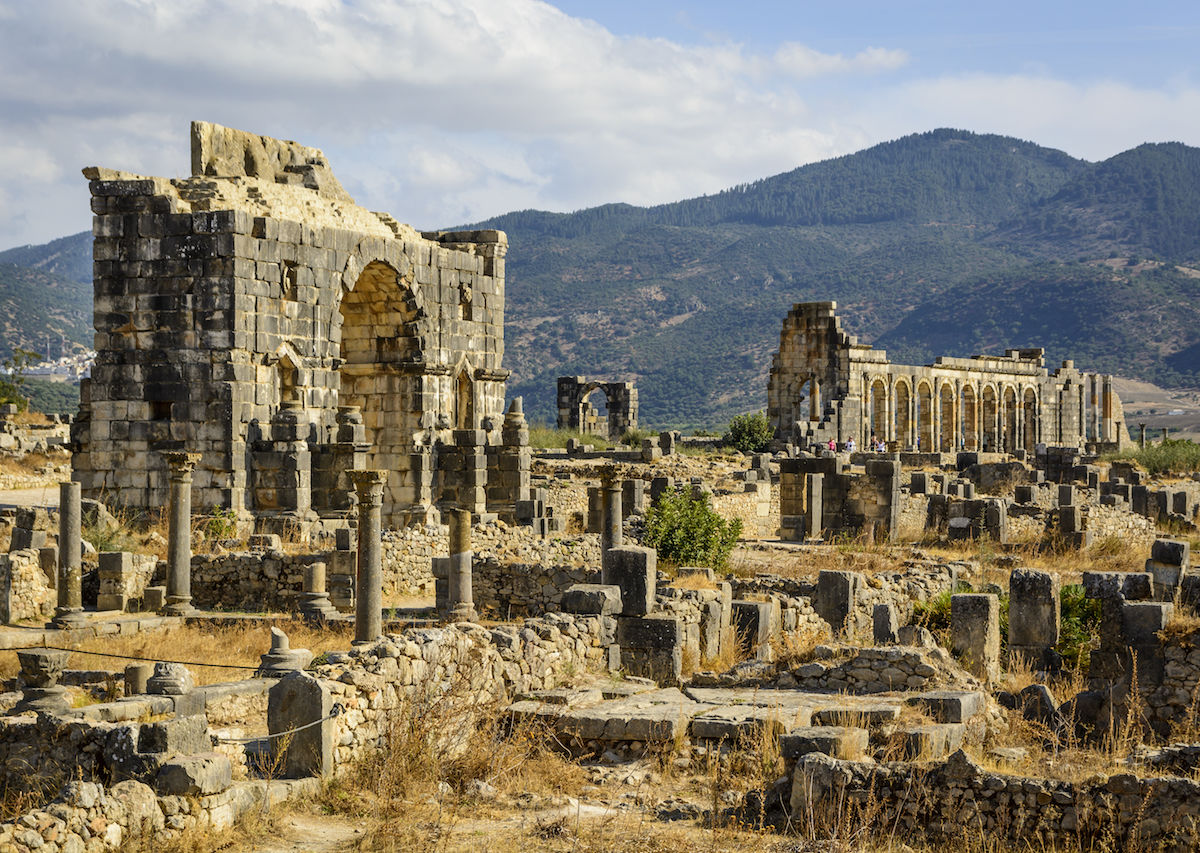
Located near the modern city of Meknes in Morocco, Volubilis stands as a premier example of Roman-era urban planning in North Africa. Inscribed as a UNESCO World Heritage site in 1997, the city flourished from the 3rd century BC through the Islamic conquest. Excavations have revealed only about 50% of the site, yet the findings are staggering. The city’s elite mansions feature intricate floor mosaics that demonstrate a blend of African, Roman, and Christian artistic motifs. Archaeologists emphasize that the site’s preservation allows for a unique study of how Roman administrative structures were adapted to the North African landscape. Visitors are advised that the site remains a major cultural draw, requiring private transport from Fez or Meknes to reach the ruins.
The Architectural Legacy of Great Zimbabwe and Khami
The medieval period in Southern Africa was dominated by the Kingdom of Zimbabwe, a state whose wealth was built upon gold production and cattle husbandry. Great Zimbabwe, which served as the capital from the 11th to the 15th centuries, remains the largest stone-built complex in sub-Saharan Africa, covering 1,700 acres and housing an estimated 18,000 inhabitants. Its signature dry-stone masonry—walls constructed without mortar—demonstrates an advanced understanding of structural engineering.
When the kingdom’s influence shifted, the capital moved to the Khami Ruins, occupied between 1450 and 1650. Khami refined the architectural language of its predecessor, introducing chevron and checkered wall patterns that represent a significant evolution in aesthetic expression. UNESCO’s recognition of Khami in 1986 highlighted its role as a key site for understanding the transition of power in the region.
Adam’s Calendar: Rethinking Human Chronology
In the Mpumalanga province of South Africa, the site known as Adam’s Calendar, or "Inzalo Y’langa" (Birthplace of the Sun), has sparked intense debate regarding the origins of human activity. Discovered by a pilot in 2003, the site consists of a series of dolerite monoliths arranged in a geometric pattern. While mainstream archaeology often approaches the site with caution, proponents suggest it is a functional astronomical calendar dating back over 75,000 years. If proven, this would predate the Giza Pyramids and Stonehenge by tens of millennia, challenging existing timelines regarding the development of sophisticated human cognition and monumental architecture.
Kilwa Kisiwani: The Swahili Maritime Empire
Off the coast of Tanzania, Kilwa Kisiwani was the epicenter of the Kilwa Sultanate, which controlled trade along the Swahili Coast from the 13th to the 15th centuries. The island was a vital hub for the exchange of gold, ivory, and ceramics between Africa, Arabia, and Asia. The Great Mosque and the Palace of Husuni Kubwa remain the most prominent features. Historians note that the site is an essential case study for the "Swahili Corridor," a maritime network that facilitated deep cultural and economic integration. Maintaining the site is a collaborative effort involving local authorities and international heritage organizations to combat coastal erosion.
Luxor Temple: The Religious Heart of Ancient Egypt
The Luxor Temple represents the zenith of New Kingdom religious architecture. Built primarily by Amenhotep III and later expanded by Tutankhamun and Rameses II, the temple was dedicated to the Theban Triad: Amun, Mut, and Khonsu. Unlike funerary temples, Luxor was a site for the rejuvenation of kingship, particularly during the Opet Festival. Its long-term use is evidenced by the presence of Roman-era administrative structures and even later Coptic Christian shrines, highlighting the site’s status as a persistent locus of power and worship across three millennia.
The Aksumite Empire: Ethiopia’s Monolithic Giants
The ruins of Aksum in northern Ethiopia represent the remains of a civilization that served as a critical trade bridge between the Mediterranean and the Indian Ocean. At its peak, the Aksumite Empire was recognized as one of the four great powers of the world, alongside Rome, Persia, and China. The site is famous for its towering monolithic stelae, with the largest measuring 108 feet in length. These structures, dating from the 1st to the 13th centuries, serve as funerary markers for royalty. The ongoing preservation of these monuments is a point of national pride and historical identity for the Ethiopian government.
Laas Geel: The Art of the Horn of Africa
Discovered by French researchers in 2002, the rock art at Laas Geel in Somaliland provides an invaluable record of prehistoric pastoral life. The paintings, estimated to be between 9,000 and 3,000 years old, depict cattle adorned with ceremonial robes, giraffes, and domestic dogs. The site is considered one of the best-preserved examples of Neolithic rock art in Africa. However, the site’s location in a sensitive geopolitical region necessitates strict security measures, including the requirement for military escorts, reflecting the complexities of conducting archaeological research in areas of conflict.
Gedi: The Mystery of the Swahili Coast
The Gedi Ruins in Kenya offer a window into a medieval Swahili-Arab city that was abandoned for reasons still debated by scholars—ranging from water shortages to hostile incursions. Located within the Arabuko-Sokoke Forest, the site features extensive coral-brick architecture, including a mosque and a palace. Local Giriama tradition considers the site sacred, and the community actively participates in its protection. The Gedi Ruins serve as an important ecological and cultural intersection, where wildlife conservation and historical preservation meet.
Leptis Magna: A Roman Masterpiece in Libya
Leptis Magna, located in modern-day Libya, is widely considered the finest example of Roman architecture in Africa. Founded by Phoenicians and later expanded by the Roman Emperor Septimius Severus, the city boasts a theater, a forum, and a basilica of monumental proportions. Despite its architectural splendor, Leptis Magna is currently at risk due to the instability in Libya. International heritage bodies have repeatedly called for the protection of the site, emphasizing that its destruction would be an irreparable loss to global human history.
Broader Implications for Heritage Management
The diversity of these sites underscores a broader narrative: Africa’s past is not a monolith but a mosaic of competing and cooperating civilizations. The challenges faced by these sites—ranging from the looting of the Nok Caves to the environmental threats at Gedi and the geopolitical risks at Leptis Magna—highlight the necessity of a unified approach to heritage management. Experts argue that the formalization of local management, increased investment in digital documentation, and international advocacy are essential to ensuring that these sites continue to educate future generations about the deep-rooted complexity of African history. As global interest in these sites grows, the balance between accessibility and preservation remains the central challenge for policymakers and historians alike.