Beyond the Spec Sheet: Six Years of Sony Full-Frame Shooting With Creator Curtis Padley

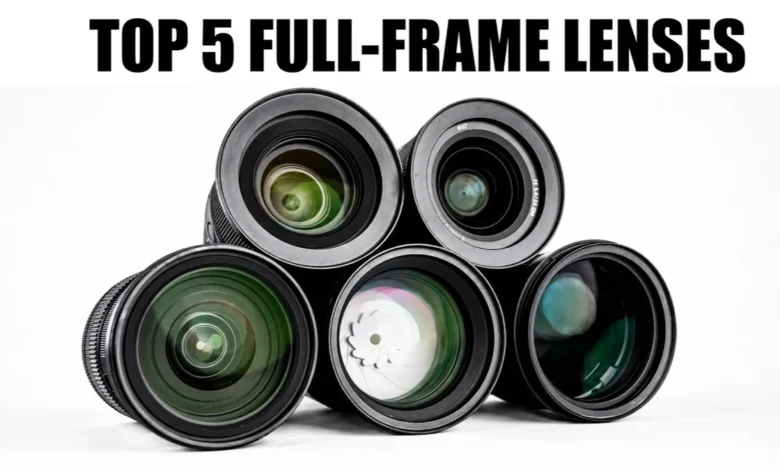
The modern market for full-frame mirrorless camera lenses presents photographers with an embarrassment of riches, particularly for users of the Sony E-mount ecosystem. Photographers navigating this landscape face a constant dichotomy: choosing between native optical engineering from Sony—exemplified by its flagship G Master line—and third-party alternatives from manufacturers like Sigma, whose Art series has steadily carved out a reputation for rivaling or even surpassing native glass at a fraction of the cost. While spec sheets provide a reliable baseline for evaluating sharpness, chromatic aberration, and distortion, they fail to quantify how a piece of equipment integrates into a working professional’s daily workflow over years of field use.
To understand the difference between theoretical optical perfection and long-term utility, veteran content creator and photographer Curtis Padley recently evaluated his kit after six years of shooting exclusively on Sony full-frame bodies. Rather than relying on popularity metrics or promotional specifications, Padley compiled a ranked assessment of his top five lenses based strictly on field survivability, versatility, and their sustained earned space inside his camera bag. His findings offer a revealing look into how creative evolution, weight considerations, and changing shooting styles ultimately dictate gear longevity.
The Evolution of a Working Photographer’s Kit
Padley’s six-year journey within the Sony ecosystem mirrors the broader maturation of the mirrorless market. When full-frame mirrorless systems first gained mainstream dominance, the priority for early adopters was establishing a baseline of optical performance that could match or exceed legacy DSLR systems. Over time, however, the metric for gear value shifted. Photographers began prioritizing weight management, autofocus reliability under adverse conditions, and focal length flexibility over maximum theoretical resolution.
This shift in perspective is evident throughout Padley’s curated selection, which balances premium native lenses with high-performance third-party options. His retrospective analysis highlights a broader industry trend: third-party manufacturers are no longer viewed merely as budget-friendly compromises, but as primary tools chosen for their specific ergonomic and optical signatures.
Fifth Place: Sony FE 24mm f/1.4 GM
Securing the fifth position in Padley’s lineup is the Sony FE 24mm f/1.4 GM, currently retailing for approximately $1,598, up from its initial launch price of around $1,400. Notably, this stands as the sole Sony G Master lens remaining in Padley’s regular rotation.
Weighing in at 445 grams, the 24mm f/1.4 is relatively lightweight for its class, making it an agile option for hybrid shooters. Padley utilizes the lens in two distinct operational contexts. Mounted on a crop-sensor Sony a6700 body, the 1.5x focal length multiplier yields a full-frame equivalent field of view of approximately 36mm. This performance profile closely mirrored the Sigma 23mm f/1.4 DC DN Contemporary, rendering a dedicated purchase of the Sigma optic redundant during testing.
For primary full-frame use, however, Padley employs the lens predominantly for video production. Every talking-head segment featured on his digital channel over a three-year span was captured using this focal length. While he acknowledges that a 24mm field of view can occasionally prove excessively wide for general full-frame still photography, its studio performance remains uncompromised. The autofocus motor has maintained a flawless tracking record, the maximum aperture of f/1.4 delivers substantial background separation, and the physical form factor avoids the heavy fatigue associated with larger ultra-fast primes.
Fourth Place: Sigma 85mm f/1.4 DG DN Art
Occupying fourth place is a lens that once reigned as Padley’s undisputed favorite: the Sigma 85mm f/1.4 DG DN Art. After four years of sustained field usage—enduring standard operational wear, minor impacts, and demanding environments—the lens continues to function without mechanical degradation.
Padley characterizes the optical performance of the Sigma 85mm wide open as exceptional, citing aggressive center sharpness, reliable low-light light-gathering capabilities, and optical compression that renders subject isolation organic and effortless. Despite these strengths, the lens has gradually slipped downward in his operational hierarchy. Tipping the scales at roughly 630 grams, the 85mm is far from a lightweight field companion. More importantly, Padley’s personal shooting style evolved away from ultra-narrow telephoto isolation toward wider environmental storytelling, illustrating how personal creative shifts often relegate high-performance gear to the shelf.
Third Place: Sony FE 70-200mm f/2.8 GM OSS II
Representing the most substantial financial investment in Padley’s inventory, the Sony FE 70-200mm f/2.8 GM OSS II commands a retail price of $3,098. Despite the steep acquisition cost, Padley categorizes the telephoto zoom as an indispensable asset for automotive photography, street reportage, motorsport coverage, and travel documentation.
The lens holds significant sentimental and professional value, having been used to capture portraits of Formula One driver Max Verstappen—a highlight of Padley’s field career. Weighing just over one kilogram, the Mark II iteration of Sony’s professional telephoto zoom is remarkably lightweight relative to its optical capabilities. Nevertheless, the physical mass and physical footprint of a 70-200mm f/2.8 zoom inherently create a logistical burden, frequently forcing Padley to leave the lens behind during casual outings. Despite this limitation, he maintains that the versatility and image rendering justify the capital expenditure.
Honorable Mention: Sigma 10-18mm f/2.8 DC DN Contemporary
Before detailing his top two selections, Padley highlights an APS-C outlier: the Sigma 10-18mm f/2.8 DC DN Contemporary. Adopted as his primary vlogging solution when paired with bodies like the Sony a7 series in crop modes, this ultra-wide zoom was selected explicitly for its minimal weight and diminutive physical dimensions. Its integration into his workflow was so efficient that it completely superseded the native Sony 16-35mm f/2.8 zoom, prompting Padley to liquidate the more expensive Sony optic entirely.
Second Place: Sigma 35mm f/1.4 DG II Art
Surpassing the 85mm Art in both preference and utility, the Sigma 35mm f/1.4 DG DN Art claims second place in the ranking. Padley identifies the 35mm focal length as the ultimate compromise for documentary and street applications, arguing that it captures sufficient contextual surroundings to ground a subject without introducing the exaggerated geometric distortion characteristic of wider lenses.
Serving as his primary tool for street photography, travel documentation, portraiture, and environmental storytelling, the 35mm f/1.4 is described as the single prime lens he would select if restricted to a one-lens kit. Optically, Padley notes exceptional sharpness at the maximum f/1.4 aperture, paired with a smooth, gradual transition from the plane of focus into background blur.
First Place: Sigma 24-70mm f/2.8 DG DN II Art
Topping the list at number one is the Sigma 24-70mm f/2.8 DG DN II Art, priced competitively at $1,319. Padley’s relationship with this lens involved a period of reassessment; after hearing critiques from fellow digital creators labeling standard zoom lenses as uninspiring, he briefly suspended its use. However, a field assignment in New York City prompted him to reintegrate the optic, immediately reminding him of its foundational utility.
The 24-70mm zoom range allows Padley to transition seamlessly from sweeping architectural establishing shots and urban cityscapes to street scenes, automotive details, and environmental portraits without interrupting the workflow via lens changes. Padley characterizes the optical resolution across the entire zoom range as comparable to high-end prime lenses.
Weighing 735 grams, the lens is undeniably substantial, yet it remains significantly more efficient than carrying multiple specialized prime lenses and managing field swaps. Furthermore, the constant f/1.4 aperture of primes is rarely missed outside of extreme low-light scenarios. Given its pricing relative to native alternatives, Padley identifies the Sigma 24-70mm f/2.8 DG DN II Art as the single most universally recommendable lens for full-frame photographers entering the Sony ecosystem.
Industry Implications and the Shift Toward Value
Padley’s long-term evaluation underscores a broader evolution within the photographic equipment market. As third-party manufacturers like Sigma continue to close the performance gap with native manufacturers, consumer purchasing habits are shifting away from brand loyalty toward functional utility.
The sustained popularity of lenses like the Sigma 24-70mm f/2.8 DG DN II Art and the 35mm f/1.4 Art demonstrates that modern creators prioritize practical handling, optical reliability, and cost-to-performance ratios over the pedigree of a brand logo. For manufacturers, these insights emphasize that future gear development must focus on balancing weight reduction with uncompromising optical integrity if they hope to secure a permanent place in a professional’s camera bag.
Related posts: