The Gold Coast, situated in Southeast Queensland approximately 78 kilometers south of Brisbane, represents one of Australia’s primary economic and tourism drivers. Known globally for its expansive sandy coastline, high-rise urban development, and proximity to subtropical rainforests, the region attracts millions of domestic and international visitors annually. Recent travel accounts from international visitors highlight the diverse ecological and urban geography of the area, shedding light on administrative travel requirements, regional infrastructure, and the socioeconomic dynamics of Australia’s premier holiday destination.

Administrative Prerequisites: Australian Entry Visas and Compliance

International travel to Australia is governed by strict federal immigration policies, which mandate that all foreign nationals—excluding citizens of New Zealand under specific trans-Tasman arrangements—must secure an approved visa or electronic travel authority prior to departure. The Department of Home Affairs oversees these authorizations, which are digitally linked to the traveler’s passport.

Travel industry data frequently emphasize the necessity of early administrative compliance. Many travelers from visa-exempt nations mistakenly assume that long-term tourist entry permits are granted upon arrival, mirroring policies found in other Commonwealth nations. Failure to secure proper documentation prior to check-in frequently results in denied boarding by commercial airlines. Immigration legal experts and visa processing agencies recommend initiating electronic applications weeks in advance of scheduled departures to mitigate processing delays resulting from minor data discrepancies.

Geographical Diversity and Urban Planning of the Gold Coast

Spanning approximately 50 kilometers of coastline, the City of Gold Coast municipality balances high-density urban centers with protected natural reserves. The region’s geography transitions rapidly from coastal marine environments to the lush valleys and mountainous terrain of the Great Dividing Range hinterland.

Urban planning across the coastal strip varies significantly by precinct:

- Surfers Paradise: Characterized by high-rise residential towers, commercial retail hubs, and intensive nightlife, serving as the commercial epicenter for tourism.
- Broadbeach: Functioning as a central administrative and residential hub, Broadbeach offers high walkability, public transit connectivity via the G:Link light rail system, and a more subdued commercial atmosphere compared to its northern neighbor.
- Burleigh Heads and Coolangatta: Preserving traditional surf-town aesthetics, these southern precincts prioritize community green spaces, heritage architecture, and direct access to world-renowned point breaks such as Snapper Rocks.
Hinterland Integration: Ecology and Agritourism

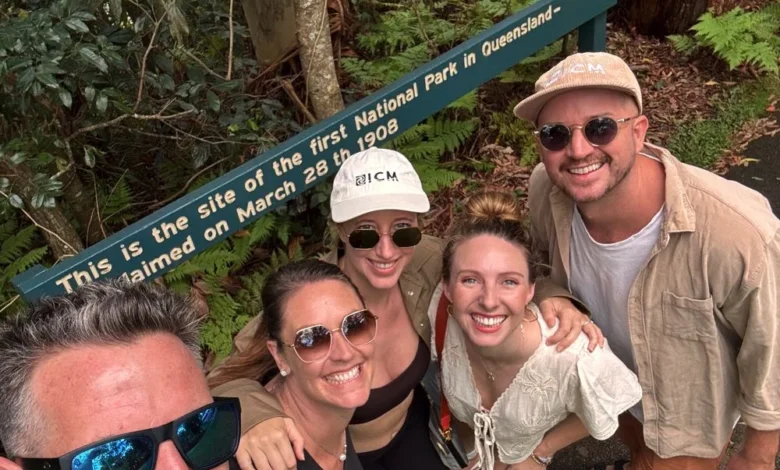
Beyond the coastal fringe, the Gold Coast hinterland—encompassing Tamborine Mountain and the Currumbin Valley—contributes significantly to the regional economy through ecotourism and agricultural production. Tamborine National Park, established in 1908 as Queensland’s first national park, protects vital subtropical rainforest ecosystems, endemic flora, and historical geological formations.

Regional economic analyses indicate that hinterland tourism has experienced steady growth as visitors seek alternatives to coastal activities. Agritourism initiatives, including boutique viticulture at operations such as Witches Falls Winery and localized agricultural cooperatives in Currumbin Valley, provide diversified revenue streams for regional landowners while promoting sustainable environmental management practices.

Infrastructure, Public Transit, and Accessibility

The region’s transportation network relies heavily on the Gold Coast Airport (OOL) located in Coolangatta, complemented by proximity to Brisbane International Airport (BNE). Within the urban core, public transport integration—managed via the Translink network combining light rail and bus services—facilitates movement between Southport, Surfers Paradise, and Broadbeach.

However, transportation studies underscore that accessing peripheral ecological zones, such as the Scenic Rim and regional valleys, necessitates private vehicular transport or specialized tour operations. The expansion of regional roadways continues to be a focal point for municipal infrastructure development to accommodate seasonal tourism surges while minimizing environmental degradation in protected wildlife corridors.

Socioeconomic Implications of Tourism Growth

Tourism remains a foundational pillar of the Gold Coast economy, generating substantial employment across hospitality, retail, construction, and service sectors. Municipal authorities continuously balance the economic benefits of high-volume tourism with urban sustainability initiatives, particularly concerning coastal erosion management, waste reduction, and the protection of native fauna habitats, including koala and kangaroo populations residing within urban-rural interfaces.

As international travel patterns recover to pre-pandemic volumes, regional tourism boards emphasize the dispersal of visitors away from high-density commercial strips toward decentralized cultural and ecological experiences in the hinterlands. This strategic shift aims to maximize economic distribution across local businesses while preserving the natural assets that define Southeast Queensland’s regional identity.