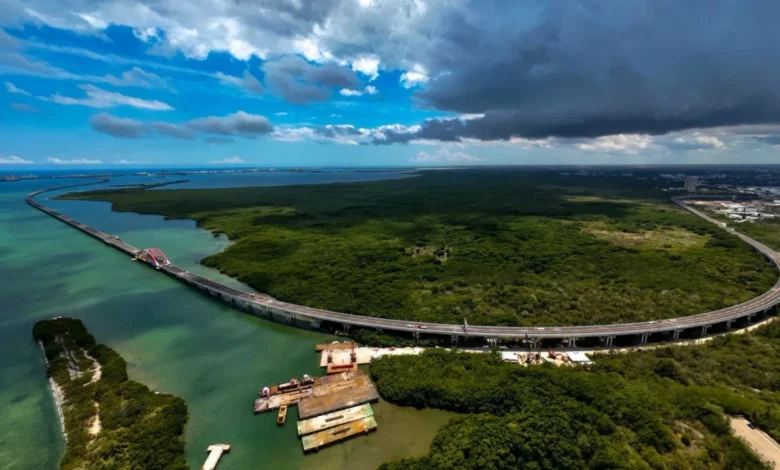
The Nichupté Bridge represents a pivotal advancement in the infrastructure of Cancún, marking one of the most ambitious engineering projects in the history of the state of Quintana Roo. Designed to address the chronic traffic congestion that has long plagued the region’s Hotel Zone, this 8.8-kilometer vehicular bridge serves as a strategic link between the urban core of downtown Cancún and the primary tourism corridor. As the Mexican Caribbean continues to see record-breaking numbers of international arrivals, the completion of this project signals a shift in the regional development strategy, focusing on mobility, sustainability, and the integration of local communities with the lucrative tourism sector.
Project Overview and Technical Specifications
The Nichupté Bridge is a toll-free infrastructure project spanning the Nichupté Lagoon, connecting the intersection of Colosio Boulevard and Kabah Avenue in downtown Cancún to the 13.0-kilometer mark of Kukulcan Boulevard in the Hotel Zone. With an estimated investment exceeding 5.5 billion Mexican pesos, the bridge is part of a broader federal and state initiative to modernize the gateway to Mexico’s most visited destination.
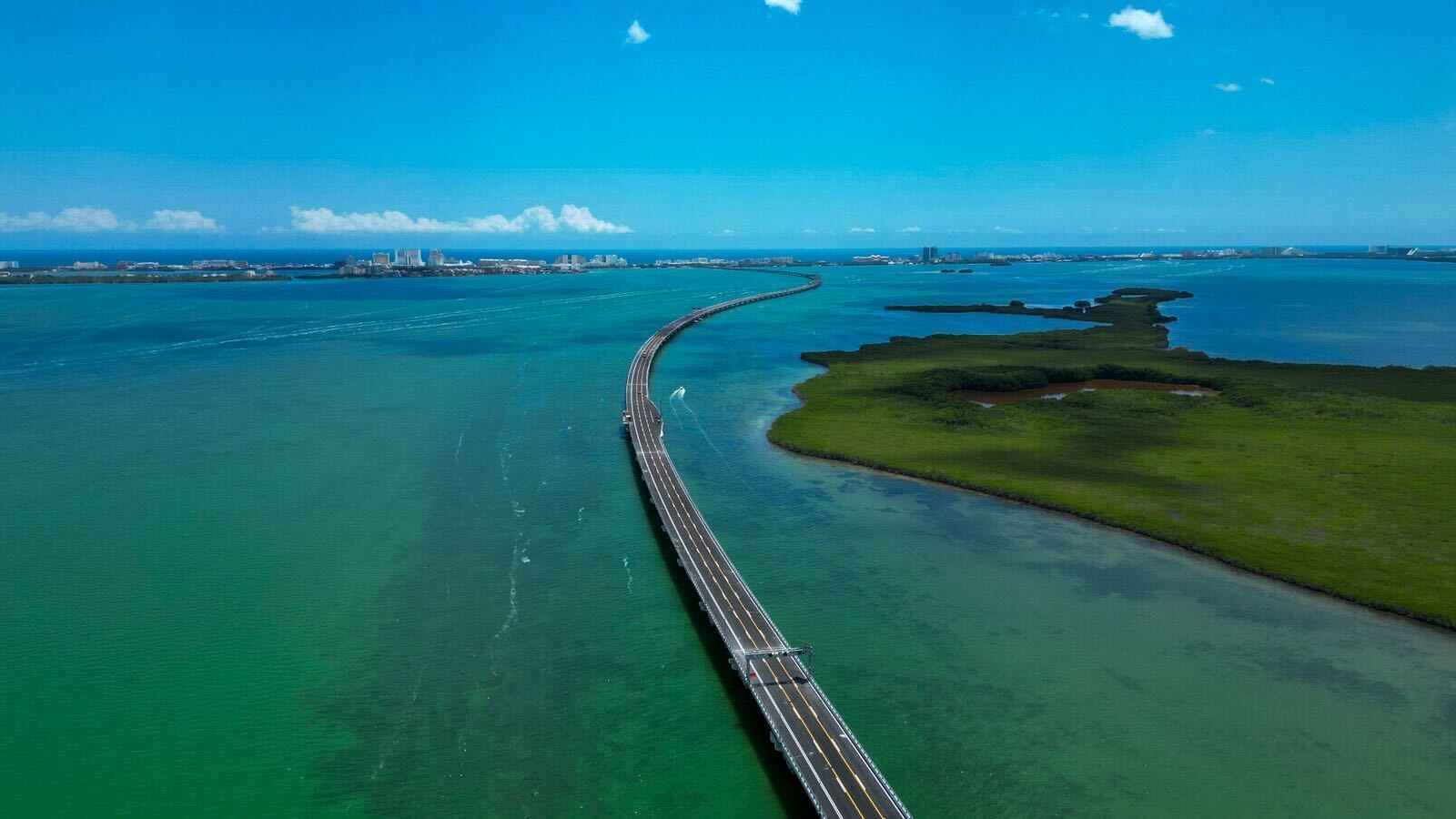
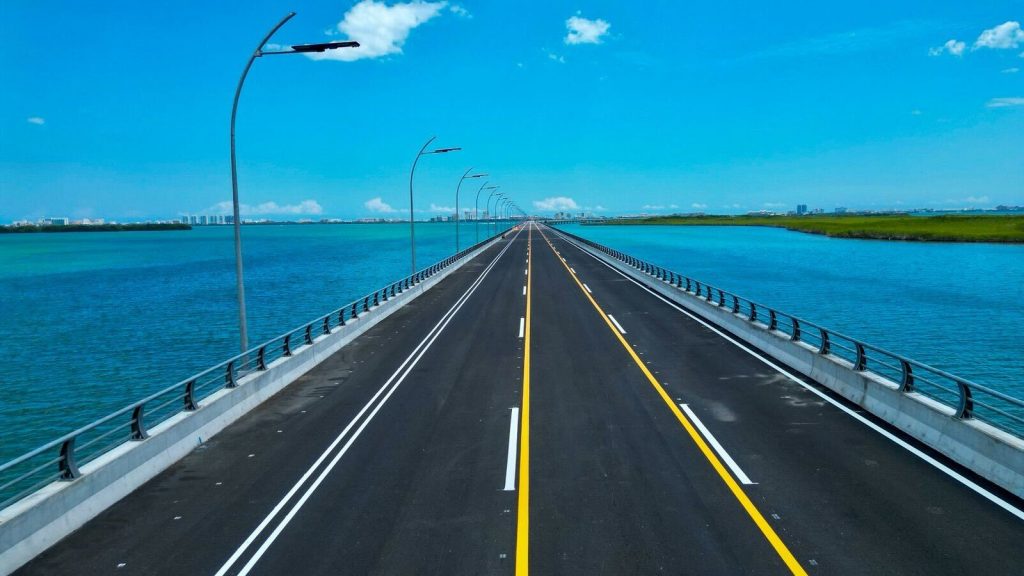
Technical specifications of the bridge include a total length of approximately 8.8 kilometers, of which 8.4 kilometers traverse the lagoon and the remaining portion consists of access ramps. The structure features three lanes, each 3.5 meters wide. A key logistical innovation is the inclusion of a reversible central lane, which will be adjusted according to peak traffic flows—outbound toward the Hotel Zone in the morning and inbound toward downtown in the evening. Additionally, the bridge incorporates a dedicated 2.5-meter-wide lane for cyclists and pedestrians, reflecting a modern approach to multi-modal transportation and urban leisure.
To ensure the structural integrity and environmental safety of the project, the bridge was constructed using a "top-down" methodology. This technique allows for the placement of pillars and deck segments from above, significantly reducing the physical footprint on the lagoon bed and protecting the delicate mangrove ecosystems that characterize the Nichupté Lagoon.
Chronology of Development and Strategic Planning
The conceptualization of a bridge over the Nichupté Lagoon has existed for over two decades, but it was not until the current administration that the project secured the necessary federal funding and environmental clearances to proceed.
In early 2022, the Secretariat of Infrastructure, Communications, and Transportation (SICT) finalized the project’s environmental impact assessment (MIA), which included rigorous requirements for mangrove reforestation and the monitoring of local fauna. Construction officially commenced later that year, spearheaded by the Mexican government in collaboration with specialized engineering firms.
Throughout 2023 and 2024, the project faced various logistical challenges, including the management of heavy machinery in a protected natural area and the need to maintain traffic flow on the existing Kukulcan Boulevard during the tie-in phases. The project was integrated into the "Cancún Integrated Program," which also included the renovation of Colosio Boulevard, the modernization of the "Trébol" (Cloverleaf) interchange at the Cancún International Airport, and the extension of Chac Mool Avenue. This comprehensive suite of projects was designed to create a seamless transit network for the millions of tourists arriving via the airport and the local workforce that supports the hospitality industry.
Supporting Data and Economic Context
The necessity of the Nichupté Bridge is underscored by the sheer volume of traffic in the region. Before the bridge’s inception, the Hotel Zone was accessible primarily through two points: the northern entrance via the city center and the southern entrance via the airport. During peak seasons, Kukulcan Boulevard frequently reached a point of total saturation, with commute times for the 15-mile strip exceeding 90 minutes.
According to data from the Quintana Roo Tourism Secretariat (SEDETUR), the region hosted over 20 million visitors in 2023. Projections for the coming years suggest a steady 3-5% annual growth in tourism capacity. Without the bridge, the existing road network would have likely reached a state of permanent gridlock, threatening the region’s reputation as a world-class destination.
Furthermore, the bridge is expected to generate significant economic savings. Estimates from the SICT suggest that the bridge will reduce travel times by up to 45 minutes for daily commuters. For the local economy, this translates into reduced fuel consumption and increased productivity for the more than 50,000 workers who enter and exit the Hotel Zone daily.
Official Responses and Regional Leadership
The project has received strong backing from both state and federal leadership. During a recent progress inspection, Mara Lezama, the Governor of Quintana Roo, emphasized that the bridge is a matter of "social justice" as much as it is an infrastructure project. She noted that for decades, the workers who are the backbone of the tourism industry spent hours in transit, away from their families. The bridge, she argued, returns that time to the people.
Andrés Martínez Reynoso, CEO of the Mexican Caribbean Tourism Board, recently highlighted the bridge’s importance during the EDGE 2026 conference in San Diego. Reynoso described the bridge as a "transformational project" that reflects the region’s commitment to meeting the high expectations of modern international travelers. His announcement that the EDGE 2027 conference will be held in the Cancún-Riviera Maya region further solidified the area’s standing as a premier hub for global MICE (Meetings, Incentives, Conferences, and Exhibitions) tourism.
Federal officials have also pointed to the bridge as a companion piece to the "Tren Maya" (Maya Train), the 1,554-kilometer railway loop connecting five states in southeastern Mexico. The synergy between the bridge and the train is expected to facilitate easier movement for tourists who wish to explore the interior of the Yucatán Peninsula after landing in Cancún.
Environmental Mitigation and Sustainability Efforts
Given the ecological sensitivity of the Nichupté Lagoon, which is a protected area, the project has been subject to intense scrutiny from environmental groups. In response, the Mexican government implemented a comprehensive environmental management plan.
Key measures include:
- Mangrove Reforestation: For every hectare of mangrove affected by construction, the project committed to reforesting significantly larger areas in surrounding zones.
- Water Quality Monitoring: Regular testing of the lagoon’s salinity and oxygen levels to ensure that the construction of the bridge’s 200+ pillars does not disrupt the natural flow of water or the health of seagrasses.
- Fauna Protection: The installation of biological corridors to allow for the safe passage of local species, including crocodiles and various bird species, across the construction site.
These efforts are intended to align the project with the United Nations Sustainable Development Goals, specifically those related to sustainable cities and infrastructure.
Broader Impact and Future Implications
The implications of the Nichupté Bridge extend beyond simple traffic relief. It represents a fundamental change in the urban geography of Cancún. Historically, there has been a stark divide between the "tourist city" (the Hotel Zone) and the "resident city" (downtown). By creating a direct, high-capacity link between the two, the bridge encourages tourists to venture into the city center, potentially boosting local businesses, restaurants, and cultural sites that were previously overlooked.
From a safety and emergency management perspective, the bridge provides a critical third evacuation route. In a region prone to hurricanes, the ability to quickly move thousands of people out of the low-lying Hotel Zone is a vital component of the state’s civil protection strategy.
In the context of global tourism competition, the Nichupté Bridge serves as a statement of intent. As other Caribbean and Mediterranean destinations grapple with aging infrastructure, Mexico is actively investing in the "logistical friction-less" experience. Modern travelers increasingly prioritize ease of movement; the bridge ensures that the transition from the airport to the resort is as pleasant as the stay itself.
As the Mexican Caribbean prepares to host major international events like EDGE 2027, the Nichupté Bridge stands as a testament to the region’s evolution. It is no longer just a collection of beaches and resorts, but a sophisticated, integrated metropolitan area capable of supporting world-class infrastructure and sustainable growth. The bridge is not merely a path over water; it is a bridge to the next era of tourism in the Mexican Caribbean.