United Airlines Blocks Unauthorized AI Agents from Booking Flights in Industry-First Move

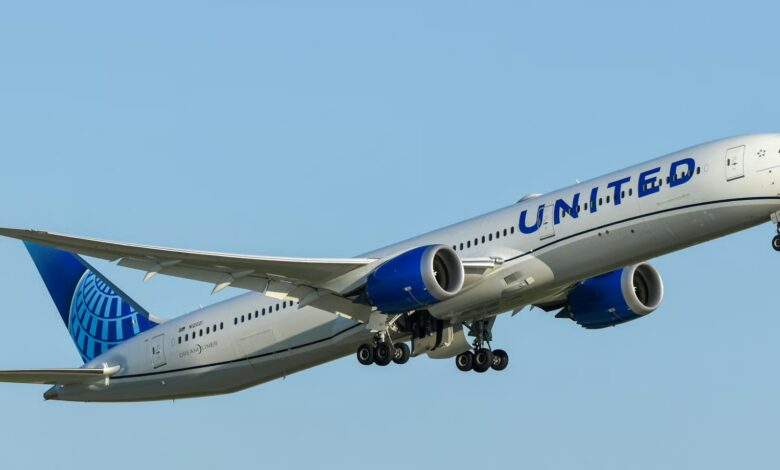
United Airlines has officially become the first major United States air carrier to implement a strict ban preventing unauthorized third-party artificial intelligence agents, including xAI’s Grok Bot and Meta’s Muse, from executing flight bookings on its digital platforms. The Chicago-based airline announced that the new policy applies universally across its proprietary website and mobile application, as well as indirect booking pathways operated by third-party travel agencies and online ticket aggregators.
While personal AI assistants remain capable of retrieving and displaying flight schedules, routes, and fare pricing, they are now technically restricted from completing transactions or purchasing tickets on behalf of users. The development marks a significant escalation in the commercial friction between legacy aviation infrastructure and rapidly evolving generative artificial intelligence technologies.
The decision has ignited broader discussions across the global travel and technology sectors regarding data privacy, regulatory compliance, consumer automation, and the future economics of airline ticket distribution.
Official Rationales: Security, Compliance, and Liability
In public statements defending the policy, United Airlines executives emphasized that the restrictions are primarily driven by data security concerns and stringent federal regulatory frameworks. Handing over sensitive account credentials, such as MileagePlus loyalty program logins, to external, automated software tools exposes travelers to potential data breaches, unauthorized account access, and privacy vulnerabilities. Furthermore, the airline noted that autonomous agents operating without human supervision risk executing unintended purchases, modifying existing reservations, or depleting accumulated frequent flyer miles through automated errors.
Beyond consumer protection, United highlighted potential conflicts with regulatory mandates enforced by the Federal Aviation Administration (FAA) and the Department of Transportation (DOT). For instance, federal aviation regulations require passengers to personally certify that their checked luggage does not contain hazardous or prohibited materials, such as explosives or flammable substances. An automated AI agent checking in a passenger cannot legally or honestly make this required security declaration on behalf of the traveler, creating potential compliance liabilities for both the passenger and the airline.
The Economic Undercurrent: Protecting Dynamic Pricing and Ancillary Revenue
Despite the emphasis on safety and compliance, industry analysts and financial observers suggest that financial motivations heavily influence the timing and scope of the ban. Just a day prior to the official announcement, United Airlines CEO Scott Kirby addressed the rise of automated digital assistants at an industry event in Chicago, expressing a clear stance against emerging commercial gatekeepers.
"To be honest, I don’t want to create another middleman," Kirby stated regarding the proliferation of AI booking agents.
Airlines have historically spent decades and millions of dollars locked in commercial battles with online travel agencies (OTAs) and global distribution systems (GDS) to control how their fares are marketed, displayed, and sold to the public. The emergence of sophisticated AI agents threatens to introduce a powerful new layer of mediation between carriers and their consumer bases. Modern AI tools possess the capability to monitor fare fluctuations around the clock, automatically executing purchases the exact moment a ticket price drops, entirely without human intervention.
If scaled across millions of passengers, this level of automated vigilance poses a direct challenge to the dynamic pricing models and ancillary revenue streams upon which modern airline profitability depends. Seat selection fees, baggage charges, and upgraded boarding tiers could see diminished uptake if automated systems bypass promotional upsells or continuously rebook itineraries to capture lower market rates.
The Rebooking Dilemma: The Real Threat to Airline Margins
Industry experts argue that the most substantial economic threat posed by AI agents to airline bottom lines is not the initial booking process, but rather the automated management of flight rebookings.
Since the major U.S. carriers, led by United, permanently eliminated most domestic change fees during the COVID-19 pandemic in 2020, savvy travelers have utilized a popular cost-saving strategy: monitoring ticket prices after purchase and rebooking the identical itinerary if the fare decreases, pocketing the price difference as a future travel credit. However, because this process requires continuous, manual price checks over weeks or months, only a small fraction of travelers actively utilize the loophole.
AI agents change this equation fundamentally. Capable of checking fare classes hourly until departure, an AI assistant could systematically rebook flights the second a price drops for every trip in a user’s portfolio. What currently functions as an occasional, labor-intensive travel hack could easily transform into an automated default setting for millions of consumers, capturing revenue that airlines traditionally retain when prices fluctuate.
By implementing restrictions before consumer adoption of AI-driven booking becomes widespread, United has minimized immediate customer friction. Company representatives confirmed that the volume of actual AI-agent bookings remains statistically negligible, making the present moment the most cost-effective window to establish legal and technical boundaries.

Divergent Strategies Across the U.S. Airline Industry
While United has taken a hardline stance against autonomous booking agents, competing carriers are adopting markedly different approaches to the integration of artificial intelligence.
Delta Air Lines has adopted a more accommodating policy, stating that AI assistants are permitted to complete bookings provided they successfully navigate security authentication protocols. Delta is implementing targeted safeguards specifically designed for sensitive transactions, such as booking travel arrangements for unaccompanied minors, rather than imposing a blanket prohibition.
Meanwhile, Southwest Airlines embraced conversational commerce earlier in the year by launching a pioneering proprietary plugin within OpenAI’s ChatGPT. The integration allows prospective passengers to search for Southwest flight schedules and fare classes directly within the conversational interface of the chatbot.
These divergent strategies create a complex competitive landscape. If travelers increasingly rely on personal AI agents to orchestrate complex travel itineraries, carriers that block automated bookings risk losing market share to competitors whose platforms integrate smoothly with third-party software. Conversely, airlines maintaining strict access controls retain greater oversight over their customer relationships and yield management systems.
Industry Implications and Future Outlook
The collision between United Airlines and third-party AI agents highlights an accelerating friction point in the digital economy: the struggle for control over consumer transactions as software gains agency. As developers refine autonomous tools capable of managing complex real-world logistics, service industries must decide whether to embrace automation as a primary distribution channel or erect defensive walls to protect legacy business models.
Whether rival airlines will ultimately follow United’s lead or leverage openness to capture displaced customers remains one of the most compelling commercial storylines in modern aviation. For now, United Airlines has drawn a clear line in the sand, signaling that while the skies may be open to artificial intelligence, the cockpit of commerce remains firmly under corporate control.