Tracking the Ancient Paths of Kazakhstan: Conservation Efforts and the Survival of the Saiga Antelope

The rugged expanses of the Central Asian steppe present an unforgiving landscape where the Association for the Conservation of Biodiversity of Kazakhstan (ACBK) conducts critical field audits. Navigating the unpaved, mud-slicked tracks requires experienced navigation, a challenge amplified during the seasonal rutting period. It was under these extreme weather conditions that conservationists monitored the saiga antelope (Saiga tatarica), an ancient migratory ungulate whose survival is increasingly threatened by modern industrial fragmentation. The ongoing field research highlights the delicate intersection between infrastructure development and the preservation of prehistoric wildlife corridors.
Chronology and Historical Context
The evolutionary history of the saiga antelope stretches back to the Pleistocene epoch, positioning the species as a contemporary of woolly mammoths and saber-toothed cats. For hundreds of millennia, these nomadic animals traversed the Eurasian plains, serving as ecological guides for early human caravans.
The human relationship with the steppe underwent a profound transformation during the 20th century. Under the Soviet Union, traditional nomadic human populations were subjected to mandatory sedentarization policies, transitioning from mobile pastoralism to agrarian frameworks. This policy disrupted centuries-old cultural knowledge related to land navigation.
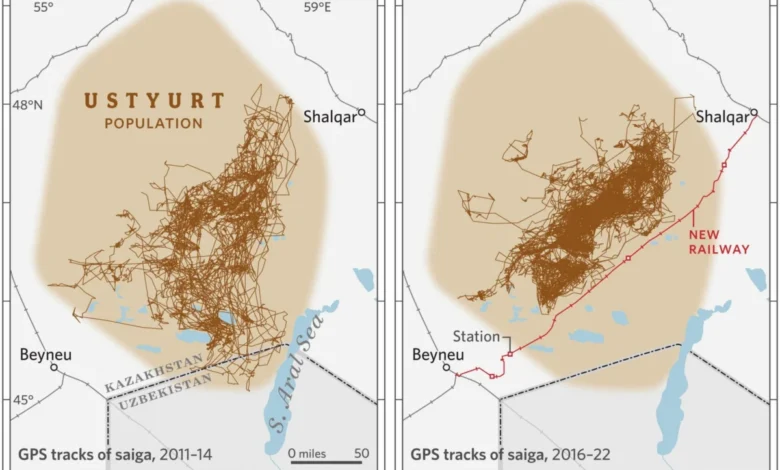
Concurrently, the post-Soviet era brought rapid infrastructure expansion. The construction of border fences, highways, and particularly the barrier-forming railway lines in 2014, fundamentally altered the ecology of the region. These developments effectively severed historical migratory routes, trapping animal populations and impeding access to traditional seasonal feeding and watering grounds.
Main Facts and Ecological Significance
The saiga antelope is distinguished by its unique, proboscis-like nose, an evolutionary adaptation designed to filter dust during dry summers and warm frigid air during harsh winters. During the autumn rutting season, males congregate to display physical prowess through aggressive territorial battles, relying on physical vitality and the size of their nasal appendage to attract mates.
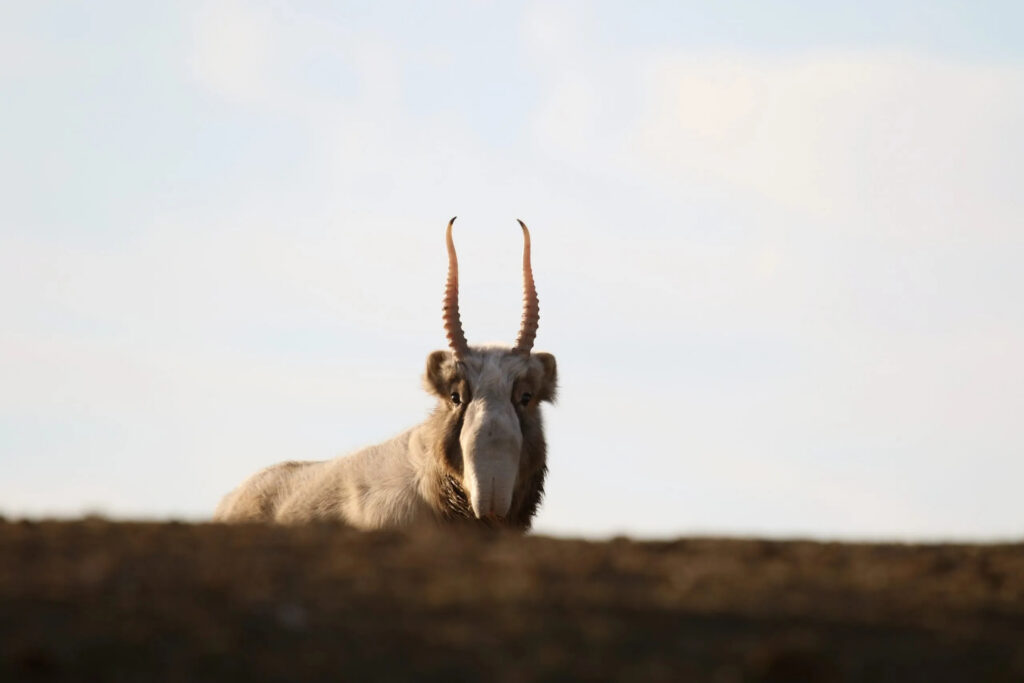
Historically, saiga populations spanned a massive geographic range from the Caucasus Mountains to Mongolia. However, modern anthropogenic barriers have severely fractured these populations. Data collected via GPS-collared specimens demonstrate that physical barriers—such as the 2014 railway construction in the southern range—cause behavioral disruption, leaving herds stranded on suboptimal terrain while vital resources remain inaccessible on the opposite side of the tracks.
This spatial disorientation results in a loss of cultural transmission among herds. Similar to the erosion of ancestral navigation knowledge in human populations, young saigas learn migration routes through direct observation of older generations. When physical barriers block these routes, the collective spatial memory of the herd is compromised.
Conservation Strategies and Official Responses
To mitigate these ecological impacts, conservation organizations such as ACBK, in collaboration with the governments of Kazakhstan and Uzbekistan, have implemented targeted structural interventions.
- Wildlife Crossings: Engineers have constructed specialized, sloping dirt ramps designed to match the elevation of railway tracks, creating the illusion of a continuous, level landscape that encourages animals to traverse safely.
- Barrier Modifications: Border fences in neighboring Uzbekistan have been redesigned from traditional continuous barbed-wire walls to X-shaped barricades. These structures successfully deter unauthorized vehicular traffic while maintaining sufficient clearance for saigas to pass underneath.
- Protected Areas: Field data collected by ACBK researchers directly inform the establishment of new wildlife sanctuaries, ensuring that critical mating and calving grounds receive formal legal protection.
Broader Impact and Implications
The plight of the saiga antelope reflects a broader global conflict between modern infrastructure expansion and the preservation of migratory wildlife corridors. From an analytical perspective, the fragmentation of the Eurasian steppe not only threatens biodiversity but also disrupts ancient ecological processes that have sustained the region for millennia.
The integration of empirical tracking data into policy-making demonstrates a shift toward evidence-based conservation. However, long-term viability depends on cross-border cooperation between Central Asian nations to maintain permeable borders for wildlife. Ensuring the survival of the saiga requires balancing economic development with the preservation of ecological connectivity, safeguarding a living link to the Pleistocene epoch against the pressures of the modern world.